

I, too, found my way back to Judaism
Like Janet Silver Ghent (“Joy and pride, not crises, pulled me back to Judaism,” Feb. 7), I also was raised in a secular Jewish home. My parents acknowledged that we were Jewish and, in fact, tried to put me in a few Sunday schools around the area that my mom’s friends felt were politically “liberal” enough, but it was never a good experience for me so they eventually stopped even that.
Other than my dad not working or me not going to school on the High Holidays and other than my parents hosting a few “model seders” for other secular Jewish friends, not much Judaism was practiced or taught at home.
My mother was a devoted Democratic activist and even had strategy lunches with James Roosevelt (FDR’s son), who was a Congress member representing Los Angeles at that time. She would pick me up after school and we’d drive over to the Fairfax area to deliver election materials for Democrats running for local offices. For years as a kid, I believed that being Jewish meant being a Democratic precinct worker — just like Mom!
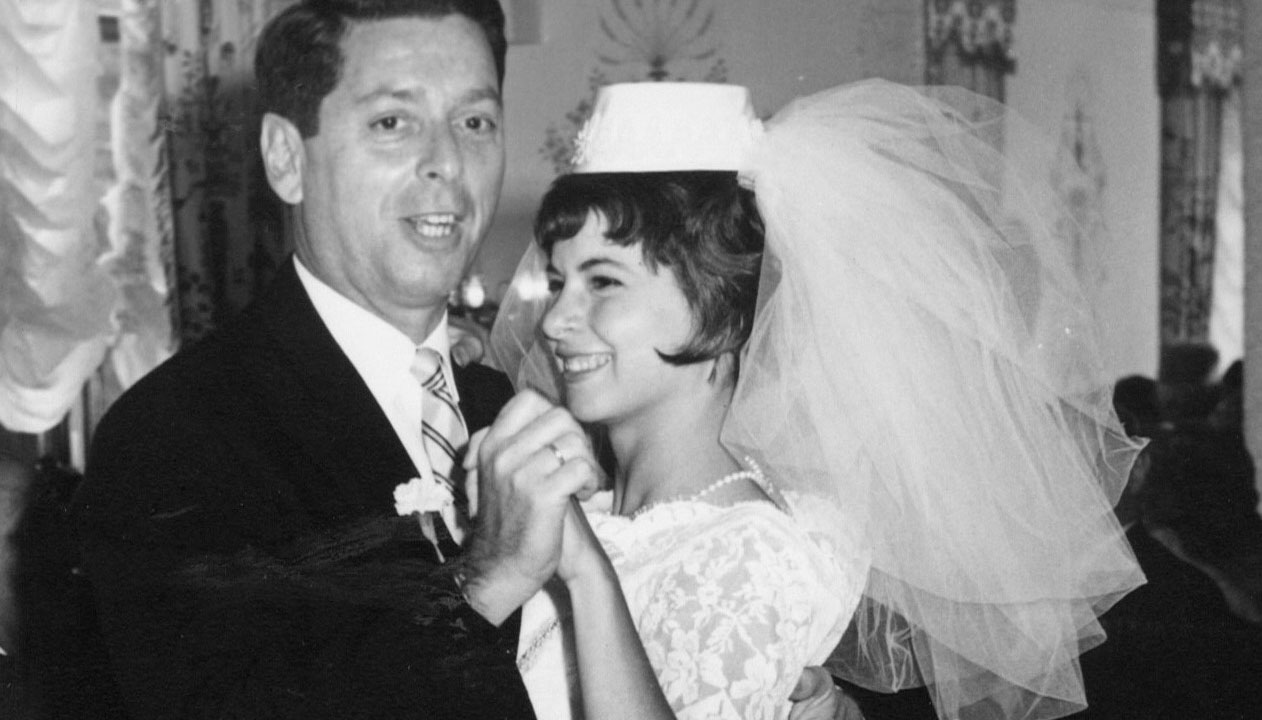
My story of finding my own way to Judaism was largely influenced by being a part of United Synagogue Youth as a teen. Then 41 years ago, 13 women (myself included) had our adult b’nai mitzvah at Congregation Beth David in Saratoga following nearly two years of study of Jewish history, Hebrew, trope, etc. We became the first adult b’nai mitzvah class at Beth David.
Nearly 50 years after joining, we are still active members of our Beth David community, which has truly been one of the best parts of my life.
The other of course is being a grandma!
Hillary Farkas
Cupertino
Fight for ethnic studies
Liberated ethnic studies — a movement for elevating the history, voices and experiences of Black, Indigenous and people of color — can be transformative and life-saving for students of color, but also for white Jewish students.
This moment of rising antisemitism, racism and xenophobia calls for solidarity across marginalized groups. Standing together calls on Jews of conscience to lend our support to those ethnic studies scholars who have shaped the field and carry the torch of the Third World Liberation Front.
It is largely the advocacy of our Jewish community organizations that has endangered the adoption of ethnic studies in California. The omission of white Jews from liberated ethnic studies courses does not mean that our stories are missing from the high school curriculum. The history of our people — the devastation of the Holocaust, our immigration stories to arrive here, our resilience and our numerous contributions — have an important and safeguarded place in world and U.S. history courses.
Furthermore, liberated ethnic studies is not antisemitic. Ethnic studies helps us to explore and examine all aspects of our identities, including our Jewish identity, and build bridges with others. An overwhelming majority of white students who engage in ethnic studies develop a stronger sense of their own identity, confidence to engage in dialogue across differences and the agency to work toward a just future.
Now more than ever, Jewish students need to feel strong in their sense of self, and to feel empowered as agents of change to preserve our democracy and strive toward justice for all. Let’s fight for it.
Laura Einhorn
San Leandro
Trump’s ‘big, bold’ Gaza plan
Once again, J. has published a ridiculous op-ed from the Forward, “Trump’s Gaza plan is terrible. So why don’t the Democrats have anything better?” (Feb. 18) by Rob Eshman.
He asks, why hasn’t a Democrat provided a “genuinely practical vision for Gaza’s future,” one with a “big, bold, rational alternative” and articulated by someone with “passion, clarity and humanity”? He further proposes that the “loyal opposition” should “think out of the box of historical thinking to create different possibilities for the future of the region.”
First, let’s review what Trump has stated as his plan: 1) removal of Hamas from the region; 2) provide the opportunity for those in the Gazan population to emigrate; 3) develop the strip, creating jobs, security and a world-class destination.
What would be the result? 1) permanent removal of terrorist threat to Israel from that area on its border; 2) allow Gazans to escape from the murderous iron boot of Hamas and leave for a better place; 3) create safety, security and peace in the area, a booming economy and a better life for those who live there.
My response to Eshman’s questions: Hasn’t Trump already thought out of the box, provided a big, bold, rational and practical alternative to the current situation, and articulated it with passion, clarity and humanity?
The reason Democrats have not come up with a better plan might be because there isn’t one.
Dave L. Harris
Richmond
Willing to consider any vision for Gaza
Rob Eshman’s article about Trump’s Gaza plan could be summarized as: Woe is us. Trump’s plan won’t work, and the Dems don’t have an alternative.
And he’s right, of course. But if the Dems were willing to extract a nugget of reason from Trump’s “outrageous” proposal and adapt it to reality, and if the Republicans were willing to listen to anyone on the other side, something might happen.
As much as I despise the Trump administration and fear what it’s doing to our country, I’m willing to listen to anyone who suggests a way out of the Gaza quagmire. And neither party has done that. So let’s take a summary of the proposal: Mandatory, permanent relocation of all Gazans, and U.S. ownership of the land for redevelopment to serve rich vacationers.
That’s a nonstarter. But change “mandatory” to “optional,” “permanent” to “temporary” and “ownership” to “assistance.” Changing those three words turns a mendacious pipe dream into a negotiable possibility, details TBD.
Trump is correct that Gaza is a wasteland; no plan will work without rebuilding it.
No one can return to a “home” that is just a pile of rubble. Peaceful, innocent Gazan civilians might welcome a clean, well-lighted, temporary place to live, work and raise their children while their homeland is rebuilt. Give them a return ticket that they can use when that happens. Then make it happen through international cooperation. Let able stalwarts choose to stay in local camps and help with the rebuilding. Sure, bring in businesses including international hospitality; just please leave the Trump Organization out of it.
Richard Tavan
Saratoga
Bibas boys and Palestinian children
I share with Rob Eshman his horror and rage at the murder of the Bibas children and their mother, together with all the other hostages who have died. (“The only appropriate response to the Bibas deaths: Pure rage,” Feb. 21) However, I take exception to his throwaway line addressed to “pro-Palestinian” protesters: “Do not dare cite body counts of children killed by Israel in Gaza in response to agony over the Bibas children. Each young life marred or taken by war is a unique tragedy: Palestinian or Israeli; Jewish, Muslim or Christian.”
Really? To focus almost exclusively on the tragedy of these two young children with barely a mention of the thousands of Palestinian children killed and the hundreds if not thousands orphaned is reprehensible to me as a Jew and as a son of a Holocaust survivor. I can’t be easily dismissed as anti-Zionist, which I am not. I am a strongly identified and engaged Jew who believes that our historic suffering and the challenges of current antisemitism should not eclipse the enormous scale of the destruction of Palestinian people in our name.
Richard Weiner
Oakland
Donations should be private
It should be an embarrassment to J. that it chose to publish over six pages of donors and the range of their donations in the Feb. 21 edition. It is not a Jewish value to publicize charity. If you think this is what most donors want, you are mistaken. Your action makes me rethink any future donation.
Marcyl Seidscher
San Mateo
Violence behind the word ‘intifada’
Your story “Calls for ‘intifada’ at Cal protest of Israeli dance company” (see page 3) about the protesters at the Batsheva performances at UC Berkeley noted that they chanted, “Intifada, intifada, long live intifada.”
Since calls for “intifada” have become featured slogans at anti-Israel rallies since the Oct. 7, 2023, Hamas invasion, it’s worth explaining, briefly, what it is that those demonstrators are calling for when they invoke that term.
The first intifada, lasting from 1987 to 1993, was launched and directed by a PLO department called the Unified Leadership of the Intifada, which issued daily instructions on how much violence should be used and against whom. The violence consisted of hundreds of attacks with guns, hand-grenades and bombs and thousands of attacks with Molotov cocktails. About 200 Israelis were killed. One of the most notorious of the attacks took place in 1989 when a terrorist steered an Israeli bus into a ravine, murdering 15 passengers, including American attorney Rita Levine.
The second intifada, directed by the Palestinian Authority, lasted from 2000 to 2005. More than 1,000 Israelis were killed in waves of suicide bombings, shootings and stabbings. Among them were the machine-gun massacre at a Passover seder in 2002 that left 30 dead and the bombing of the Hebrew University cafeteria that same year that killed nine, including five American students.
Moshe Phillips
Chairman, Americans For A Safe Israel
New York