
After a year of disruptive protests at Bay Area college campuses during the 2023-2024 school year, including tent encampments, building takeovers and a hostile environment for some Jewish students, things looked to be calming down starting last fall.
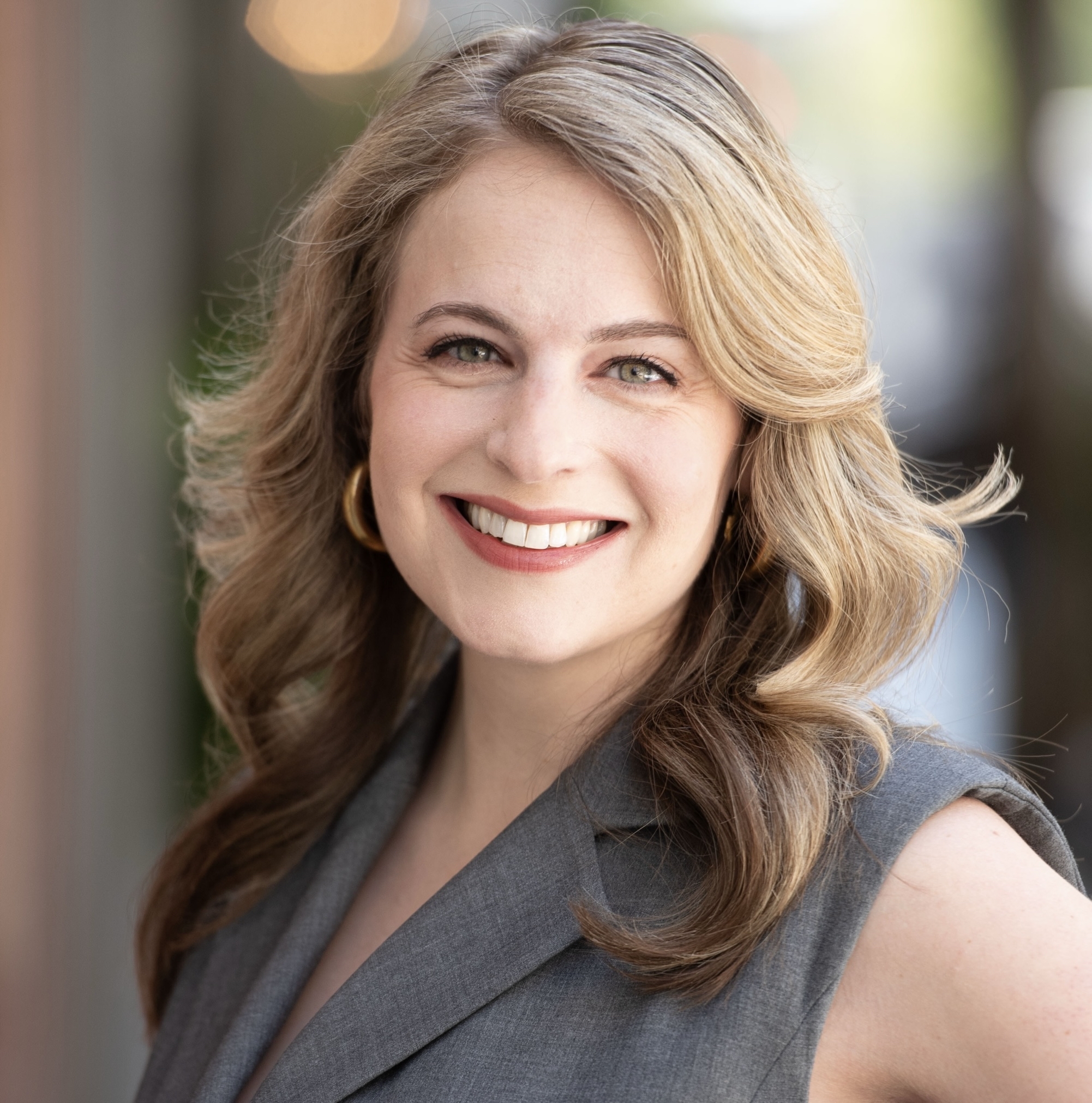
“It’s been a really quiet year in a lot of ways,” Rabbi Jessica Kirschner, executive director of Hillel at Stanford, told J. recently. “Really wonderful Jewish life is still happening and has been happening all through this.”
But the Trump administration’s intense focus on universities, with its stated purpose to root out antisemitism, continues to ramp up, bringing new challenges for Jewish campus leaders throughout the Bay Area — and the country.
In the wake of the Oct. 7, 2023, attack on Israel and the resulting war in Gaza, Kirschner, like other local Hillel directors, worked with the university administration to improve the atmosphere for Jewish and Israeli students. Now, facing scrutiny from the federal government with its “broad brush” approach to fighting antisemitism, which includes detainment of pro-Palestinian activists, she worries whether the crackdown will help or hurt Jewish students.
During the 2023-2024 school year, anti-Israel protests rocked the Stanford campus, culminating in two tent encampments; the first one lasted more than three months. Protesters called for an end to the war in Gaza, and some called for violence against Israel. At one point, a speaker with a history of antisemitic statements was invited to speak.
Kirschner said in May 2024 that the tent encampment violated university policies and was potentially harmful to Jewish and Israeli students. Some of the chants and messages, she said, created “an environment that is alienating, and deeply othering, to Jewish and Israeli students.”

In a recent interview, she noted that while “antisemitism is an issue and does need to be addressed, I think the administration here at Stanford is aware of that and has been and will continue to take steps to address it.”
Meanwhile, the federal government is taking a more aggressive approach, leveraging federal grants and funding if institutions appear unwilling to comply with its demands.
The Trump administration recently took highly publicized punitive actions against Harvard, freezing $2.2 billion in federal grants and $60 million in contracts after Harvard’s president defied federal demands to limit activism on campus, stop DEI efforts and end recognition of pro-Palestinian groups.
The government also has “considered taking steps to freeze an additional $1 billion in grants, initiated numerous investigations of Harvard’s operations, threatened the education of international students, and announced that it is considering a revocation of Harvard’s 501(c)(3) tax-exempt status,” Harvard President Alan M. Garber wrote in a letter to the Harvard community. “These actions have stark real-life consequences for patients, students, faculty, staff, researchers, and the standing of American higher education in the world,” he added.
Stanford President Jonathan Levin and Provost Jenny Martinez wrote an April 15 letter in support of Harvard’s position, stating: “Universities need to address legitimate criticisms with humility and openness. But the way to bring about constructive change is not by destroying the nation’s capacity for scientific research, or through the government taking command of a private institution.”
Kirschner, too, worries about federal funding freezes, and the potential impact that could have on critical cancer research.

“I have a hard time seeing how taking money away from cancer researchers — including Jewish cancer researchers and including Jewish cancer patients, both currently participating in studies and future studies — [is] relevant to the problem that they claim they are trying to address,” Kirschner said.
She is also concerned that such actions, couched as efforts to support the Jewish community on campus, could lead to Jews being scapegoated.
“I think there has always been a danger when we are held up by groups in power as either the answer to other people’s problems or the cause of their problems,” Kirschner said. “I worry that is what is beginning to happen here.”
Concerns about the federal crackdown are coming up in one-on-one coffee chats among San Francisco Hillel staff across five campuses.
“They’re worried about weaponizing antisemitism,” said Roger Feigelson, SF Hillel’s executive director. “If it’s a means to an end, what is the end here? What are you actually trying to do?”
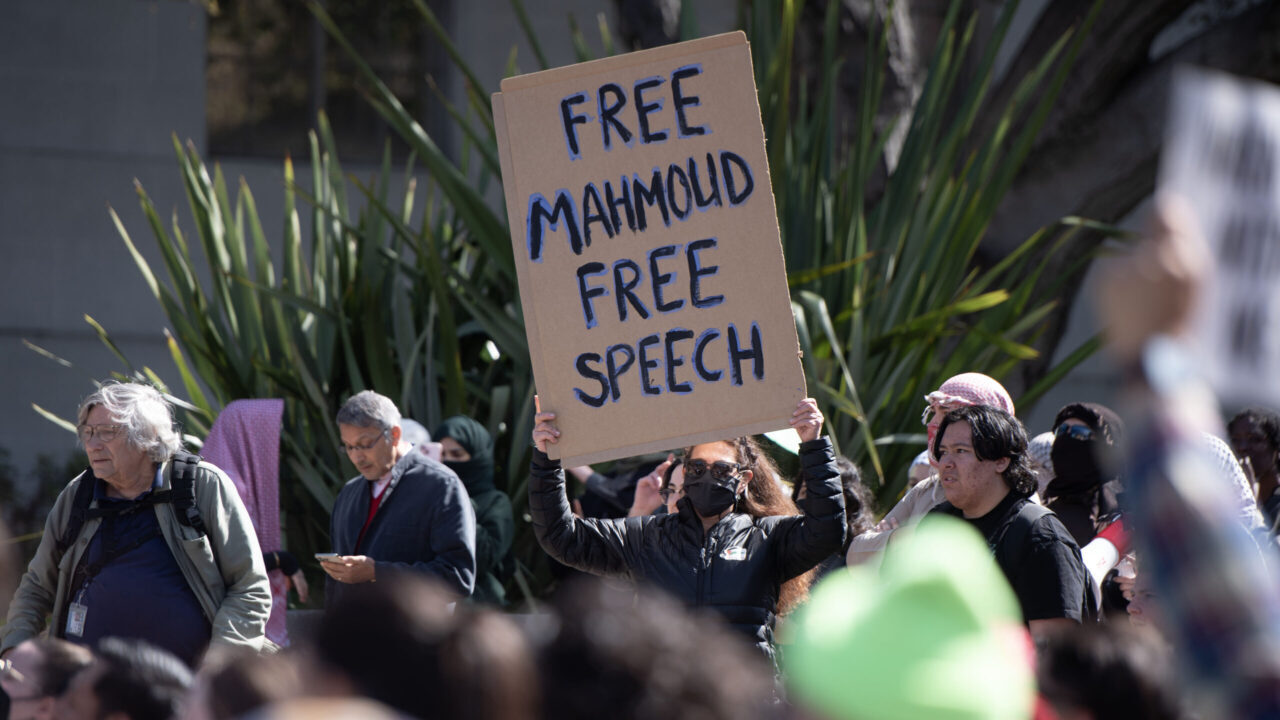
The theme that keeps coming up with students, he said, is outrage over the lack of due process shown to Columbia University graduate Mahmoud Khalil, who was arrested by ICE agents in March for his role in leading pro-Palestinian protests, which federal officials deemed “activities aligned to Hamas.”
“There are students who disagree with Khalil’s stance, and the methods at Columbia, but that doesn’t matter, he still is entitled to due process,” Feigelson recounted.
In recent weeks, more than 1,800 international students and recent graduates across the U.S. were abruptly informed their visas had been revoked, without explanation. U.S. Secretary of State Marco Rubio told reporters on March 28 that the revocations were focused on students who participated in pro-Palestinian campus protests as well as others who had criminal records.
Twenty-three visas were revoked for UC Berkeley students and recent graduates, but weeks later, the Department of Homeland Security reinstated them all, according to Janet Gilmore, a university spokesperson. The same number of visas were revoked and then reinstated at UC Davis, according to the university. At Stanford, seven that had been revoked were reinstated.
The instability that international students faced during these weeks did not result in any discernible backlash toward Jewish students at Berkeley, according to Naomi Ashira Shenassa Toubian, a freshman from Los Angeles who has leadership roles in multiple pro-Israel and Jewish student groups.
Asked how as a Jewish student leader she felt about the heavy-handed approach to tackling antisemitism on campuses, Toubian reframed the question. She wondered why Jewish students were facing so much antisemitism in the first place. “Why is this even happening to any group?” she said.
On top of the actions to fight campus antisemitism and the threats to university funding, the Trump administration also made sweeping cuts toward dismantling the Department of Education. For one San Francisco State University student, those cuts cost her half of the federal scholarship money she relied on to afford university housing.
“It really just kind of came out of nowhere,” said Blue Bartikofsky, a 20-year-old sophomore and a regular at Hillel Shabbat dinners and events.
Her $6,000 in federal scholarships, administered by her Los Angeles public elementary school and high school, were chopped in half to $3,000. To pay for her expenses and get through the school year, she took out a loan from Sallie Mae.
She plans to look for a summer job back home in Whittier. When classes resume in the fall, she said, she probably won’t have enough money to return to S.F. State, where she has been studying microbiology. Her LinkedIn activities include “peer mentor” and “Jewish student leader.”
“My plan is to be able to take classes virtually. I am established at the local community college, I already have a student ID and everything, so if I really need to, I’ll take classes at that community college,” Bartikofsky said.
Leaving the friends and the campus she’s called home for two years won’t be easy.
“My life is here,” she said. “It’s going to be a big change.”