
Teenagers hear a song on TikTok. The beat is catchy. And without realizing it, they begin to sing along — to words that glorify one of history’s most brutal perpetrators of genocide.
That is the danger of the latest release from Kanye West, or Ye.
With his new single “Heil Hitler,” the rapper continues to cross boundaries that should never be breached: He has turned Nazi propaganda into a hook. He has put hate to music. And in doing so, he’s not just expressing a dangerous ideology. He’s injecting it into our cultural bloodstream.
The track appears on an album with songs titled “Gas Chambers,” “WW3” and “Hitler Ye and Jesus.” The artwork features a swastika-style doodle. It dropped on May 8, the 80th anniversary of the defeat of the Nazi regime — timing that feels more like provocation than coincidence.
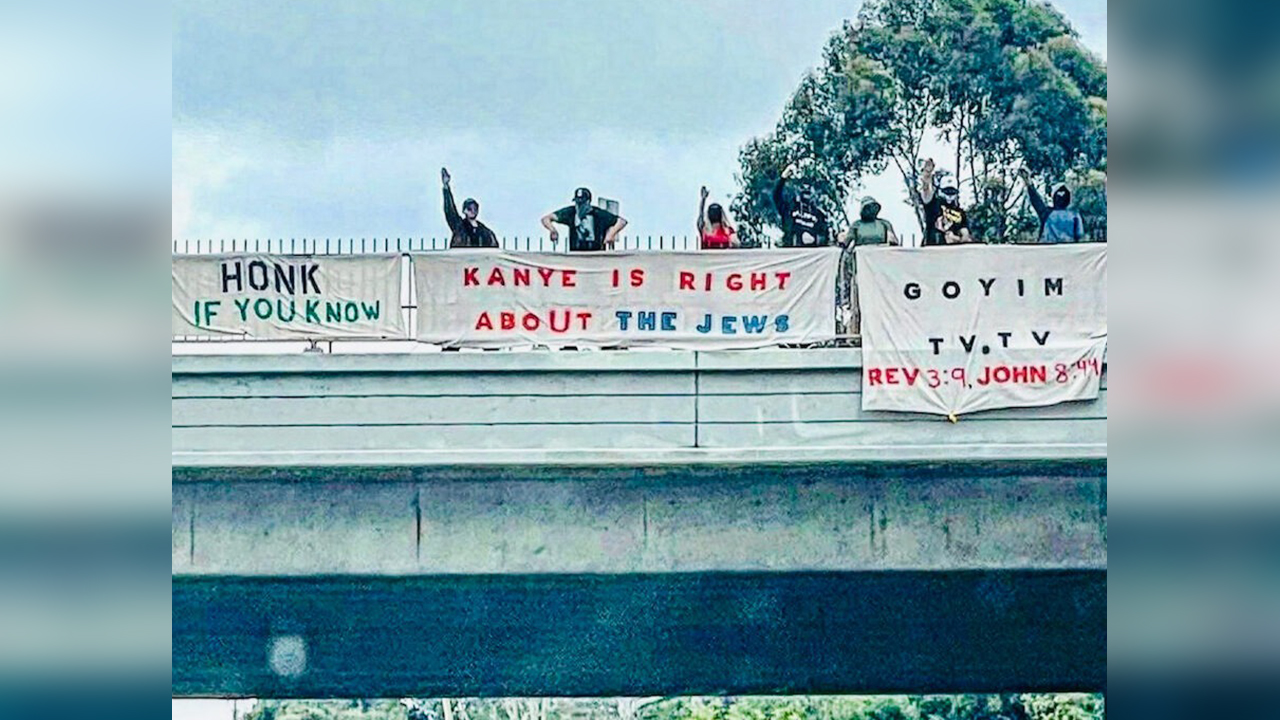
Music is one of the most powerful tools for learning. It’s why we teach children the ABCs through song. When hate speech is delivered with rhythm and repetition by one of the most influential artists of our time (a man with more X followers than there are Jews on Earth), it becomes normalized, mimicked and internalized.
In genocide education, we refer to this as glorifying the perpetrator. It’s when those responsible for unimaginable harm are not only remembered but celebrated. Across cultures, this is known as a final stage of genocide: when the memory of the victims is overshadowed by the heroizing of those who caused their suffering.
A colleague recently told me that her young Jewish son wanted to buy the album. He knew the title. He’d seen the controversy. But as he put it, “The music sounds good.” That’s what makes this moment so alarming. Even Jewish kids, fully aware of the content, still feel drawn to it. When hate is packaged as entertainment, it becomes easy to overlook or accept what it really is.
At the Jewish Family and Children’s Services Holocaust Center, we navigate the rise of hate speech — in school hallways, social media feeds and, now, playlists. Students and teachers come to us looking for clarity, tools and guidance.
We tell them what history has taught us: The Holocaust didn’t begin with the Final Solution. It began decades earlier, and it began with words. With “Mein Kampf,” with speeches in beer halls. With rhetoric that was mocked, then tolerated, then embraced. In Nazi Germany, when people started saying “Heil Hitler” because it was expected, the machinery of genocide was already in motion.
The only way forward is to change what we teach children because what they learn today shapes the values of tomorrow. Holocaust education must do more than recount history. It must build understanding, foster identity and instill pride. For many young people, Holocaust education may be their first introduction to Jewish life. That’s why we must teach the richness of Jewish culture, values and contributions — not just our trauma.
Teaching the Holocaust in isolation risks reducing Jewish identity to victimhood. We must also answer: Who are the Jewish people? What do we stand for? Where does the Holocaust fit into the broader arc of Jewish history? And why is it in everyone’s interest to create a just and inclusive society?
During May’s Jewish American Heritage Month, we should call upon our schools to teach about Jewish contributions — from the invention of antibiotics to the words of Emma Lazarus engraved on the Statue of Liberty. This isn’t just about the past; it’s about the kind of society we want to build.
That’s why I’m proud to work with the state of California to meet this urgent need. Through the JFCS-led California Teachers Collaborative, we are creating standards-aligned curricula and educational tools designed to reach every student and teacher in the state. Our resources do more than teach history. They build empathy, critical thinking and moral courage and include meaningful content about Jewish identity for the ethnic studies classroom.
To sustain and expand this work, we are building Northern California’s first major Holocaust and genocide education center right here in the Bay Area. It will be a hub for students, educators and the public to engage with survivor testimony, interactive exhibits and deeper understanding of what happens when hate goes unchecked.
Education is our greatest tool in fighting hate and confronting antisemitism. As a parent, I want my daughters to associate their Jewish identity with pride, not fear. Now is the time to act with clarity and courage. Urge your civic leaders to ensure Holocaust and genocide education is not just preserved but prioritized, starting in your own community.
Repeating hate speech, whether on social media or in a song, is never neutral. It fuels hate, shapes young minds and shifts what society is willing to tolerate. We must invest in the future of our society, work together and use our voices. The next generation is watching us.