
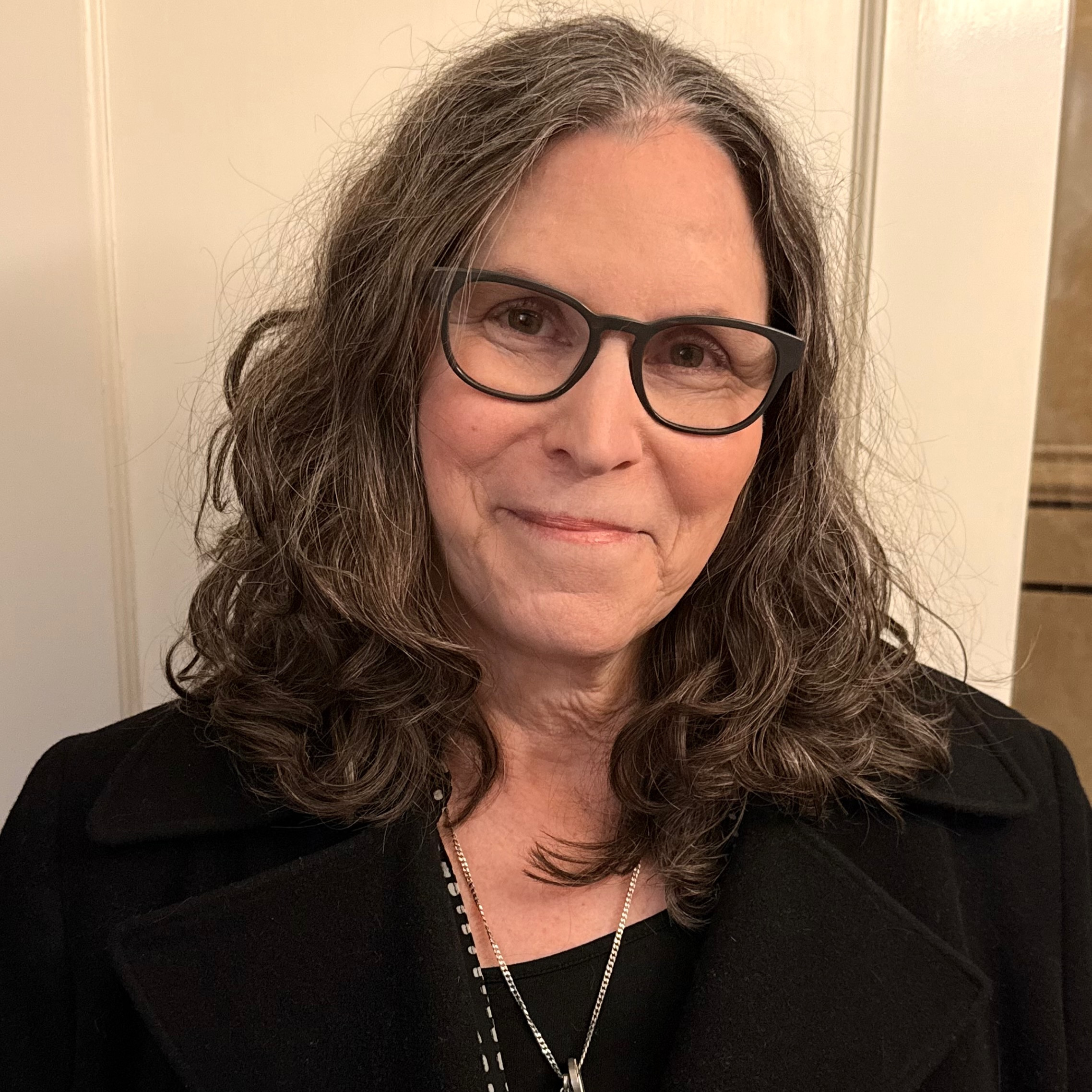

Sasha Velour is one of the most imaginative drag stars working today. Known for her fantastical, multimedia shows, she’s a storyteller at heart whose theatrical performances routinely surprise and move her audiences.
But before she became Sasha Velour, she was young Alexander (Sasha) Hedges Steinberg, who celebrated a bar mitzvah and confirmation in Urbana, Illinois, and was always finding ways to get on stage.
“My first performance gig was doing puppet shows for Sunday school,” she recalled ahead of her show coming to Berkeley Rep in June. “I was supposed to be assisting a teacher, and I ended up turning it into a performance opportunity, like I did with everything, turning stuffed animals and Barbie dolls into marionettes so I could act out traditional fables and stories from the Torah.”

It must have been a good training ground. Velour, 37, is now world-famous after winning the TV reality competition “RuPaul’s Drag Race” in the 2017 season, memorably delivering an iconic lip-sync “reveal” when she released red rose petals hidden inside her gloves and wig. She went on to tour in 80 cities around the globe.
At home in New York, she launched a long-running revue that gives a stage to her fellow drag queens. In 2023, she wrote and illustrated her first book, “The Big Reveal: An Illustrated Manifesto of Drag.” Part drag history and part memoir, it leans heavily into family stories.
She was born in Berkeley, but before she was a year old her family began moving around the country for jobs in academia. Velour still feels a strong pull toward the Bay Area, where her parents grew up and where she would frequently come to visit her grandparents. Her father, Russian history professor emeritus Mark Steinberg, attended UC Santa Cruz and earned his Ph.D. at UC Berkeley. Her mother, Jane Hedges, was an academic editor who grew up in Palo Alto. (Hedges died of cancer in 2015, and Velour continues to shave her head in her mother’s memory.)
Velour herself has some pretty sparkly credentials. She graduated from Vassar in 2009, won a yearlong Fulbright scholarship to study Russian art in Moscow and St. Petersburg, and earned an MFA in comic illustration. Her drag revue was made into a documentary series in 2020. She was profiled in the New Yorker in 2023 and was invited to illustrate the cover. And last year, she was a host on the Peabody-winning HBO series “We’re Here.”
Next month Velour will return to where it all started, presenting the stage version of her book from June 4 to 15 at Berkeley Rep. She said that family history and her own story are the core of “A Big Reveal Live Show!”
This interview has been edited for length and clarity.
J.: Tell us about the “Big Reveal” book, and why you decided to write it.
Sasha Velour: It’s a memoir, but it’s really a history of drag and a philosophy of what the art of drag is, as told by someone who does it. As basic as that sounds, that book has never existed before. And I felt like it was impossible to tell that story without infusing it with the story of how I got there, how my family and my context and my culture inform the way that I do drag and the way that I see it. I think my family’s own peculiar way of loving history and telling ancestral stories generation to generation, and my insistence on always carrying this history with me, shaped my approach to drag.

How did you turn all of that into a live show?
The drag show was the destiny of the book. I wanted to take some of my favorite stories that I felt best spoke to the fears of drag and the political backlash against it, and the stories from my childhood, showing videos of me as a little kid playing with drag and expressing myself in very queer ways before I had that kind of language or self-awareness. I think that kind of speaks the truth more clearly than anything can.
I wanted to put that on stage and then transform those stories into drag numbers, which are metaphors. They’re operas. They are multimedia, visual, emotional gestures, and they all kind of circle around the idea of a reveal, which is something I’m known for in drag — about three-quarters of the way through a number you do a surprise that the audience didn’t see coming, that somehow makes the story all fit together in a new way.
Can someone who is new to drag still enjoy it?
I always say that drag is for everyone. It’s about stepping into a world of fantasy where you can access all the different sides of yourself. I like to throw them all together and exaggerate them and make my outfits as true to me as I can, which does involve lipstick and giant feather headdresses and absurdly shaped costumes and very bright colors. For me, it’s about the freedom to just play and have fun, which I think is what theater and art are perfect for.
In what ways do your Jewish background and your drag identity intersect?
My dad’s family was very Jewish. My Grandma Dina especially features heavily in my book and also in the stage adaptation, because she was the first glamorous person I ever encountered. Her Judaism and her Jewish family, literally traveling around the world to escape antisemitism and find opportunities — that shaped me so much. She was very comfortable around queer people, too, maybe just from being in San Francisco. She went to a gay hair stylist, and she would go to Finocchio’s and see the [female] impersonations there. She had a love of sequins, and she spent an hour doing her makeup and hair, and there was no one else in my family like that, so I immediately connected with that. There was some spark of her that I felt I must have in me too.

How far back did you go in researching the history of drag?
I definitely tiptoe through some very bold claims in the book (laughs) about the origins of language and performance and storytelling in Indigenous societies around the world that had clear examples of gender-expansive identities. But obviously language like trans and drag and gay didn’t exist. It’s hard to say how people saw themselves, but the fact that they crossed genders on and off stage definitely rings a little bell of recognition in my head. I think it’s clear these impulses are nothing new. There have been times when people saw it as the height of art or even religion, or as something sacred, to be able to live in between genders.
And yet we seem to be at a low today when it comes to full acceptance.
It’s always people who don’t know, like, a trans person or a nonbinary person firsthand, or haven’t seen drag themselves, who have the strongest negative opinions about it. Politically it’s a low, but culturally this is a high point. There’s more knowledge about the possibilities that are out there for people, especially for young people, than I’ve ever experienced in my life.
You have a nonbinary name yourself. Is Sasha your given name?
My legal name is Alexander, but I was called Sasha from the moment I was born. My family wanted me to have a Russian name to honor my dad’s family’s legacy. My grandma spoke Russian and Yiddish when she came to San Francisco in the ’30s. So they chose a gender-neutral name for me, and when I started doing drag, I was like, well, I already have a superstar nonbinary drag name that fits me perfectly.

You spent a year studying in Russia on a Fulbright scholarship. Do you speak the language of your forebears, and do you plan to visit again?
It’s less fluent than it used to be, but I did study Russian. I don’t think I will be going back anytime soon. My dad has been banned for speaking out against Putin, and there’s so much fear of gay propaganda. I think given my reputation, I would probably be banned as well. But I’ve connected with people from all over. I’ve been able to connect with Ukrainians, who are very open, so there’s a great drag scene in Ukraine. There’s great drag in Russia, too, but it’s not a safe space for people to take part in that culture. I dream of getting to go to Ukraine or to Russia and perform in a safe space for all people.
Coming back around to the show, how did you end up bringing it to Berkeley?
It hadn’t dawned on me that theater spaces like Berkeley Rep, which is one of the most respected theaters in the world, especially for new work, would be open to someone doing drag, or to someone like me. I don’t have a famous theater producer or director attached to this project. It’s me and my team of artists that I work with all the time, but we’re all kind of on the outside of the institution of theater. But we just thought of asking, do you have a space for us? Are you interested? And the excitement that was there really surprised and humbled me in this time where we’re wondering whether the art is going to be illegal, or whether our lives or genders are going to be illegal. The fact that there are institutions and communities standing up for inclusion gives me a lot of hope.
Looking forward to returning to the Bay Area?
Many of my fondest memories are there. My grandparents lived there until they passed away, so I would go back two times a year and always loved it. And when my mom passed away, we spread her ashes into the Pacific Ocean because she grew up in Palo Alto. So my family, though deceased, is still in the Bay Area. Yeah, in the bay (laughs). And so it’s like a sacred emotional space every time I go and visit, and I feel like family is always going to be there.