

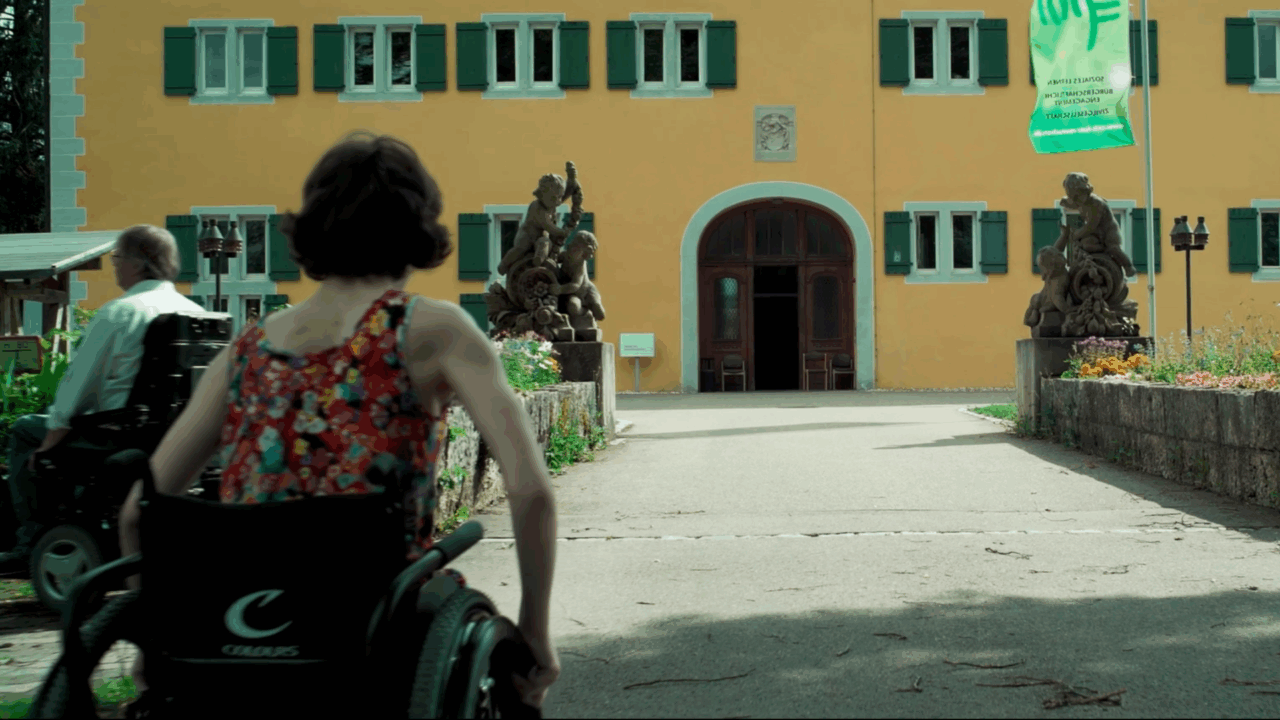
Director Cameron Mitchell describes this documentary as the first feature-length film focusing on the Nazi’s Aktion T4 program, which oversaw the murder of more than 93,000 disabled people from 1939 to 1942. Virtually all of them German citizens confined to psychiatric hospitals, they were the earliest victims of the gas chambers, which were often set up in the very institutions that housed them.
With the active complicity of the German medical and scientific communities, the Nazis promoted a eugenics philosophy — based on one developed in the United States — that advocated the removal of “those whose lives are not worth living” in order to cut government spending on so-called “useless eaters.” Ultimately some 300,000 disabled people were murdered in the Holocaust.
Whereas the surviving family members of Jews and other groups killed by the Nazis honored their memories, putting up memorials and punishing the perpetrators, the families of the disabled victims felt shame and buried their relatives’ stories.
The power of this film comes from its insistence on centering the dignity of the disabled. The director’s father, a disability studies professor who himself uses a wheelchair, acts as the primary narrator, and many of the experts interviewed are also academics with disabilities. Mitchell’s aim is not only to expose this horrific, little-known aspect of the Holocaust, but to give its victims back their humanity. It is, ultimately, an uplifting film with a highly relevant warning about the dangers of fascism today in the United States and around the world.