

I have long felt drawn to the idea of monasticism, both for its retreat from worldly concerns and for its dedication to living in an abiding awareness of God’s presence.
Because my interest in monasticism developed after I found love, had a family and became engaged in worldly matters, retreating from that world was not desirable. However, I remained committed to cultivating an awareness of God’s presence and, happily, through my work as a palliative care chaplain, I have discovered the possibility of what I call “domesticated monasticism.”
In my work, I help translate medical information for patients in situations where doctors might be struggling to effectively communicate with them.
I also help identify a patient’s values, to ensure alignment of medical interventions; to provide education and guidance around decision-making; and to support palliative care physicians in their efforts to manage symptoms and ensure comfort.
All of this comes in the context of providing spiritual care and emotional support. As such, I am present and responsive to the emotional, existential, psychological and spiritual impact of serious illness on the patient, their caregivers and their loved ones.
In so doing, I place myself in the service of others, often at the most challenging times in their lives. I have discovered — and have heard this echoed by colleagues in the field — that, even as I serve others, I am rewarded for my care.
One of the rewards of chaplaincy is that it provides me with the opportunity to approximate the monastic life.
But how?
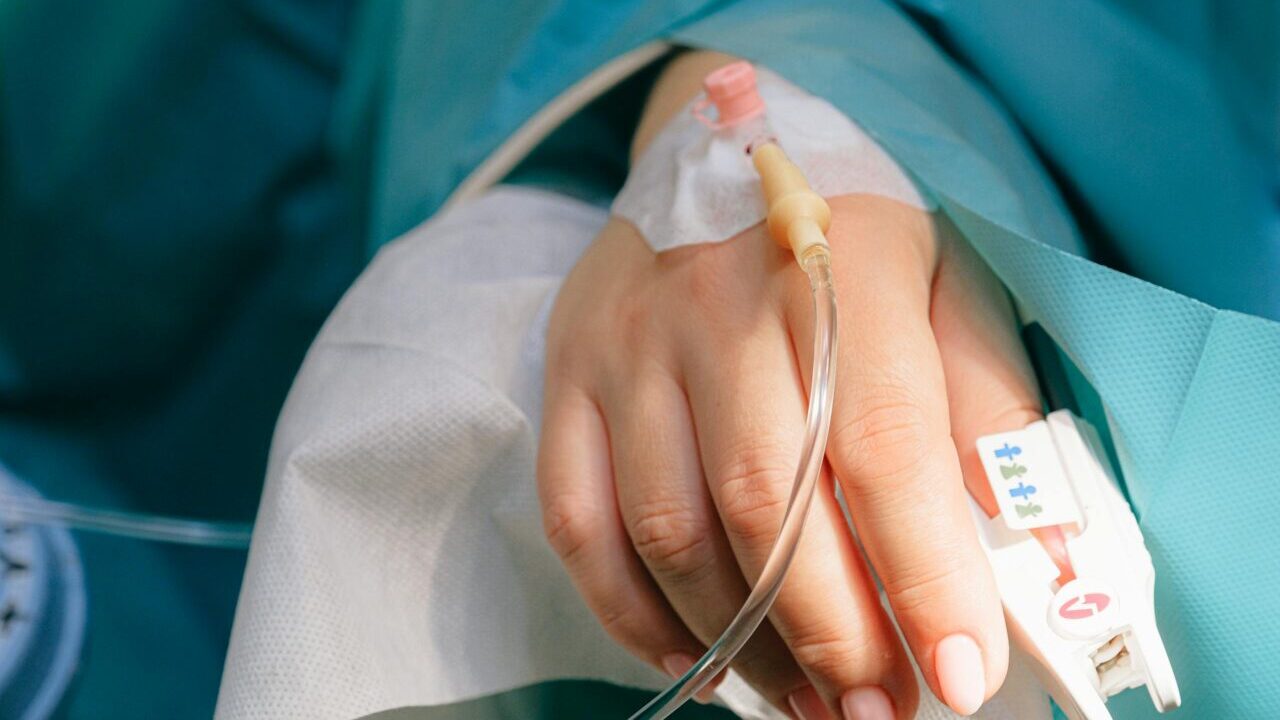
I spend much of my time with people who are seriously ill and dying. As I see things, to be effective as a spiritual caregiver, I must remain mindful at all times of God’s presence. To use another word, I must remain attuned to the sanctity of what is taking place.
I embody this attunement by attending to thoughts, emotions and sensations; to the way I am breathing; to my body language and facial expressions; to the tone and volume of my voice; and to the words I choose to say or, as is more often the case, choose not to say.
All of this is accomplished by maintaining a state of awareness in which the distinction between inner and outer dissolves. I perceive the thoughts arising in the mind in just the same way as I perceive the patient lying in front of me.
By focusing on these ways of being, I am more present, more attuned and more supportive of the people I serve.
Recently, I sat with a patient who is suffering from terminal cancer. They shared with me that the youngest of their children had recently turned 18 and that, as a result, they now felt able to accept their approaching death.
They said that their work was done and that, while they would like more time, they were accepting of “God’s will.”
This patient was able to greet their reality with dignity, laughter, a passing acknowledgement of sadness and, ultimately, acceptance.
This reminds me of the early months of the Covid pandemic, when I felt called to fulfill the 613th mitzvah: writing a copy of the Torah (Deuteronomy 31:19).
I did so, one chapter at a time, one day at a time.
Each time I was about to write one of the Divine names (YHWH, Elohim), I would pause, gather myself, become intentionally mindful of the presence of God, and then proceed to write. Gradually, the practice habituated my mind to an awareness of God’s presence that lingered even when I wasn’t copying Divine names.
Similarly, each encounter with the seriously ill and dying is like copying those Divine names.
By remaining aware of the presence of God in patient encounters, I am able to offer the kind of care that is needed; which is to say, care that communicates to the patient that my attention is undivided. Giving undivided attention is among the most caring things we can do for one another.
Through both practices — writing the Divine names and sitting with patients and their loved ones — I feel that I have come to realize my long-held desire to pursue a monastic life — a life where material things take a back seat to a focus on the transcendent; a life in which the hospital, the world beyond it and life itself are the monastery.