

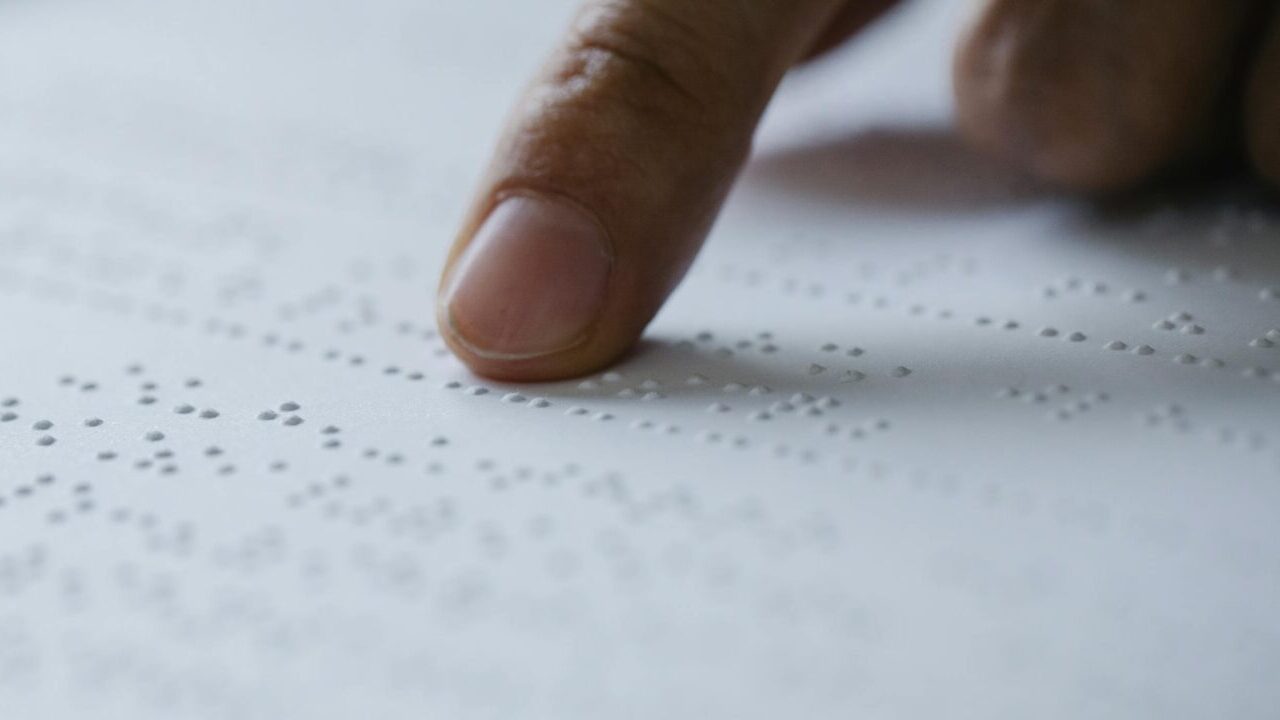
JBI Library, a free service with a catalog of more than 16,000 audio, Braille and large-print Jewish books, will send High Holiday liturgy and resources by request, at no cost, to people with vision, reading and physical disabilities. Many of the materials are also downloadable.
Founded as the Jewish Braille Institute in 1931, the New York-based JBI Library helps people with disabilities overcome the challenges in finding accessible Jewish literature and liturgy. It also provides resources to synagogues and Jewish institutions to support accessibility.
“Our goal is simple. No one should ever feel like Jewish life is out of reach because of a vision or print disability,” said executive director Michelle Shapiro Abraham. “We’re making it possible for everyone to take part in Jewish life in a way that is personally meaningful.”
Jews with disabilities can register with JBI and request books both virtual and physical; materials ship at no cost. There is also a range of downloadable High Holiday materials, including Rosh Hashanah and Yom Kippur machzorim (Reform, Orthodox, Conservative and Sephardi versions) and family-friendly resources such as “A Time to Grow: A PJ Library Family Guide for Starting the Jewish New Year.”
The library serves some 5,000 people annually, with popular offerings in the collection including large-print liturgical books, available in English, Hebrew, Russian and other languages. Audiobooks are popular year-round, with about 1,400 books requested every month. The catalog also includes fiction, history, biography, short stories, humor, philosophy, poetry, Jewish studies, memoirs and cookbooks.
“I have been using JBI’s services ever since I was a little girl to learn Hebrew, prepare for my bat mitzvah, and connect with my community,” a longtime patron told JBI. “Decades later, I am still grateful every day for JBI. … JBI helps me feel connected all year round — but especially during the holidays.”
JBI Library is an associate agency of the National Library Service for the Blind and Print Disabled at the Library of Congress. More information can be found at jbilibrary.org.