

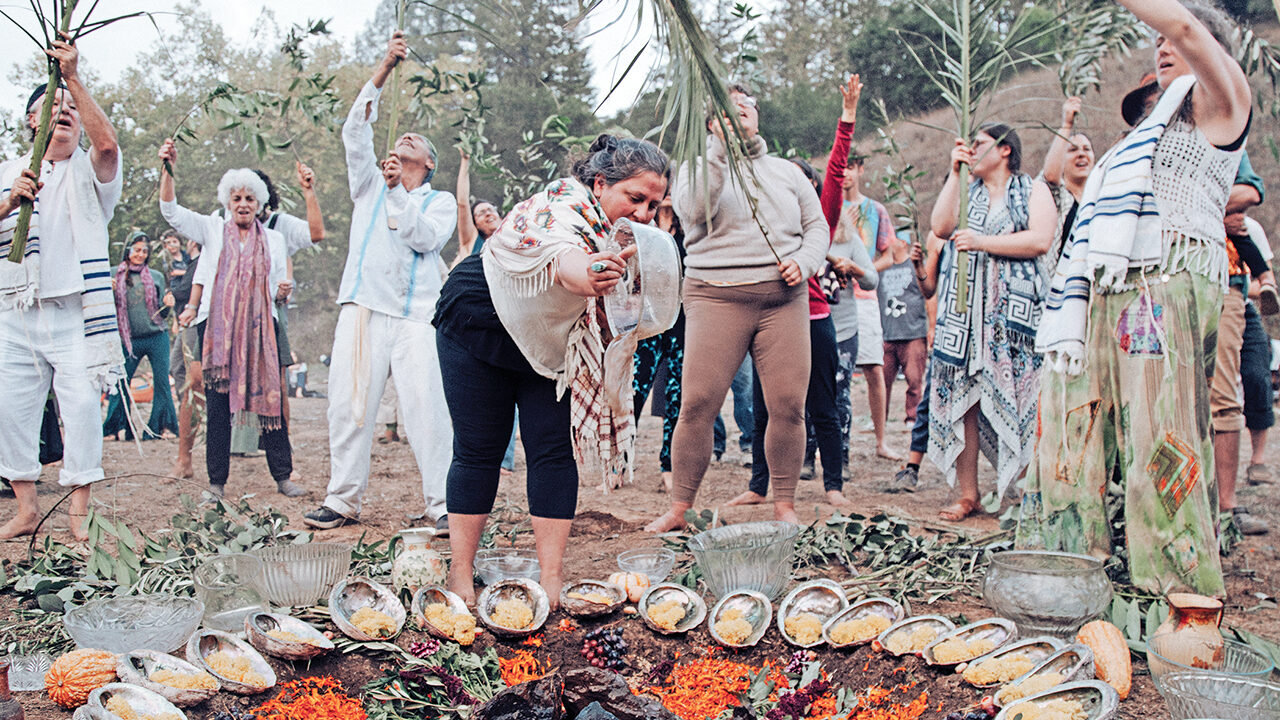
“Why is God constantly asking us to celebrate while there is immense suffering?” a student asked me last year during Sukkot.
Sukkot has multiple names, including Z’man Simchateinu, the Season of Our Joy. Yet at its heart, the Festival of Booths remembers the 40 years of wandering of our ancestors, whose lives were marked by fragility and longing. This is not unique to Sukkot. Again and again, Jewish tradition binds the memory of pain with acts of celebration. Something tragic happens, we survive, and then we sing. We tell ourselves to remember, lest we forget.
Too often, though, we go through the motions. We read the Haggadah, we build the sukkah, we say the words “we remember,” but it is not a living memory. Few of us can imagine the exhaustion of wandering without shelter, the cold of the night winds, the way that joy must have felt like defiance.
Since Oct. 7, 2023, that distance has collapsed. The tension between grief and joy is no longer abstract, it is the air we breathe. That day, which should have been filled with dancing for Simchat Torah, marked the beginning of two years of unbearable loss.
This year, the first full day of Sukkot coincides with Oct. 7.
How do we celebrate while grief is still raw? Why does God ask us to hold joy when our hearts are heavy, when our communities are strained, when we feel so far from one another?

Like many, I have felt the temptation to retreat, to stay quiet, to keep myself hidden, to risk less. What if no one can hold my pain? What if the disagreements and divisions cannot be bridged? I have felt friendships grow thinner, conversations become more cautious, relationships suddenly feel unable to hold the fullness of who we are. Even when we long to reach for one another like a life raft, it feels easier to drift alone.
But Sukkot was made for times such as these. It is a holiday that embraces vulnerability. It asks us to leave behind the illusion of permanence, to sleep in fragile huts with roofs that let the rain through, to be reminded that no house is truly safe and that our shelter lies in one another.
Jewish tradition teaches that community is not a luxury. It is a necessity. We cannot recite the Mourner’s Kaddish without a minyan. We cannot speak the wedding blessings without witnesses. We are called to stand with one another in grief and in joy. On Sukkot, we are commanded to open the walls of the sukkah, to welcome guests both real and imagined, to make space for brokenness and laughter side by side.
In this way, Sukkot teaches us that joy is not an individual possession. It is something we create together.
This year, celebrating Z’man Simchateinu, the Season of Our Joy, will not mean setting grief aside. It will mean bringing it into the sukkah, trusting that others will help us hold it and offering to hold theirs in return. It will mean inviting in those who feel far away, and perhaps even those we have disagreed with. It will mean remembering that even when the winds rise and the rains fall, we, Am Yisrael, will still gather to eat, to bless and to sing.
This is the paradox and the promise of our tradition: to remember suffering, to endure loss and still to celebrate life. Two years after Oct. 7, I hold close the words that have become an anchor: Am Yisrael chai. The people of Israel will live.