

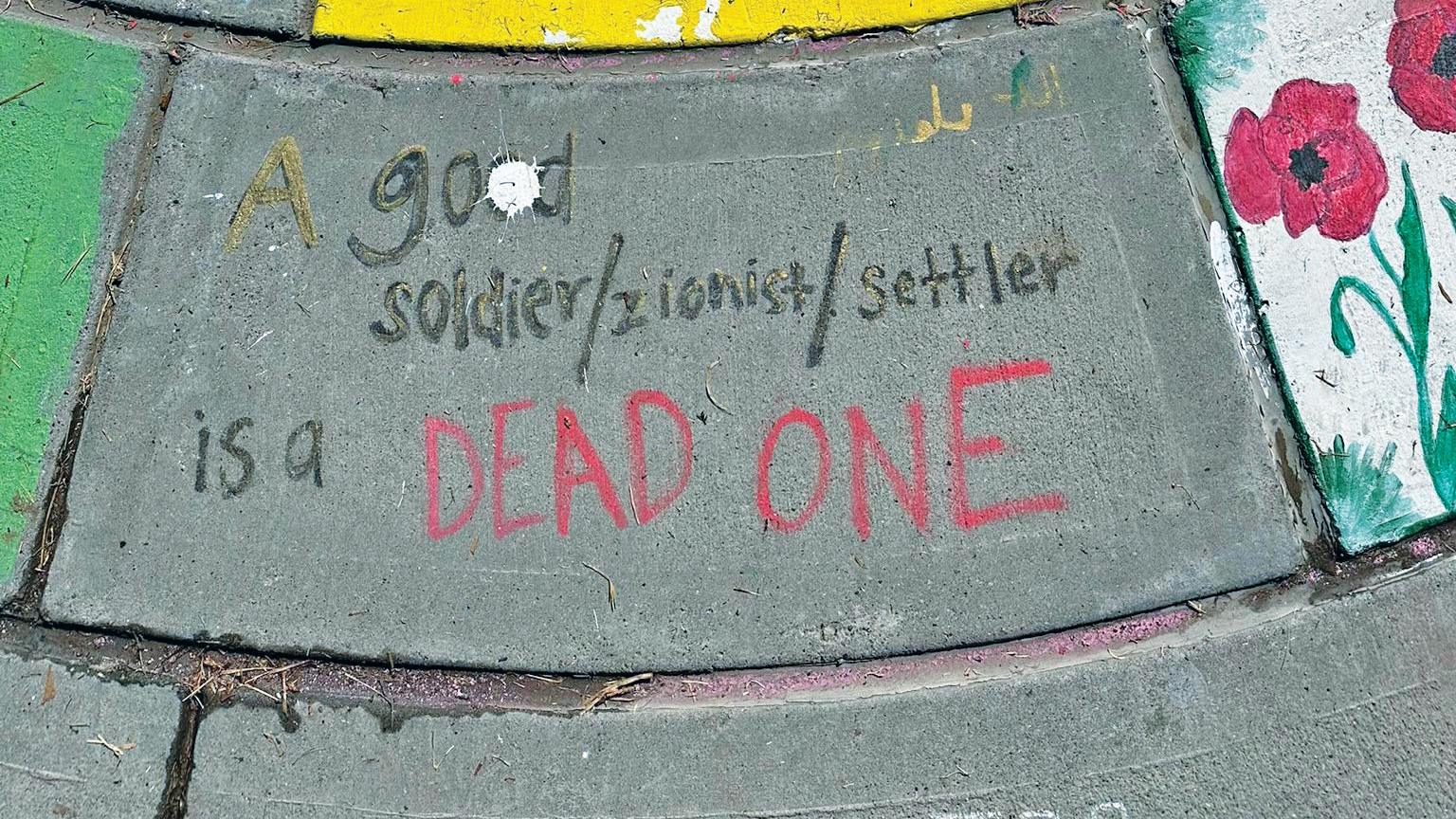
Since Oct. 7, much of the discussion of rising antisemitism has devolved into polarized arguments over what is or isn’t antisemitic. This narrative distracts us from a more urgent problem: Many Jews fear for their safety, and it’s impacting their mental health. Whether a policy, behavior, or rhetoric fits a certain definition of antisemitism becomes irrelevant when the negative psychological impact on Jewish community members is real and measurable.
As a professor of human development at UC Davis, I study the impacts of stress on health and well-being. Based on data from a diverse sample of over 200 Jews in communities ranging from secular to ultra-religious, my colleagues and I published a scientific article revealing that the mental health of American Jews has significantly deteriorated since Oct. 7, 2023. Since the Hamas-led massacre in southern Israel on that date, we identified a 30% increase in depressive symptoms in respondents and an increase of over 45% in symptoms of anxiety. Notably, these symptoms are being driven by Jews’ increasing concerns about antisemitism here in the United States. Indeed, our data shows a three-fold increase in Jewish parents encouraging their children to hide their Jewish identity.
The results of our study, and others, show that we’ve crossed a line from isolated incidents to systematic intimidation that is reshaping the lives of American Jews. Unfortunately, instead of discussing these real-world impacts, the conversation is focused on whether anti-Zionist activities are antisemitic. An article in the Washington Post about the couple murdered exiting the Capital Jewish Museum concludes that the attack was not antisemitic. An op-ed in the New York Times asserts that this attack and the firebombing of twelve Jews in Boulder, Colorado were anti-Zionist political acts rather than antisemitism.
These semantics provide little comfort for the majority of Jews who understand anti-Zionist attacks to be a broad threat to Jewish safety. The focus should be less on attempting to define an attack, threat, or slogan based on the political leanings of the person involved, and more on addressing the measurable fears and anxieties of the Jewish community.
Americans can and will agree or disagree about the extent to which any act is antisemitic, sexist, racist, homophobic or Islamophobic, and should talk freely and respectfully about these differences in opinion. However, definitional debates about antisemitism are being weaponized to obstruct efforts to address the fact that whether or not these acts are antisemitic, they have a harmful impact on Jews living in the U.S.
Just as decades of research reveals that racism is a systemic public health concern, lowering life expectancy, eroding mental health and impacting conditions like heart disease among Black, Latino and Asian Americans, our research shows that antisemitism is also a public health concern. We need to extend our focus beyond adjudicating definitions of antisemitism and start treating the harm to the Jewish community as the public health crisis it is.
Clinical and scientific progress depends on evidence-based approaches without political interference. As a start, policy makers should support data collection efforts on the health, wellbeing, and safety concerns of all community members, including Jewish residents. Federal attempts to dismantle the primary institutions who fund cutting-edge science, like the Centers for Disease Control or the National Institutes of Health, or canceling millions of dollars of in-progress grants, will most certainly undermine data-driven approaches to solving the world’s many pressing problems, including antisemitism.
Based on the data, community building, educational, and therapeutic interventions can be created to address the individual and community factors that heighten mental health risks in Jews and ultimately prevent the root causes of these problems. Although it may sound obvious, effective public health interventions focus on reducing harm, not adjudicating motivation.
Meanwhile, communities need to ensure the mental health needs and safety concerns of all residents, including Jews, are taken seriously. A recent report on how Oct. 7 has impacted the Jewish community worldwide demonstrates that Jews who express distress about Oct. 7 and rising antisemitism often encounter traumatic invalidation, or the minimization, denial, or justification of their experiences.
Trauma-informed training for municipal service providers, mental health clinicians, educational staff and other public-facing personnel must include the knowledge, skills and awareness to understand and respect the unique cultural and discriminatory experiences of Jews in the diaspora.
Without this approach, service providers are ill-prepared to serve their communities. The Human Relations Commission in Davis, my hometown, recently issued a report that the three largest Jewish organizations in the area have all condemned. The report was purportedly created to document concerns of the local Muslim, Arab, Palestinian and ally communities. But these Jewish institutions sound the alarm that the report relies on antisemitic tropes, vilifies Zionists and demonizes Jews who talk about antisemitism.
Unfortunately, the commission has declined to address the report’s impact on Jews’ sense of safety and belonging. Worse, the commission defends the report as necessary for promoting equity and justice. It should go without saying that it is possible to document the fears and concerns of one community, without demonizing and scapegoating another.
Public health and community safety are not a zero-sum game. Policy responses should be based on data about what reduces harm and promotes safety for all communities, not symbolic gestures that might help one group while undermining another. Commissions and policy makers who ignore the health and safety concerns of their Jewish residents as ideologically inconvenient, have abandoned the scientific process and their mandate to serve the community.
A public health approach of data collection and data-driven interventions would move us beyond debates around definitions and other efforts to dismiss Jews’ concerns, to address the systemic factors that undermine Jewish safety, health and healing.