

I’ve been feeling a tug of unease as Thanksgiving approaches.
On paper, it’s supposed to be simple: a day to cook too much, eat too much, be grateful. But in our house, a mixed Jewish-Salvadoran family, Thanksgiving doesn’t feel so simple this year.
When I was growing up, my parents set the table with brisket and kugel alongside the turkey. Gratitude, my parents say, is the most Jewish thing you can practice. When I married my husband, George, whose family came here from El Salvador in the late 1980s, a new set of traditions was thrown into the mix.
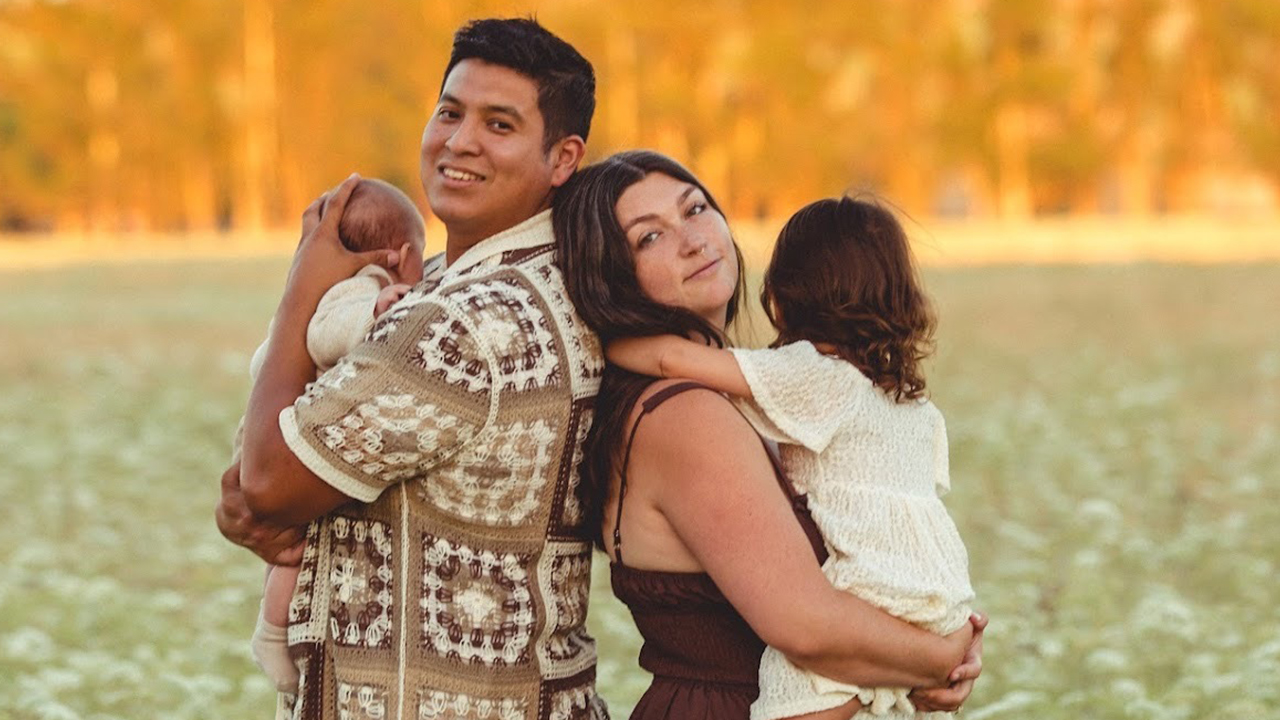
Now we feast on traditional fare like mashed potatoes and pumpkin pie plus panes con pavo, Salvadoran-style turkey sandwiches. We say todah rabah and gracias a Dios, a clumsy but heartfelt blend of blessings. We want our daughter, and now our 5 month-old son, to know that being mixed doesn’t mean being divided and that diversity should be celebrated.
But this year, things just feel different.
I’ve been struggling with the weight of raising children who are a double minority. I feel responsible to them as a mother and as a Jew, to raise them to be loud and proud of both their heritages. But right now, I fear for their safety. My husband is less fearful – he’s angry. He’s had plenty of experience watching over his shoulder for ICE vans, an all-too real boogeyman. He’s angry at the broken American dream, the Americans who seem to support what’s going on, and the cruel helplessness he feels watching his homeland turned into a megaprison.
It’s hard to feel patriotic when your family’s safety depends on the mood of the country. It’s hard to bow your head in thanks when so many others are being hunted. This year, I can’t help but wonder whether celebrating Thanksgiving means ignoring the parts of America that would rather my family wasn’t here.
And then there’s the deeper history I can’t quite shake: how this same country that once welcomed my suegros (in-laws) also helped create the reasons they had to leave. During El Salvador’s civil war, U.S. policy poured money and weapons into the conflict that drove thousands of families north. People like my suegros, who crossed deserts not out of choice, but survival, and endured hardships many of us could never fathom.
Sometimes, as I pass cans of yams and bags of marshmallows in the grocery store, I think about that strange circle of cause and consequence: how a nation that fueled their homeland’s suffering and whose government is against us could still be the place we’re supposed to give thanks in.
But still, we’ll cook. I’ll say Shehecheyanu and Hamotzi. George will call his parents, who will be home in El Salvador visiting loved ones left behind.
I don’t think Thanksgiving will ever be uncomplicated for us again, but maybe that’s all right. In a way, wrestling with the holiday makes it feel more Jewish than ever. We will give thanks for what we’ve built here — and we’ll pray that maybe next year, things will be different.