

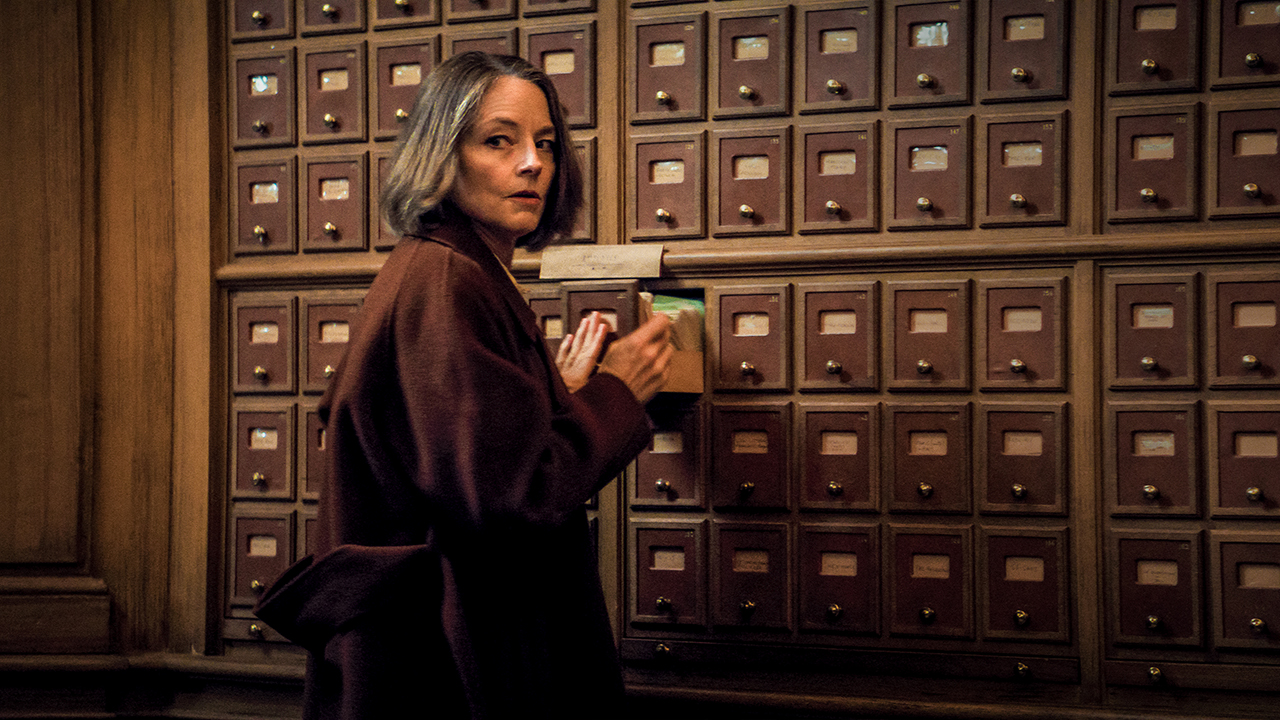
Psychiatrist Liliane Steiner may be losing her grip.
That’s the premise of a new French movie, “A Private Life,” opening Jan. 16 in the Bay Area and starring Jodie Foster in her first French-language leading role.
In this tense psychological whodunnit threaded with comic elements, Steiner’s patient has committed suicide with drugs that Steiner prescribed. Or was it murder? Steiner is convinced that Paula Cohen-Solal (Virginie Efira) didn’t kill herself. Steiner then enlists the help of her ex-husband (Daniel Auteuil).
While the premise isn’t Jewish per se, French Jewish director Rebecca Zlotowski has created a film in which Jewish identity and history are intertwined. In one sequence, Steiner sees herself caught up in a Nazi roundup during the Holocaust. There’s even a dybbuk that makes an appearance of a sort.
“It doesn’t take itself too seriously,” Jodie Foster said in a Q&A about the film sent to J. “Just like Rebecca, who is intellectually very strong — she’s done a lot of studying, read many books — but who can also easily laugh at herself. She loves that self-deprecating humor! And then there’s her very strong Jewish identity, which allows her to embrace, with humor, a kind of primal, raw despair.”
Zlotowski has spoken in interviews about the way in which her Jewish identity informed Foster’s character.
“As a French woman from Jewish culture, it’s something that is connected to my family, but also a very interesting playground. It is very interesting narratively,” she told the Jewish Chronicle.
The plot, in which Steiner investigates something that may or may not be true while trying to figure out her relationship with her ex, has drawn comparisons to Nancy Drew and the TV show “Only Murders in the Building.” The film plays with possibilities, both supernatural and prosaic ones, as Steiner obsesses with the death of her patient.
Zlotowski has said the film can be viewed through multiple lenses, but she acknowledged in an interview with the Wrap that she is releasing it during a rise in antisemitism.
“If there is an impact or a discourse brought about around antisemitism, the return of antisemitism in Europe, it would be to say, ‘[Whether] through idiocy, through ignorance, through psychosis, people continue to write swastikas on our walls. But let’s continue to open the door to them and try to understand,’” she said.