

One Sunday evening in early February, Congregation Beth Am in Los Altos Hills was quiet, save for one conference room. There, about a dozen people sat around a table to participate in a 15-year-old tradition: helping select the three top choices in the Jewish Plays Project’s annual national playwriting contest.
On March 29, voting will continue at the Oshman Family JCC in Palo Alto, where theater enthusiasts from across the Bay Area will pick one of the three as the overall winner. Anyone who registers can come to hear sections of the three plays read by actors and vote on their top choice.
The local panel is one of 11 such panels across North America (plus one more in Israel) that participate in selecting their favorites. The finalists explore topics in the Jewish world that are as difficult as they are timely: gender politics in the Hasidic community, fraught relationships on American college campuses and the gruesome aftermath of the Oct. 7, 2023, Hamas massacre in Israel.
After each participating area picks its favorite, the final round of the contest will take place at the Weitzman National Museum of American Jewish History in Philadelphia on the July 4 weekend.
It’s a complicated but worthwhile process, according to Jewish Plays Project founder David Winitsky. He calls it a form of “artistic democracy.”
“This is about the community’s voice and what they choose,” he told J. “You’ve got to come and vote, right? Just like any other democracy, it only works if you show up. We want everybody’s voice in the room.”
The contest is the Brooklyn-based Jewish Plays Project’s flagship program, serving as an incubator for innovative plays that speak to “21st century topics” of interest to the Jewish community worldwide. The point of starting the contest in 2011, Winitsky said, was to move beyond familiar Jewish tropes.
Producers “just were not confident about some of the more challenging parts of the conversation,” Winitsky said. “I think people, on some level, don’t want to get in trouble. But I would say it’s more than that. [Jewish playwrights] want to do something that is good for the communities that they’re representing, and they need help to do that.”
The Silicon Valley panel has participated in the contest since its third year and contains a critical mass of “theater-connected” panelists, though that is not a requirement for joining, said group producer Judy Kitt.
“I think that’s a strength in the Jewish community,” she said. “We turn to each other, and a lot of times through story. It’s just great fun.”
“Flatbush Lysistrata,” in which three Hasidic women plot a sex strike, is the first play from theater director Lila Rachel Becker of New York City.
“I’m interested in the increasing power of fundamentalist thought in American life,” Becker told J. “I’m curious about what is available in strict traditionalist communities that’s not available in the rest of contemporary American life.”
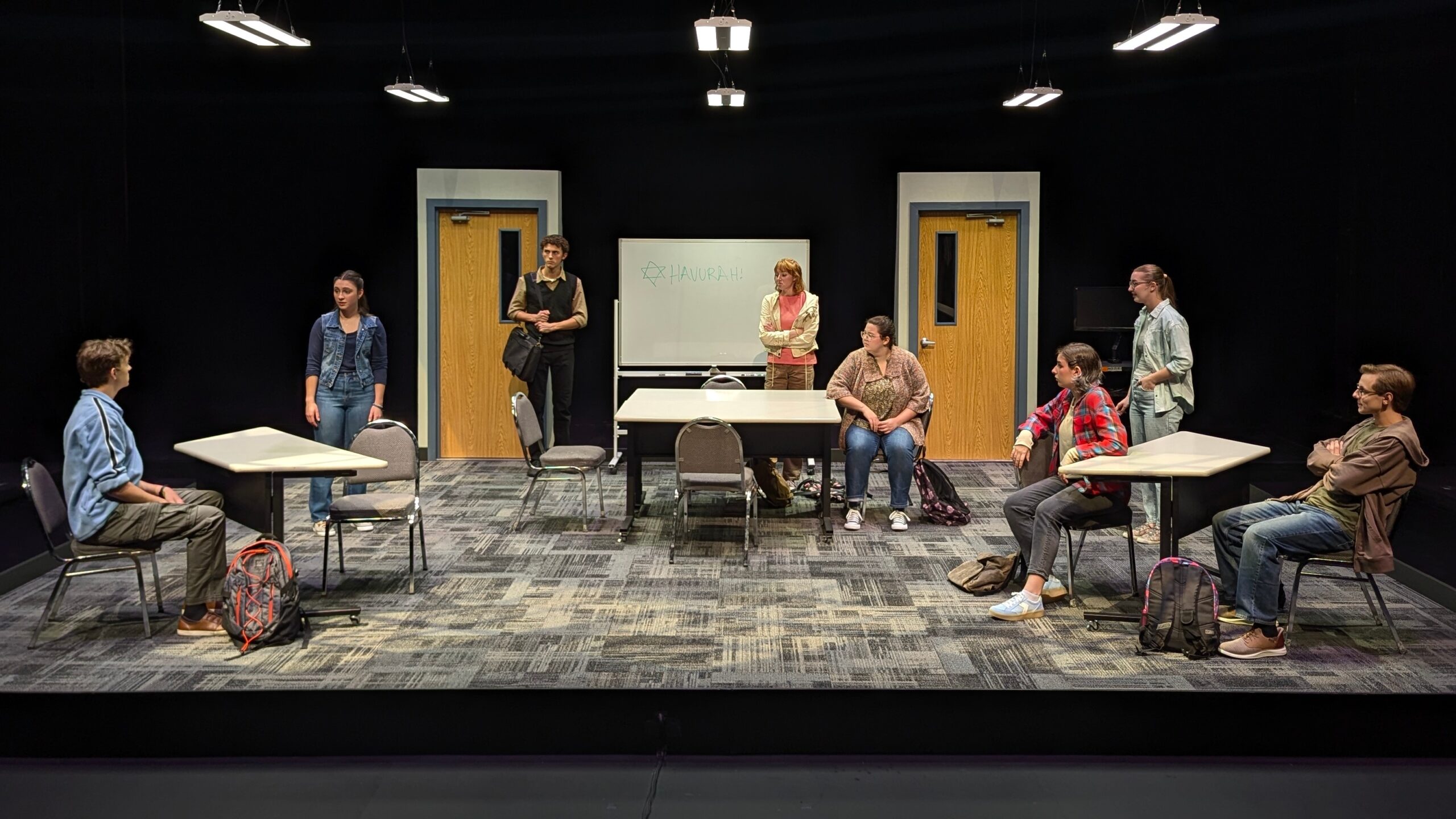
“Havurah” by Margot Connolly of Pleasantville, New York, explores interfaith dialogue through the lens of a group of Christian university students who attempt to offer support to their school’s Jewish club following a shooting at a synagogue. More than that, however, it’s about the experience of growing up, Connolly told J.
“We want to do good in the world, and none of us really know how to do that,” said Connolly, whose fifth play, “Belfast Kind,” won the contest in 2015. “We might goof it along the way, but there’s room for us to readjust, learn and keep trying.”
“Shura: The mission of identifying life,” by Israeli playwright Roee Joseph, is based on Joseph’s own experience when he was called up to military reserve service after Oct. 7. Part of a team tasked with identifying bodies of massacre victims, he kept a journal at the time about his experiences. The play was initially produced in Hebrew and premiered at the Israel Festival in fall 2024. It was translated into English by literary translator Shir Freibach.

For Joseph, the act of writing helped clarify his feelings about what he witnessed. The process itself, he told J. in an email, felt instinctual.
“Looking back, I understand that in real time I was placing a kind of screen between myself and what was happening, and that distance was protective,” Roee said. “Writing also gave voice to hidden thoughts and reflections that would not have surfaced otherwise.”
The next round of the “12th Annual Silicon Valley Jewish Playwriting Contest,” hosted by the Jewish Plays Project, is set for 7 p.m. March 29 at the Oshman Family JCC, 3921 Fabian Way, Palo Alto. $18 and up. tinyurl.com/play-project-tix