

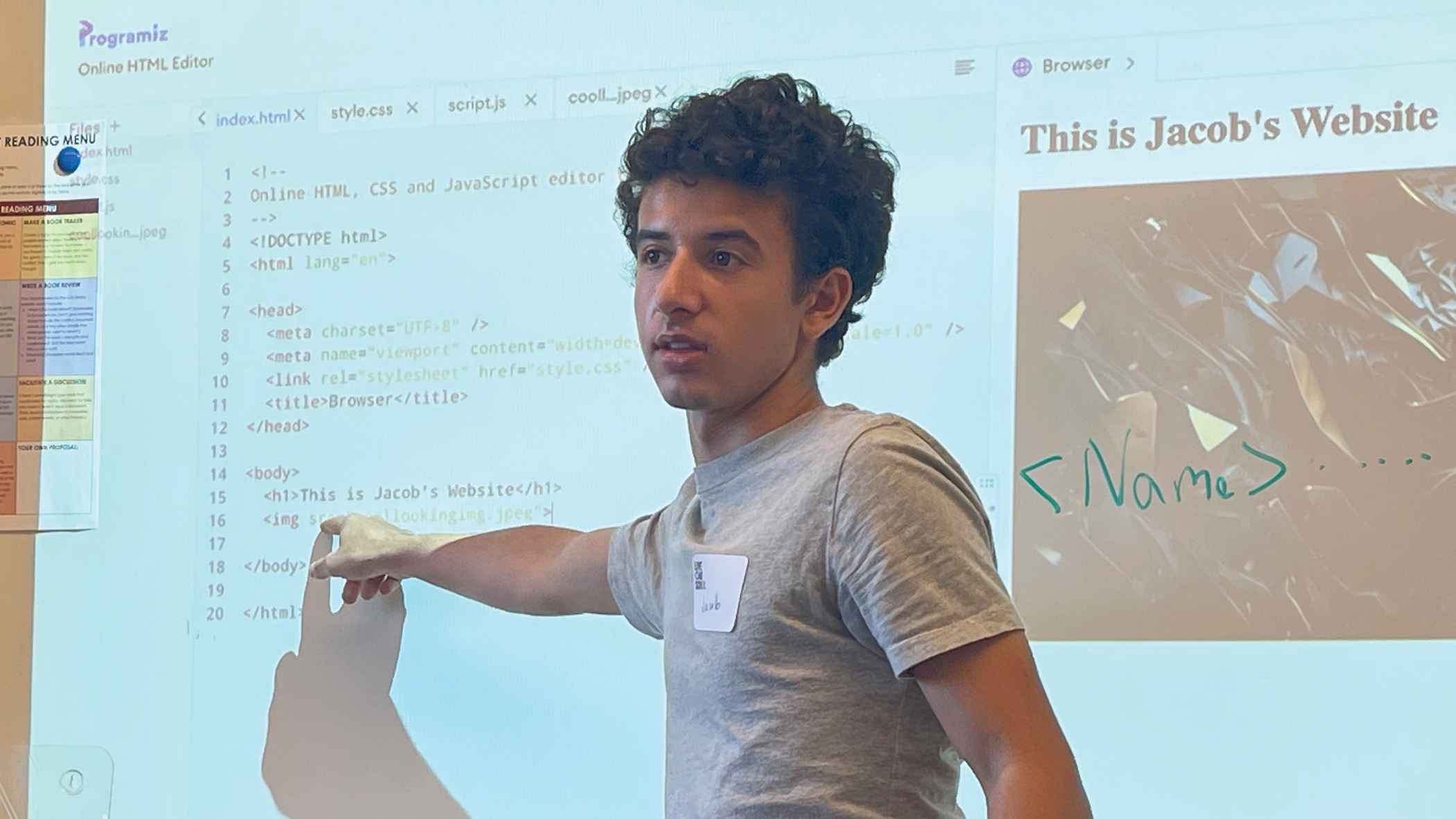
Healing the world wasn’t Jacob Shaul’s primary goal in 2024 when, as a high school sophomore, he started teaching computer coding to students at a local middle school. Mode to Code — Shaul’s free educational program run by 15 teen volunteers — now reaches more than 1,200 individuals in 10 countries.
“By thinking through different actions on a day-to-day basis, we’ve built a system that deliberately and proactively gives back, providing educational opportunities to people who might otherwise not have had them,” said Shaul, 18. “For me, that mentality comes from Judaism.”
A senior at San Francisco University High School, Shaul started Mode to Code “to expose coding to younger students who may not have seen it as a career opportunity,” he said. “Also, youth-led service is a primary and important component, and through in-person and online classes, I wanted high school students to serve as role models for middle-school students.”
About a year ago, the program expanded to other learners. The volunteers teach cybersecurity and basic technology to older adults in eight assisted-living centers, including Rhoda Goldman Plaza and Frank Residences in San Francisco, both of which are Jewish. “That helps bridge the divide between high school students and older adults,” Shaul said. “Also, by talking with the residents, I hear stories that resonate with me, and I’ve learned just how diverse and eclectic Judaism is.”
Shaul’s interest in coding was sparked when he was in sixth grade at Live Oak School in San Francisco. On the way to creating Mode to Code, he learned “a lot of little things,” including how to build a website, organize volunteers and write “persuasive emails.” He also developed a curriculum, trained volunteer instructors and connected online with schools and educational organizations in Jamaica, Bolivia, India, Mexico and elsewhere.
“I also had to learn grit and persistence, and both improved with practice,” Shaul said, laughing. “Multiple times at first, people I reached out to either didn’t respond or turned me down.” His parents, Rachel Bernstein and Shai Shaul, counseled that negative feedback is part of many a process. “If not for my parents, I wouldn’t have continued,” he said.
Shaul will graduate in June and plans to study computer science in college. Even though other volunteers at Mode to Code also will graduate this spring, Shaul is confident the program will continue.
“A big part of how we structured the program was for the volunteers to have a fundamental understanding of how it works. Some have learned about outreach, marketing and ways to find new opportunities to grow. Also, I’ll continue to help it expand,” he said.
Since his days in middle school, Shaul’s passion for computer coding has never wavered. “Technology is how you scale solutions to problems and create products that impact millions of people,” he said. “No other industry is able to do that in the same way.”