

The Torah column is supported by a generous donation from Eve Gordon-Ramek in memory of Kenneth Gordon.
Tazria-Metzora
Leviticus 12:1-15:33
What does it feel like to live at the edge, on the margins of community? The double Torah reading for this week, Tazria-Metzora, implies that it can be a very lonely experience.
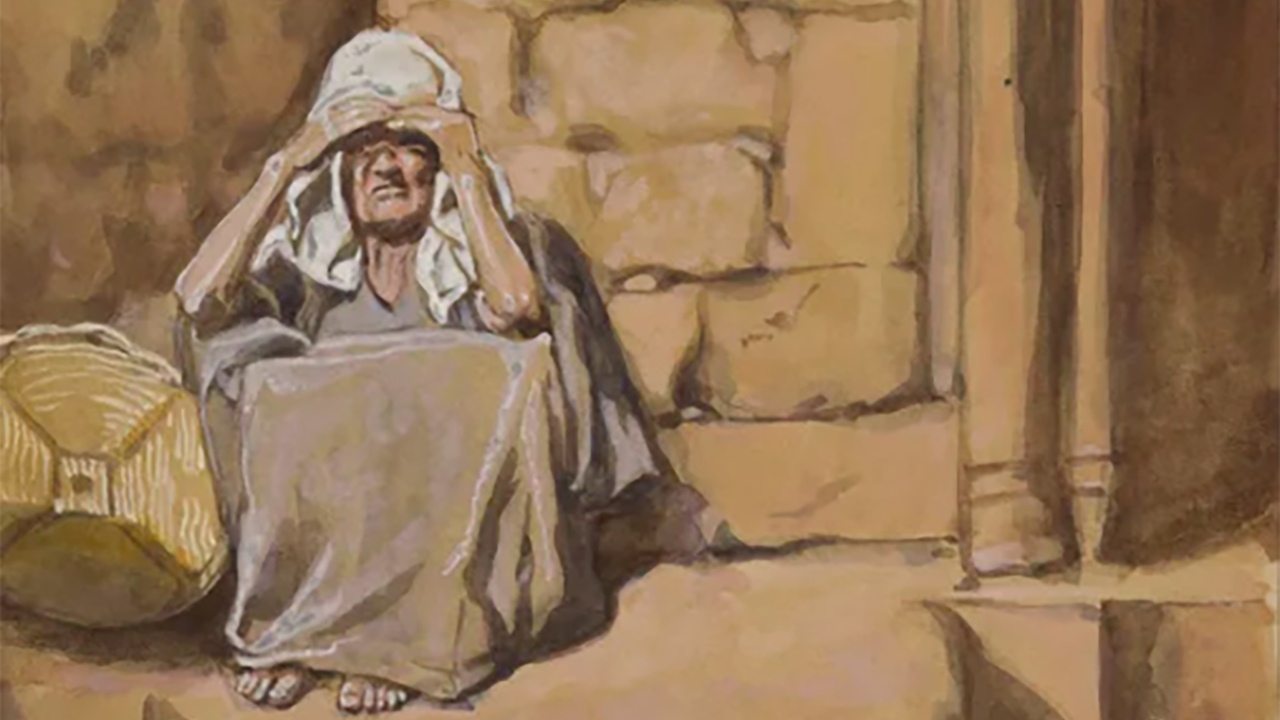
When someone from the Israelite community is found to have tzaraat, a disease of the skin that may be a reference to leprosy, that person is removed from camp and separated from all of the others. While their physical affliction is not their choice, the social consequences are severe. Those with tzaraat are compelled to become outcasts, outliers, marginal figures.
There are modern-day metzoraim, outliers who stand at the edge — and not always as a result of their own willful choices.
I have felt like a leper, someone living outside the comfort of the camp.
A number of years ago, as I loaded up my car with clothes, books and dog food, my midlife crisis showed no sign of abating. After three years of uncertainty, I still had no clue what my life or career would look like next, but I’d been hired to work for the next four months as a visiting scholar at an interfaith center based at a small university in Virginia. The school was in the heart of the Shenandoah Valley, a rural area of great beauty. I looked forward to the change of scenery.
I gave myself two days to make the 700-mile road trip from Chicago to Bridgewater, Virginia. I packed enough items to carry me through the semester, and when I’d finished, I led Jake, my Border Collie-German Shepherd mix, into the back seat. It was freezing; I was leaving in early January, just a couple of days after New Year’s, and Chicago was in the grip of another cold spell. The roads were icy, and I didn’t have much confidence in my 14-year-old vehicle.
With little of interest to look at during the first day of my drive, I occupied my mind with thoughts about my life. Here I was, in my late 40s, divorced and childless. Sure, I’d written several books and founded a synagogue in Manhattan, but when I compared myself with other men my age, I felt like an outlier, a failure. Most of my friends had homes in the suburbs, wives they’d been married to for years and kids getting ready for college. They had stable jobs and health insurance. They took vacations with their families. And they seemed reasonably happy with their lot in life.
I wasn’t. My old behavioral patterns were not leading me toward healthy, intimate relationships. My search for a new career had stalled. I was on the road, cold and alone, with only a dog for companionship. This limbo had lasted several years, and it was difficult for me to see light at the end of the tunnel. I beat up on myself and lamented my existential condition for hours, and when I pulled into a motel in Chillicothe, Ohio, I was exhausted. It was a Friday night, the start of Shabbat, but I did nothing to celebrate it. I ordered a pizza, walked Jake around town and went to bed.
The next morning, as I drove through southern Ohio and crossed into West Virginia, the landscape became much more interesting. There was something beautiful but also faintly menacing about the state. Maybe it was the haunting appearance of some of the old buildings. Or the way the shadows snaked through the hollows and around the homes. Whatever it was, it was exhilarating. I felt alive. And I began to enjoy the adventure of my journey.
The past few years had given me some gifts as well as challenges. I was about to embark on a job in academia, one that would allow me to teach an elective I’d always wanted to offer and that would team me with an Iranian scholar and a Mennonite scholar for a comparative religion course. Prior to that, I had worked as a writer at a large agency in Chicago, an experience that gave me a taste of corporate America and the advertising world. I had adopted a dog I loved. And, best of all, I’d gotten to spend unexpected quality time with my mother and father after years away. That time with my aging parents had been a profound experience of reconnection and healing.
But I missed being a rabbi.
The Shenandoah Valley sits between the Allegheny and Blue Ridge Mountains, and it is stunning. This contrasts starkly with the fact that it was the site of great violence and death during the Civil War. As a result of scorched earth strategies, most of it was burned by troops. Yet when I entered Virginia and drove for a while, and when the Blue Ridge finally came into view, all I could see was the valley’s beauty. There was no trace of fire or ferocity. Before me was a tranquil land that filled me with a sense of hopefulness, a place of rebirth and renewal that I had encountered at just the right time.
I could go on, even in the face of uncertainty. I had no other choice.
I know now that I am not alone, that there are others like me, outsiders to our own communities. We are outliers, seekers and strugglers, but we yearn for a meaningful connection and a sense of purpose. We may not have been forced out of our camp like our Biblical ancestors, but our dissatisfaction with the status quo and ambivalence about conventional life — as well as, perhaps, our own restlessness — have driven us to the margins.
Are we sometimes afflicted, not in our skin, but in our souls?
After my experience in the Shenandoah Valley, I felt ready to return to my rabbinic calling, and I eventually found my way back to the Jewish community — this time in another valley, the Napa Valley. I’ve been the rabbi here for almost a decade, and I am largely at peace. My life’s journey, in alignment with the tenets of Judaism, has shown me that there is always hope, if we are patient and resilient, no matter the challenges we encounter in our lives.