
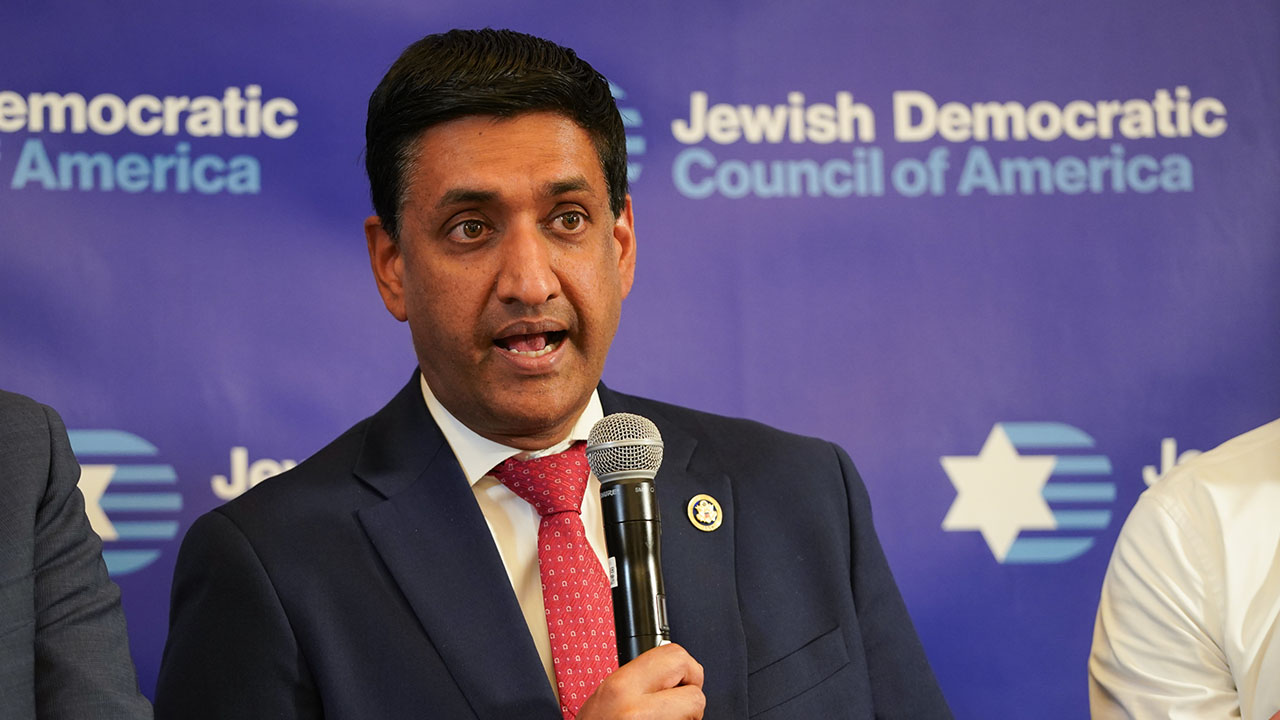
Rep. Ro Khanna, Silicon Valley’s member of Congress since 2017, has become a prominent name in national politics lately. He is considering a run for president in 2028, but more immediately, he’s campaigning for reelection this fall in his South Bay district, which he won comfortably in 2024.
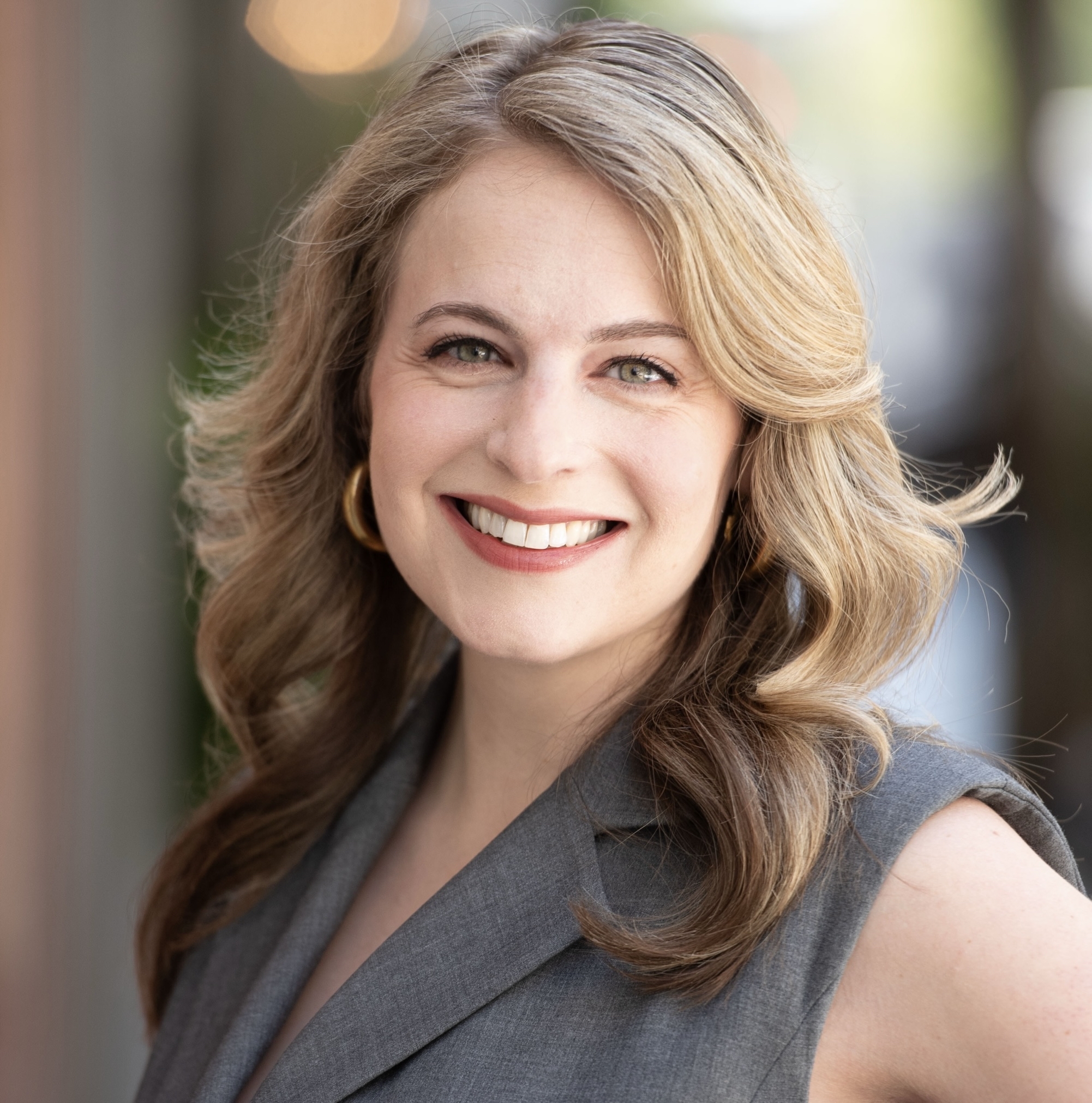
Khanna faces a primary challenge from a handful of candidates, including political newcomer Ethan Agarwal, a tech entrepreneur who is making inroads with Silicon Valley’s Indian, Jewish and Israeli American voters, as well as with the tech community. Earlier this month, J. interviewed Agarwal about his effort to unseat Khanna.
J. previously interviewed Khanna (D-Santa Clara) in October about his views on Israel and Zionism. In that wide-ranging interview, Khanna stated that despite his harsh critiques of Israel Prime Minister Benjamin Netanayhu’s government, he supports Zionism, which he defined as the self-determination of the Jewish people and the right for Israel to exist.
But Khanna’s intense criticism of Israel’s government — particularly Israel’s actions in Gaza during the war that began with the Hamas invasion Oct. 7, 2023 — has led some of his Jewish constituents to question whether they’ll support him.
One point of tension that Khanna addressed at two South Bay synagogues in December was his decision to co-sponsor Rep. Rashida Tlaib’s House Resolution 876, which declared Israel’s actions in Gaza a genocide against Palestinians and laid out steps for the U.S. to “punish” Israel. Tlaib introduced the resolution in November. It remains in committee.
Khanna has also taken heat for appearing as a repeat-guest on a show hosted by Hasan Piker, a progressive commentator known for his antisemitic rhetoric and extreme anti-Zionist views, including stating in a mid-April interview that he would “vote for Hamas over Israel every single time.”
J. contacted Khanna’s office for an interview. Khanna agreed to respond to J.’s questions in writing. Below are our questions and Khanna’s responses, unabridged.
You visited two synagogues in December to address your use of the word “genocide” and hear directly from Jewish community members. Since then, has your outreach to the Jewish community continued? Can you name specific Jewish community leaders or organizations you’ve met with, and what came of those conversations?
Last month, I convened a roundtable with Ben Linder, Carol Winograd, Steve Krausz and a dozen Jewish leaders from the Bay Area to discuss how we can build a new coalition for a just peace and a new way forward. Ben Linder and Carol Winograd both serve on the board of directors for J Street. We discussed tackling antisemitism and the safety of our community. This was shortly after the horrific attack on Israeli Americans Lior Zeevi and Daniel Levy in San Jose that I unequivocally condemned.
I also recently met with young leaders from Congregation Beth Am [in Los Altos Hills] who visited my DC office. They powerfully articulated the importance of standing up for the rights of immigrants and a two-state solution.
Sunnyvale is home to one of the highest concentrations of Israeli residents in the Bay Area. They see you on national television and social media discussing cutting U.S. funding for the Iron Dome, Israel’s key defense technology, and signing a resolution calling to punish Israel for genocide. What do you say to Israeli American constituents in Sunnyvale who feel you’ve gone too far to the left in your rhetoric on Israel?
I have respect for Sunnyvale’s Israeli-American community and I want their family members and loved ones in Israel to be safe. In 2024, I held a town hall in Sunnyvale with the Bay Area Jewish Coalition to address rising antisemitism and issues impacting the Jewish community.
Regarding the Iron Dome, I have always believed that it saves lives and I believe in a secure Israel as a Jewish democratic state. At the same time, Netanyahu’s actions have become more extreme by the day and have threatened peace and human rights and Israel can afford to pay for the Iron Dome on its own with its $45 billion dollar defense budget. We shouldn’t be giving away U.S. taxpayer funded military aid to Netanyahu, [Israeli National Security Minister Itamar] Ben-Gvir and [Israeli Finance Minister Bezalel] Smotrich’s government that is undermining the peace and safety of both Israelis and Palestinians.
This month, Israelis marked Yom HaZikaron, one of the most solemn and sacred days on the Jewish calendar. You have constituents in Sunnyvale and across your district whose loved ones served with the IDF in Gaza, some of whom were killed or wounded. You’ve publicly accused Israel’s military of participating in genocide — a charge the International Court of Justice has not ruled on — and signed a resolution calling for Israel to be punished for it. Can you reflect on the messaging this sends within your own district?
Yom HaZikaron is a solemn day, and I recognize the pain that Israeli families in my district have experienced with the loss of loved ones. My criticism has always been about Netanyahu, Ben-Gvir, Smotrich and those in power whose actions have undermined the peace and safety of Israelis and Palestinians. I agree with the U.N. commission’s finding on genocide [in Gaza].
You visited Israel in 2022, your first trip there as a Congressman. You also visited Israel in 2005. What did you take away from your visits to Israel? Given what you saw firsthand and your strong critiques of the Netanyahu government, do you still see Israel as an important ally for the U.S. in the Middle East?
I have been to Israel three times, including in October 2024 when I traveled with a congressional delegation to meet with both King Abdullah II of Jordan and Prime Minister Netanyahu. The purpose of the trip for me was to discuss the escalating conflict in the Middle East and how we can constructively find a path forward towards peace. During our meeting, I urged the prime minister to deescalate operations in Lebanon and Gaza and, in a positive development, he agreed to allow Jordan aid trucks to have access through Israel.
We need to engage with world leaders, but that doesn’t mean giving more aid to Netanyahu and his extreme government, who have made it clear that they will not uphold human rights in violation of U.S. law on military aid.
Antisemitic incidents in the Bay Area have risen sharply since Oct. 7. What have you done in Congress to address that?
I have strongly condemned the vile acts of antisemitism in our community, including against Jonathan Hirsch and his son, who were refused service simply because they are Jewish, and the recent attack on Israeli-Americans Lior Zeevi and Daniel Levy in San Jose.
This past December, I visited Congregation Beth Am and Temple Emanu-El [in San Jose] and answered questions from the community. I called for giving the Justice Department the resources it needs to prosecute antisemitic attacks.
In 2024, I introduced bipartisan legislation with Rep. Brian Fitzpatrick [R-Pennsylvania] to require schools to teach digital literacy and history relating to the Holocaust, World War II and antisemitism. Everyone should graduate with a full understanding of this history.
I held a town hall with the Jewish Democratic Coalition of the Bay Area at South Peninsula Hebrew Day School in Sunnyvale in 2024, where I said anyone who had documented antisemitism in the community and they felt it wasn’t being addressed should reach out to me and my district office.
That year, I also convened college and university school administrators and members of the Jewish community to discuss standing firm against antisemitism and other forms of hate speech and actions on campuses. That conversation included leaders from the Bay Area Jewish Coalition, J Street, and JCRC Silicon Valley.