
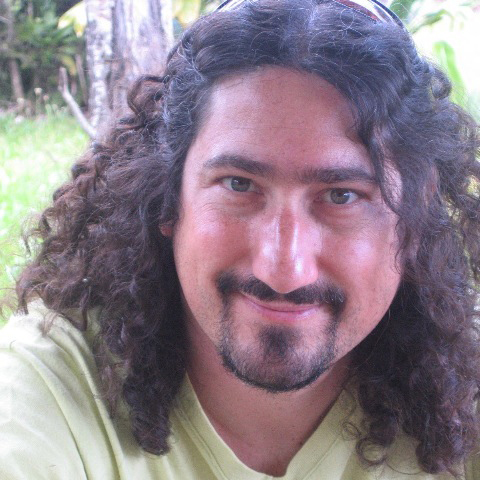
Composer Michael Schachter has been thinking about Terezín for the past 15 years.
Growing up as a music-minded black sheep in a sports-obsessed Reform family where the guiding patriarchs were Hank Greenberg and Sandy Koufax, he knew little about the showcase Nazi concentration camp known as Theresienstadt in German. But when he was backpacking across Europe with his college girlfriend — now wife — they traveled about 30 miles north of Prague to visit Terezín. One of his relatives had died there, and her great-grandfatherwas interned there before he was shipped to his death at Auschwitz.
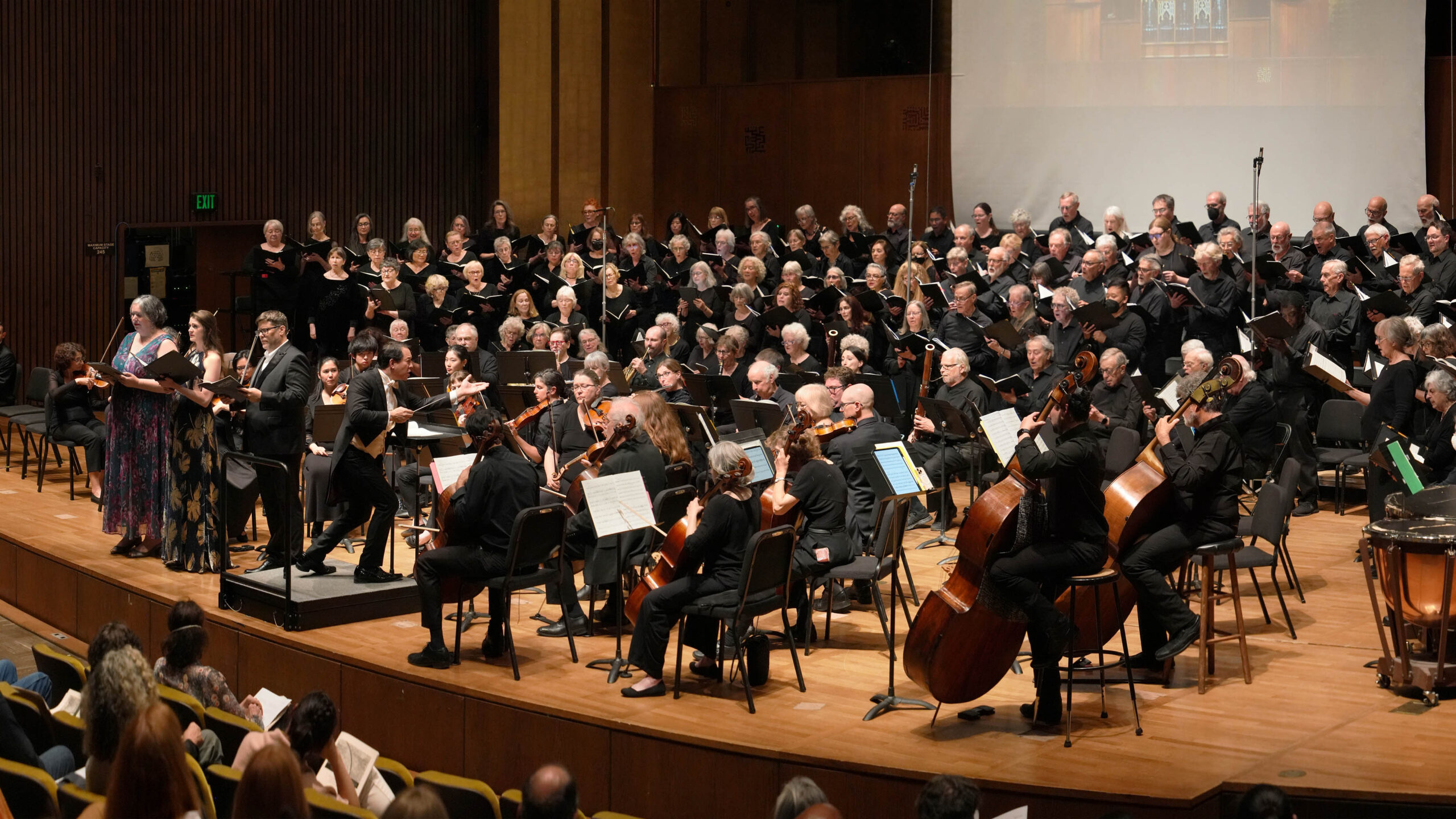
Now, the Berkeley Community Chorus & Orchestra will premiere Schachter’s Terezín Requiem as a commission to mark the ensemble’s 60th season. It’s his latest work in an illustrious career that includes critically hailed commissions such as his Concerto No. 2: Anthem, which the Los Angeles Philharmonic premiered in 2022. That concerto was a collaboration with bass-baritone Davóne Tines, who also worked with Schachter to create “The Black Clown,” a 2018 song cycle lauded by the New York Times.
The June 12 to 14 program at Berkeley’s First Presbyterian Church features baritone Simon Barrad, who is cantorial soloist at San Francisco’s Congregation Sherith Israel, and soprano Ronit Widmann-Levy, who collaborated extensively on Michael Tilson Thomas’ “The Thomashefskys.” The libretto includes Hebrew, Aramaic, Yiddish, German, Czech and Latin, all languages that would have been understood by Terezín inmates. The program also includes Joseph Haydn’s 1799 Theresienmesse.
Terezín Requiem isn’t Schachter’s only project that centers on the infamous camp in German-occupied Czechoslovakia. In the early months of the Covid pandemic, with his projects on hold, Schachter started developing a production based on the story of Czech Jewish trumpeter Eric Vogel, who founded a hot swing band in Terezín (and escaped probable death by slipping off a train headed to Dachau).
“I learned about him … in The New Yorker a few years ago,” said Schachter, 38, from his home in Burlington, Vermont. “The more you read about Terezín you realize there are a million incredible stories.”

Schachter started honing the framework for a television miniseries or theatrical production inspired by Vogel and music created at Terezín, including pieces stage-managed by the Nazis to offer the international community a Potemkin village view of their “humane” treatment of Jews.
Interest in that project evaporated with the 2023 Hollywood writers strike and the Hamas attack on Israel on Oct. 7 that year.
“There was a squeamishness about presenting something addressing Jewish life and identity,” Schachter said.
But not at the Berkeley Community Chorus & Orchestra, where music director Ming Luke “was taken with the Terezín story,” Schachter said. “They were hungry for something like this.”
Schachter has collaborated with the group before. Back in 2011 he offered his piece “Oseh Shalom” in an open call for submissions.
“They performed it several times, and Ming and I really hit it off,” Schachter said.

To Luke, adding a conspicuously Jewish work to the repertoire is a boon. He has also been attracted to the Terezín ethos of art as a galvanizing force in the face of calamity.
“The idea of people coming together and building community no matter what circumstance connects to our philosophy that all of us are important,” said Luke, noting that his community group is open to all singers and never holds auditions.
Most importantly, the commission brings a new work into the world by an artist with an encompassing vision of Jewish music.
“Mike’s writing can be challenging and evocative, and it’s always very beautiful,” Luke said. “The structure builds to this amazing apex. It’s really well-crafted and wonderful to sing and perform.”
If you’re going
Berkeley Community Chorus & Orchestra will perform the Terezín Requiem and Theresienmesse at 7:30 p.m. Friday, June 12, and 4 p.m. Saturday and Sunday, June 13 and 14, at First Presbyterian Church of Berkeley, 2407 Dana St. Free. Reservations recommended.