

The Torah column is supported by a generous donation from Eve Gordon-Ramek in memory of Kenneth Gordon.
Naso
Numbers 4:21-7:89
The joyous holiday of Shavuot marks, in important ways, the birth of Judaism. It is an ancient pilgrimage festival that celebrates the revelation of the Torah at Mount Sinai as a blueprint for Jewish life and spirituality. It is a sacred time that highlights the eternal bond between God and the Jewish people.
The Torah portion Naso is ordinarily read after Shavuot, yet the link between the two is not obvious. With a closer read, however, that link is made clearer.
In Naso, we find a brief but significant mention of the Birkat Kohanim, what has become known over the centuries as the priestly blessing. During their desert wandering, God instructs Moses:
“The Lord spoke to Moses: ‘Speak to Aaron and his sons: Thus shall you bless the people of Israel. Say to them: “May the Lord bless you and protect you! May the Lord deal kindly and graciously with you! May the Lord bestow His favor upon you and grant you peace!” Thus they shall link My name with the people of Israel, and I will bless them.’” (Numbers 6:22-27)
Through the mediation of Aaron, the high priest, the Israelites can intertwine God’s “name” with their own. How do they achieve that sense of identification and unity with the divine? As Shavuot implies, it is through the covenant, the brit, that was revealed at Mount Sinai.
When the Israelites act in godly ways — when they follow the commandments — they will be blessed. And the priesthood will embody and effectuate that dynamic.
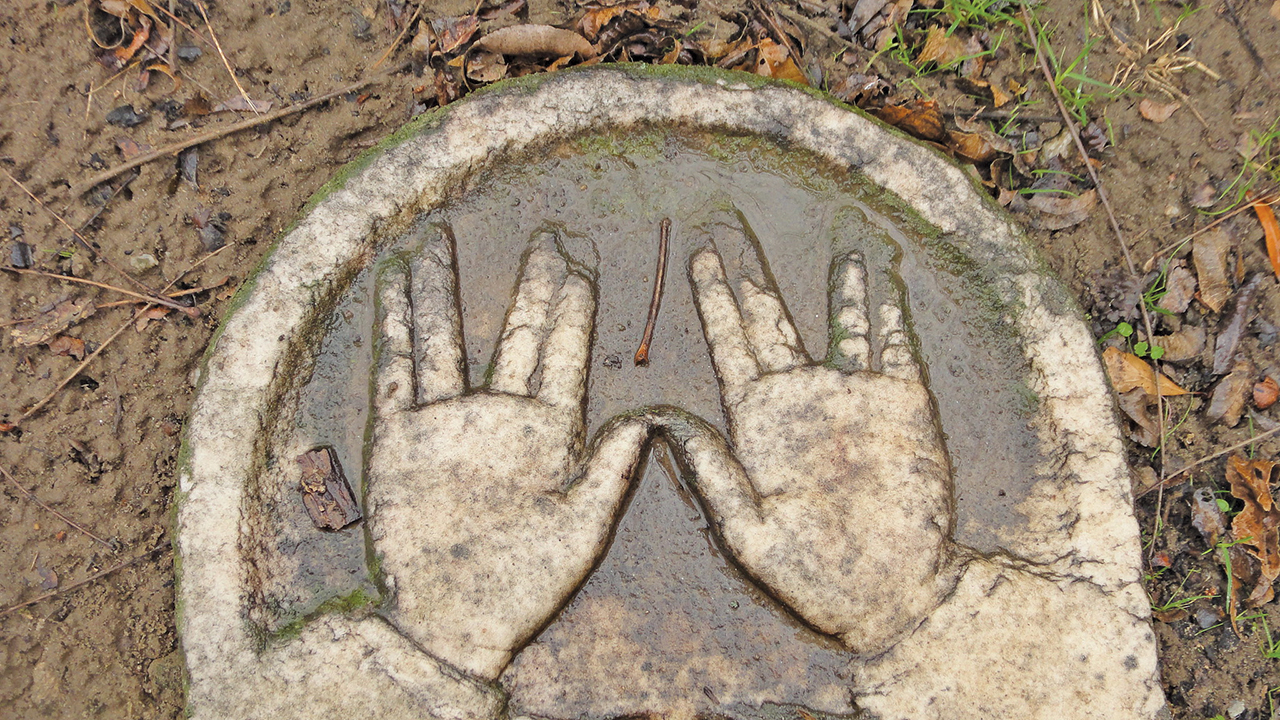
In Yiddish, the Priestly Benediction is called Dukhenen, and over time it has evolved beyond the mere recitation of the words from Naso. At specific times during a worship service, men gather in the front of the sanctuary, raise their arms toward the congregation, spread the fingers on their hands into a V shape (like Spock from “Star Trek”), and cover their heads with their prayer shawls, their tallitot. Then they chant the passage from Numbers.
I saw this ancient ritual for the first time when I was a college student in Jerusalem. I found it mystical, spectral, almost haunting — the men looked like ghosts. It was very powerful.
In more traditional communities, Dukhenen is performed regularly at certain services, depending on custom and background. But only adult males, those who identify as kohanim and who claim to be descended from Aaron and the priests who followed him, are permitted to lead the rite.
As foundational and profound as it is, the Priestly Benediction isn’t widely known or witnessed by most Jews today outside of Orthodox congregations. As a Reform Jew, I never saw it performed at the synagogue where I grew up. Nor has it been done at any shul I’ve ever served.
There are reasons for this. For many modern, liberal Jews, there are problems associated with Dukhenen. It is a patriarchal ritual, based largely on gender and not inclusive of women. It is grounded in an elitist, hierarchical caste system, something rejected by most post-Enlightenment Jews. And it is a manifestation of meritless heredity as well as dubious claims of priestly lineage.
For these reasons, virtually all Reform and other non-Orthodox congregations have eliminated the practice from their organized communal worship.
Yet while the traditional Dukhenen has mostly disappeared from these communities, the Priestly Benediction has survived in a different, more acceptable form. It is egalitarian in nature, spoken not only by male priests, but by women as well (often rabbis). It is not confined to specific worship services; instead, the blessing is recited on special occasions and at life cycle events.
When I was ordained, the president of my rabbinical school said the words to me as he touched my shoulders. In my own rabbinic career, I have recited the words of the Priestly Benediction at baby namings, b’nai mitzvah ceremonies and weddings. Some parents even follow a custom of saying it on Friday night as they bless their children during Shabbat dinner.
In my book, “Gonzo Judaism: A Bold Path for Renewing an Ancient Faith,” I write about the importance of retaining — and reinventing — several of our more esoteric (yet still powerful) practices, and the Priestly Benediction is certainly one of them. But there are others, just waiting to be rediscovered. They can be moving and deep.
Rather than completely abandoning these ancient traditions, let’s reclaim, reinterpret and reshape them. Spiritual renewal is an ongoing process, and it never ends. When we engage in it with all of our hearts, minds and souls, we will help to create and perpetuate a Judaism that is dynamic and transformational in ways that prior generations might not have ever imagined.