
When Renée Enteen joined the Jewish Folk Chorus of San Francisco in the mid-1980s, the vocal ensemble was facing an uncertain future.
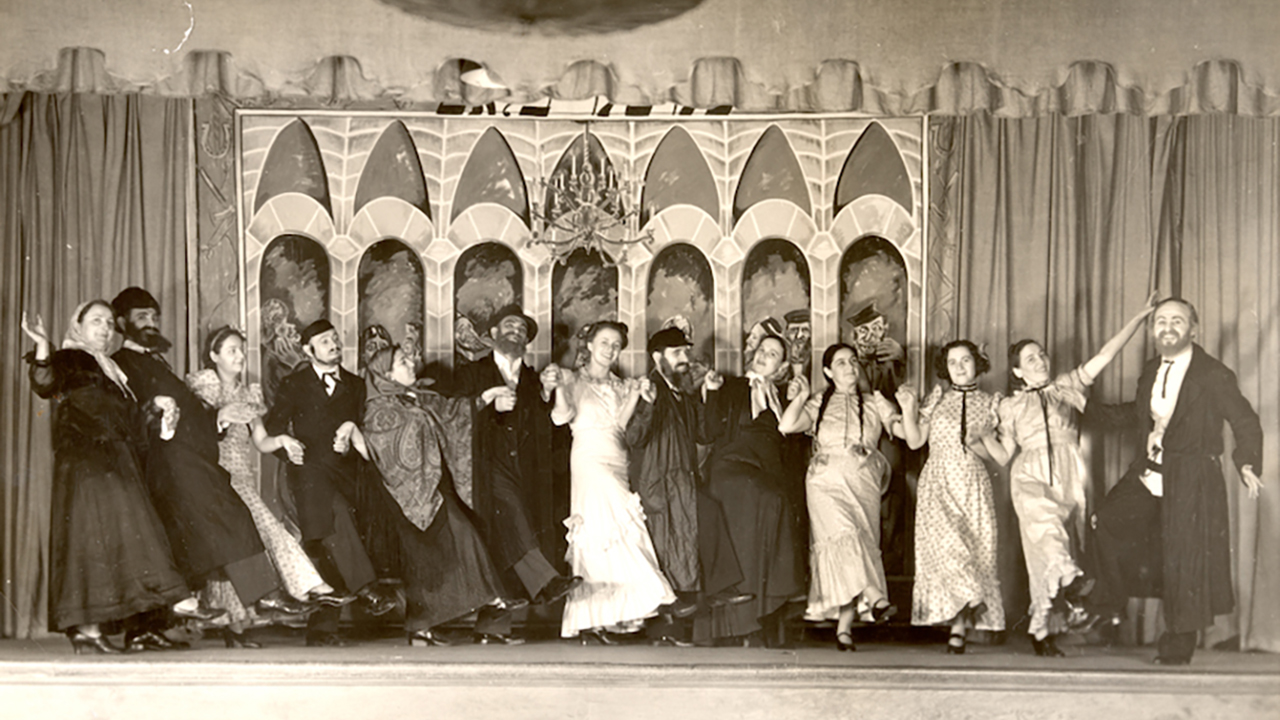
Founded by socialist-minded Petaluma chicken farmers in 1926 as the Yiddish Workers’ Chorus, the group was entering its seventh decade with few younger members.
“There were almost no young people, meaning people under 70,” said Enteen, who has spent years on the JFCSF’s board and serves as the chorus’s historian.
From the Great Depression and the Spanish Civil War to the Holocaust, the founding of Israel and the civil rights movement, the chorus delivered righteous anthems at community events, protests and concerts. But “we hadn’t adapted to getting non-Yiddish speakers into the fold,” Enteen said.
Now, as the chorus prepares to celebrate its 100th anniversary on June 14 at the Jewish Community High School of the Bay, the picture looks very different. With about one-third of its 25 singers hailing from Gen X and Millennial cohorts, the chorus embodies the concert’s theme, “From Generation to Generation.”
Enteen says credit for invigorating the once-fading institution goes to former member Allison Pittman, a non-Jewish singer who joined the group in the mid-1980s because rehearsals were walking distance from her home near the JCCSF.

“She’s the one who actually got the chorus to join the modern era,” Enteen said. “[She said,] ‘You mean all your money is in a savings account? You should put it in an investment.’ She got us bylaws. She really helped us make this leap from an insular, old people’s community to getting new people.”
The chorus has also thrived in recent years under the direction of Lisa Sargent. Hired a few months before the pandemic, she kept the group together through regular online sessions until in-person singing resumed in 2022.
While she’s not Jewish, her lack of Yiddishkeit hasn’t been a problem. She said she focuses on vocal technique and leaves repertoire choices to a choral committee.
“They do the research and ask my opinion about doing the arrangements,” she said. “I’m very respectful of what they want to do.”
For the centennial concert, JFCSF will perform with pianist Inara Morgenstern, and be joined by several special guests. The program includes songs in Yiddish, Hebrew, Ladino, Russian and English, covering topics from the labor movement and social justice struggles to love, laments and protests.
For Ami Goodman, a JFCSF board member, singer and arranger who leads the Zingeray Ensemble, the chorus’ smaller singing group, the repertoire bridges an older generation of Yiddish composers and more contemporary material, including “In Droysen Iz Fintser,” or “It’s Dark Outside,” by Adah Hetko.
The Boston-based Hetko composes and records Yiddish music “representing the new generation,” said Goodman, who grew up in a Yiddish-speaking household.
And it’s not just Yiddish they sing, she said. “I love the Ladino music we’re singing, like ‘Kuando el Rey Nimrod,’ which reflects the wide tapestry of Jewish folk music.”
When the JFCSF was founded, it was part of a network of roughly 20 Yiddish labor choruses all linked through the Jewish Music Alliance, a leftist Yiddish cultural organization established in 1925. The vocal ensembles were woven into a broader Yiddish musical landscape that was part of urban American culture through vaudeville, film and popular music.
As Yiddish fluency declined with post-World War II assimilation and the Holocaust’s destruction of Yiddish-speaking communities in Europe, the choruses gradually faded. Yiddish song experienced something of a revival in the 1950s, championed by artists like Pete Seeger and Theodor Bikel.
With themes that refer to the plight of refugees, asylum-seekers and displaced people, the songs performed today can feel “as relevant now as when they were written,” Goodman said. “We’re singing about the same issues. This music is often an endeavor that transcends the decades, and will be as relevant in 50 years as it is today.”
IF YOU’RE GOING
“From Generation to Generation, Celebrating 100 Years of the Jewish Folk Chorus of San Francisco,” 2 p.m. Sunday, June 14, at the Jewish Community High School of the Bay, 1835 Ellis St., San Francisco. $20-$25