

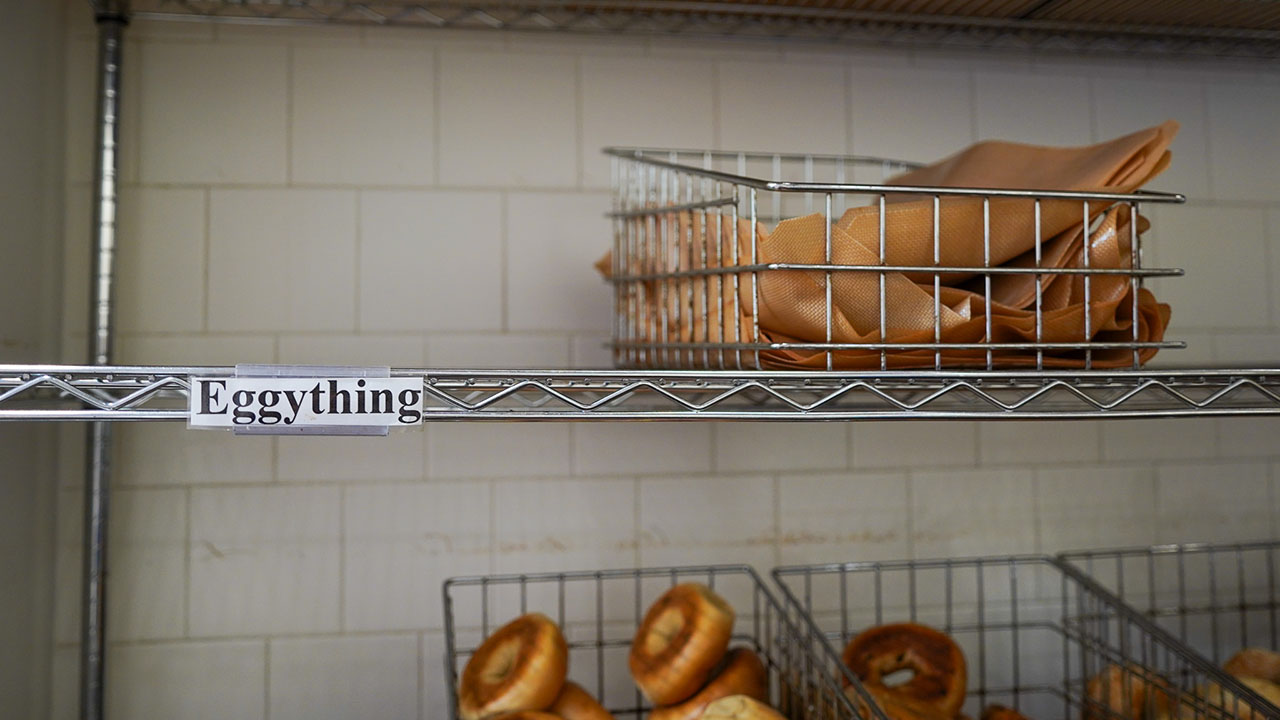
As word spread last week that Boichik Bagels was discontinuing egg bagels, its Battery Street location in San Francisco quickly ran out of both varieties it sells.
One customer came in and bought two dozen after hearing the news. More egg fans followed. By midmorning Thursday, both the egg and eggything bagels were sold out for the day — ahead of June 21, the last day Boichik planned to bake them.
“We’re definitely sad because we have a lot of customers who like egg and eggything flavor of the bagels,” said Joey Somes, the location’s manager. “They always come here to look for it.”
The rush was no surprise. When Berkeley-based Boichik announced on social media in mid-June that the company was discontinuing its two egg varieties, customers responded with grief and fury.
“This is a joke right? Eggything is hands down your best flavor and without that, I have no reason to get Boichik anymore. Rethink this decision, babes!” read the most-liked comment on the company’s Instagram post.

The announcement came after a recent drop-in health inspection of Boichik’s West Berkeley production facility. The U.S. Food and Drug Administration told Boichik founder and CEO Emily Winston that the company’s single production line — used to make every variety of bagel dough — did not meet allergen separation requirements for egg products.
Eggs are classified as a major food allergen, and facilities that sell egg-containing products through wholesale must either maintain a dedicated production line or meet a strict cleaning protocol between runs.
Winston weighed her options. She could add egg to every bagel’s ingredient list to avoid building a separate production line. However, that would make every Boichik bagel non-vegan, alienating a significant part of her customer base. Because egg bagels represent less than 50% of Boichik’s total output, she said, she couldn’t justify the investment of building another line.
So, the egg bagels go.
“Due to these bureaucratic regulations, they’re saying this is not acceptable,” Winston said. “We’re not allowed to just have a warning, and we’re not even allowed to say ’may very well have traces of sesame and egg’ — it’s make it an ingredient, or you jump through all these hoops and make it so it absolutely has a pristine environment.”
Boichik runs both its retail and wholesale operations out of the same factory — a decision Winston made when she launched the wholesale side of the business several years ago. Had Boichik remained retail only, an allergen warning about shared-equipment would have been enough. Stricter federal standards have kicked in since wholesale entered the picture.

The company cleans its machinery every day, and Winston said tests she ran of non-egg bagels for egg residue have come back negative. It wasn’t enough.
“They’re like either it contains an allergen or it doesn’t contain an allergen. And if it doesn’t contain an allergen, it better have never gone anywhere near that allergen,” Winston said.
Not everyone is sympathetic to Winston’s frustration. Some pushed back on how she framed the FDA’s role.
“As someone with several of the major food allergies, I’m disappointed by your attitude about complying with federal regulations that keep people like me safe and alive,” one person commented on the Instagram post. “Please stop complaining about the evils of having to comply with life-saving federal food safety guidelines, and focus on reaching new audiences who can now safely eat your bagels.”
Winston said she is sympathetic to customers with serious food allergies and noted that Boichik has always posted allergen warnings in its shops.
The egg bagels aren’t the only casualty of the inspection. The FDA also flagged Boichik’s sesame bagels for allergen concerns. Winston said the company plans to address that by adding sesame to the cornmeal used to dust its proofing boards, allowing sesame to be listed as an ingredient in every bagel — a workaround she believes other large producers have already adopted.
Boichik could have done the same for egg, Winston said. “But then we would be taking this and making it a non-vegan product and it’s a big problem.”
Knowing the tradeoffs didn’t mean it was easier for Winston to make the decision.
“I knew it had some real dedicated fans, but the outpouring online is, just, it’s been gut-wrenching,” Winston said. “I’ve been really upset, because I hate to disappoint my fans. It hurts.”