
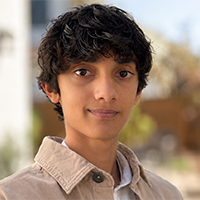
As a 15-year-old Muslim, social media algorithms want to predetermine my worldview by pushing me into a box that pits groups against each other. Intentionality is required to seek out viewpoints that challenge what my algorithm wants me to believe and instead to focus on common ground.
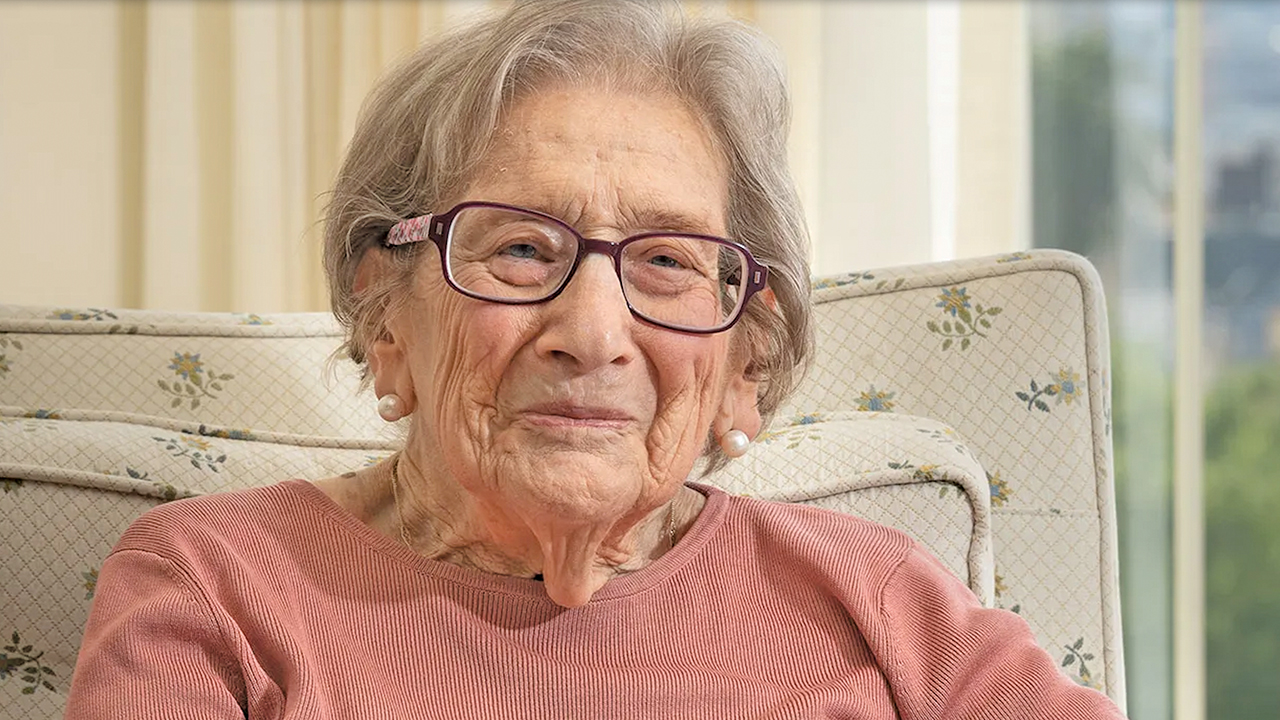
With all the online content showing the turmoil between Jewish and Muslim communities happening in the world, it was refreshing and heartwarming to see both groups come together in love and unity on June 22, when I attended a memorial service honoring the legacy of Rita Semel, who died on May 13 at the age of 104.
Semel was a San Francisco civic and interfaith leader, born in 1921, who built her career in Jewish communal organizations before co-founding the San Francisco Interfaith Council in 1988. She spent decades bringing people of different faiths and backgrounds together. The beautiful service was attended by spiritual leaders in the Jewish, Christian and Muslim communities, as well as political leaders like former House Speaker Nancy Pelosi and San Francisco Mayor Daniel Lurie.
Interfaith connections are a core value taught in my household. My parents have always modeled the importance of having diverse friendships and being open to hearing different points of view, while remaining grounded in our own beliefs and values. Now, serving as an intern at Intercultural Networks Group, a San Jose-based educational and interfaith organization that combats bigotry and promotes mutual understanding, I have begun to see the concrete reality and necessity of the ideals my parents taught me, especially in these polarizing times.
I have been raised in a practicing Muslim household and have naturally had countless visits to mosques in the United States, as well as mosques and churches on my family travels abroad. Yet I hadn’t had the opportunity to visit a Jewish place of worship until Semel’s memorial at a synagogue.
I was awed by the majesty of San Francisco’s Congregation Emanu-El. The grandeur of the sacred building captured my attention the moment my eyes met the exterior dome. As I approached the entrance, the beautiful stone archway welcomed me; accepting its invitation, I found myself admiring the glistening marble floor in the foyer.
The receptionist guided me to a set of tall, dark wooden doors. Upon walking through them, I discovered a surprise that went far beyond their oaken magnificence: a vast courtyard with pillars towering around me. Following the intricate carvings on the walls, I looked up at the sky through the roofless courtyard.

What surprised me the most was how at home I felt within this sacred structure, likely because of the similarities between Emanu-El’s architecture and that of Muslim places of worship. My memories of the domes of Istanbul’s mosques, along with my dad’s descriptions of the riad courtyards in Morocco, made the space feel remarkably familiar.
Healthy and hospitable interactions between Jews and Muslims can seem like an alien concept.
Before entering the hall in which the memorial ceremony would take place, I was cheerfully greeted by some of the Jewish organizers. Despite my preconceived notions, pleasant surprise gave way to a sense of pride as one of the rabbis greeted me with a simple “as salamu alaykum” (“Peace Be Upon You”), a common Muslim greeting of peace, as I stood waiting for the event to begin. Everyone was kind, welcoming and incredibly friendly. I finally saw how important and impactful my parents’ teachings, as well as the work of interfaith organizations such as the Intercultural Networks Group, truly are.
Everyone should be able to appreciate the beauty of other religions and faiths without being weighed down with prejudices from a culture that wants us divided.
I never met Semel, but her interfaith work bore fruit she did not live to see. One of those fruits is the profound impact she has had on me, a young man generations apart from her and from a different cultural and faith background, by bringing us all together to celebrate her life. I found myself even more motivated after such a positive experience at a synagogue to pursue interfaith work, and I hope to work toward addressing people’s misconceptions about relations between Jews, Muslims and people of other faiths and ethnicities.
A song from the service, which I can still hear echoing through the halls of the temple, has stayed with me: “Let there be peace on Earth, and let it begin with me.” Rita Semel seemed to have lived by those words, and walking out of Emanu-El, I felt newly committed to doing the same.