
Checkboxes matter. That’s why the California Senate is considering SB 1387, which would add a checkbox to government forms allowing people to identify their ethnicity as Jewish.
Checkboxes matter. That’s also why SB 1387 is wrong.
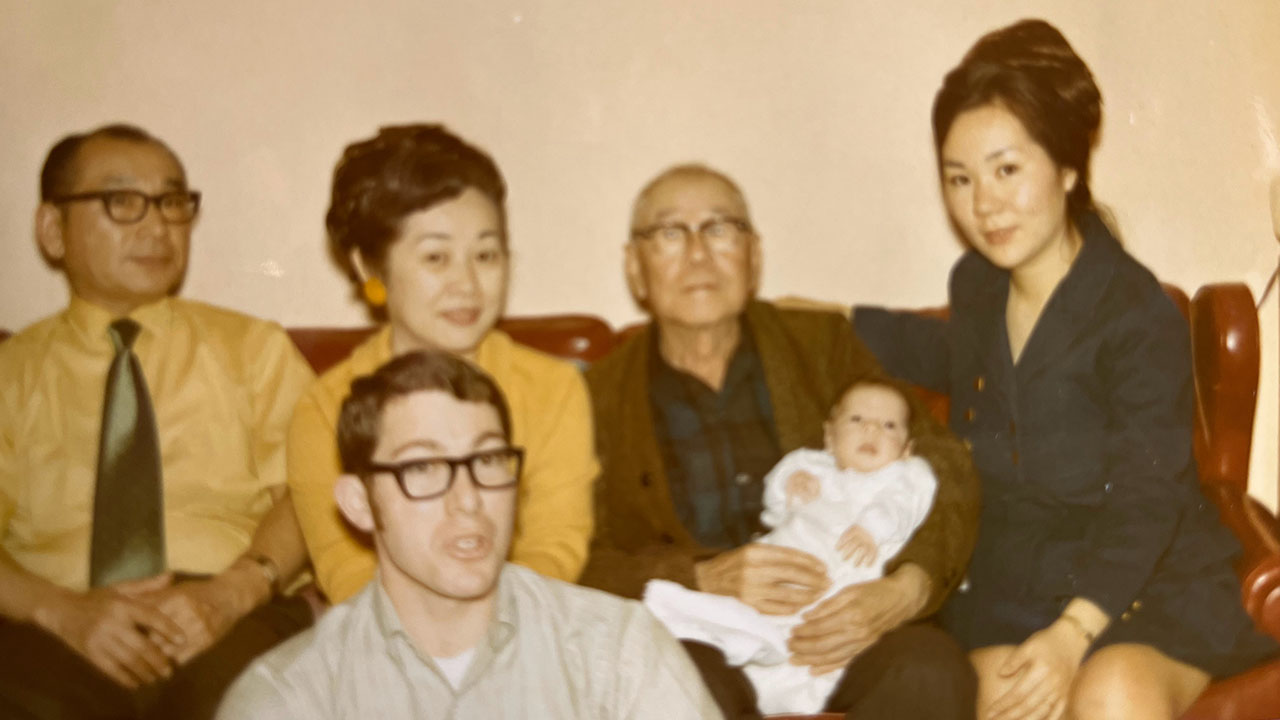
When I was growing up, my identity didn’t fit into the checkboxes on government forms. When my mom enrolled me in school or took me to the doctor, you could only check one box for race. My mom’s family is Japanese American — including my cousin who I played Barbies with, my grandma who cooked for me and my extended family at every holiday. If my mom checked the “Asian” box, that would mean ignoring my white Jewish dad. It would also mean ignoring how profoundly, deeply I am shaped by being both mixed-race and Jewish.
I think about being mixed every day. It means I have multiple perspectives, belong in many kinds of spaces and bring into one cultural space what I have learned in the other. A lot of my high school friends were mixed white and Asian. And when we were hanging out, being mixed was part of why we felt so comfortable together. By the time I was in high school, policies had fortunately changed and government forms began to allow us to check as many boxes as we needed to.
Then I started my first full-time job on the East Coast, and the HR person handed me a race form that said, “pick one.” I told her I didn’t want to pick one. She said, “Then I will check for you. You look white to me.” At that moment, she was telling me that the institution where I was about to build my career didn’t care about who I really was. This form was designed to exclude me, saying that my carefully constructed sense of self wasn’t worth considering, that the company’s paperwork mattered more than I did.
Race and ethnicity questions on forms aren’t just about identity. They capture how people of different backgrounds living in different communities have different educations, incomes, dietary preferences and health outcomes. They lead to policy decisions, budget shifts, marketing campaigns and political fights. That’s exactly why getting this right matters and why SB 1387 gets it wrong. It cuts me, and a lot of other people, out of being Jewish.
It assumes a single Jewish ethnicity where none exists. Jews have many ethnicities. Sephardi and Mizrahi identities, for example, are distinct from Ashkenazi culture, and SB 1387 offers no way to make that distinction. By one count, 12% to 15% of American Jews are not white and Ashkenazi; we are Chinese American, Black, Latino, Indigenous, Persian and more. We are no small part of the Jewish community, and a bill that flattens “Jewish” into a single, exclusive ethnic box erases the way we experience our Jewish identities.
I am Jewish. My family is Jewish. When I raised my children, we did something Jewish every day. But Judaism is my religion, not my ethnicity. I never called my grandfather “zayde” or ate kugel growing up, but my family lights Shabbat candles every week. For some Jews, Jewishness genuinely is an ethnic identity. People who say “I’m culturally Jewish, but not religious” are describing something real, and they should be able to check this box. But I refuse to accept that a box that is built around their experience, a box that excludes me and many other Jews, should be the only one that counts.
I know I could simply skip the box. But I don’t want to. Being Jewish is a profound part of who I am, and if I don’t check it, I disappear from California’s count of Jews. This bill would put me right back where I was as a kid, when I encountered those forms suggesting that some part of an institution wasn’t meant for me, and so many other Jews like me.
There are also other problems with the bill. Judaism would become the only religion with its own ethnic checkbox — there’s no proposed Christian ethnicity — at a moment when Jews should be building common ground with other faith communities, not standing apart from them. And a state government compiling an official list of who is and isn’t Jewish should give all of us pause, for reasons the last century made clear.
When I was a kid in the 1970s, my brother and I were the only mixed-race kids in our synagogue. Now synagogues are full of them. I still go to events for multiracial Jewish families because I want to show these young families that a mixed-race person can be fully Jewish, that there’s room in this community for people who aren’t white and Ashkenazi. I hope the legislature doesn’t prove me wrong.