
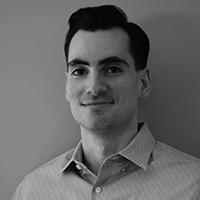
Gideon Grossman taps out rapid beats on his compact setup of bucket drums — so effortlessly, it’s hard to believe he suffers from a sometimes-crippling gastrointestinal disease.
In addition to flawless rhythm, Grossman has Crohn’s disease, an inflammation of the digestive tract that usually manifests itself through chronic diarrhea and abdominal pain. As yet there is no cure.
Grossman, 24, is a lanky and cheerful New Jersey native who’s relying on his charm and talent as he begins an ambitious effort to raise money for research into Crohn’s and other inflammatory bowel diseases, or IBD, such as ulcerative colitis.
In late July, Grossman launched Busking for Crohn’s, banging his bucket drums up the coast from San Diego to San Francisco, after which he will donate his proceeds to the American Gut Project at U.C. San Diego. He believes the project, which focuses on mapping the human body’s systems of bacteria, is the most promising in the field of IBD research. His goal is to raise $10,000.

A few months ago, Grossman was simply kicking around the idea of taking a California road trip. Then he thought, “You know what? I want to add this other element of passion from my personal history and my life and make this trip more fulfilling than just roaming around,” he said.
Doctors believe that Crohn’s disease — first identified by Jewish American gastroenterologist Dr. Burrill Crohn in 1932 — is at least partly a result of an abnormal immune system response to gut bacteria caused by genetic mutations and environmental factors. It affects about 700,000 Americans, but Ashkenazi Jews are up to four times more likely to have it than the average non-Jew of European descent.
But the field of IBD research is still fuzzy. One doctor told the Forward in 2011 that the kosher diet and other sanitary habits of 20th-century Jews (Crohn’s and colitis symptoms were virtually undocumented before the 20th century) could have left their immune systems ill prepared to deal with certain bacteria. In 2012, Mount Sinai School of Medicine researchers discovered five genetic markers that could help explain the high rates of Crohn’s among Ashkenazim.
Busking is a relatively new pursuit for Grossman, something he’s done since graduating from Princeton in 2014. In addition to on-and-off gigs as a software developer, he’s been honing his bucket drumming skills while busking in different places he has lived: New York City, Tel Aviv and Hawaii.
“[It’s] a nerve-wracking hobby, but that nervousness is what makes me feel so alive while performing,” he said in a video promoting his project. “Transforming a dull subway platform into a stage, and converting passers-by who didn’t buy tickets into an audience, is an incredibly unique experience.”
For Grossman, who grew up observing Shabbat, his Crohn’s symptoms first appeared at sleepaway camp before his senior year of high school. He had diarrhea some six times a day, lost weight and started to feel tired when he swam and played soccer. He became nervous and kept the symptoms to himself, wary of talking about his troubles in the bathroom.
When his mother came to pick him up at the end of the summer, she could tell something was wrong. So he explained his stomach struggles.
“Any Jewish mother does not like to hear that,” Grossman said. “We didn’t go home. We went straight to the hospital.”
A long diagnostic process eventually included an ingestible pill camera, invented by Israelis. By the time he moved to Maui to work for a startup within the past year, his Crohn’s disease was in remission, helped by injections of the anti-inflammatory drug Humira.
After he was diagnosed, Grossman learned about the American Gut Project, one of the world’s largest crowdsourced scientific research projects.
Grossman’s $10,000 goal for Busking for Crohn’s is a lofty one — the most he’s made busking in one day is about $40, at the Tayelet promenade in Tel Aviv, he said.
For information about donating, visit Grossman’s fundraising page at www.tinyurl.com/gideon-crohns; to see a video he made, visit www.tinyurl.com/gideon-video.