
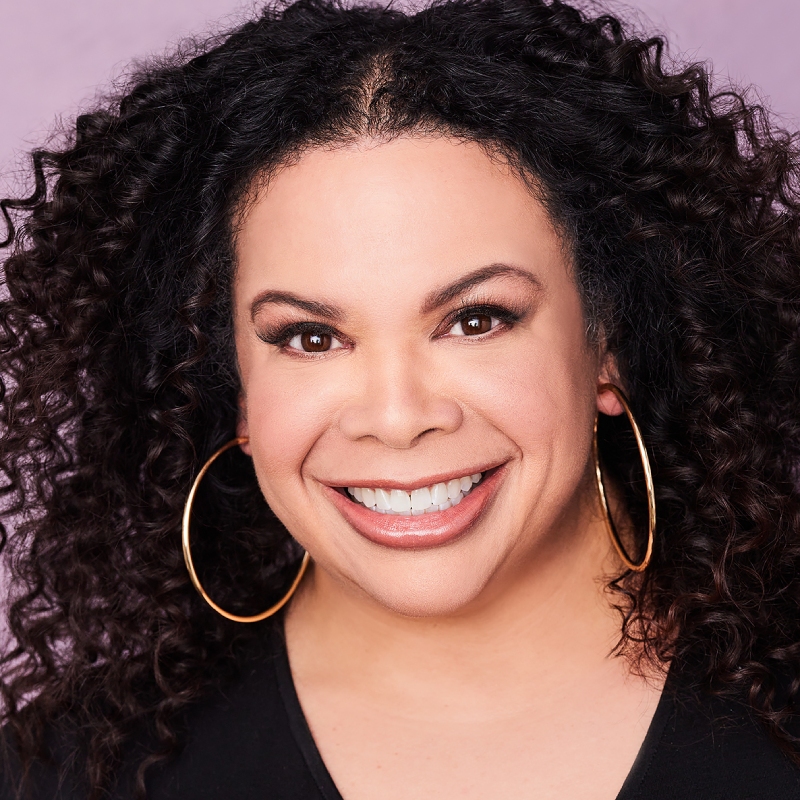

When I read the wonderful, long-overdue news in J. last month that Jenni Asher of Los Angeles will be ordained in 2025 as North America’s first Black female cantor, I felt the tears start to stream down my face almost instantly.
When I agreed to write this piece, I allowed those tears to act like a time machine and take me back 36 years to 1988, when I considered applying to Hebrew Union College to become a cantor myself.
Like many other NFTY-loving, camp-going Reform Jewish teens who came of age in the 1980s, I always seemed to have a Jewish song in my heart and on my lips — usually one by Debbie Friedman z”l. I am an alumna of the Union for Reform Judaism’s Olin Sang Ruby Union Institute (OSRUI) summer camp in Wisconsin. It seemed as if everyone I knew there was considering applying to HUC back in the late ’80s, and I was no different.
Except that I was.
Born to a white, Ashkenazi woman and a Black man — and then adopted by a white, Ashkenazi family at birth — I was the only brown, non-white face in every Jewish room. If I had attended HUC, that would certainly have remained the case.
I trained to sing opera from a young age, and becoming a cantor felt like a natural choice for me. I could not wait for my meeting with one of the cantors I knew from my summers at OSRUI, who was on the admissions committee, to get his thoughts and suggestions for my application.
But the meeting took a horrible turn when the cantor told me that HUC did not have a place for a “voice like yours.” Deeply confused, I told him again about my classical vocal training and offered to sing for him. He refused, repeating that my voice was not the right fit.
“Don’t you want to hear me sing?” I asked. “No,” he said. “That’s not necessary.”

My heart could not bear to admit what I knew was true: It was not my voice that HUC did not have a place for in his estimation. It was my skin color. Beautiful and brown.
When I then turned my attention to considering the rabbinate, things went from bad to worse. Two rabbis gave my request to meet and discuss my interest in rabbinical school the respect it deserved. But the far louder response from the other rabbis to whom I went for guidance included barely coded statements about me being Black that ranged from open concern about me someday marrying a presumably non-Jewish Black man to commentary about my “exotic looks” and how difficult it would be for me to be granted a pulpit because of them.
My dreams of becoming clergy and going to HUC died during those conversations. I chose not to apply and went on to pursue other dreams, including a career in musical theater. But I have watched and waited for the last 36 years to see when our bimahs would start to show the gorgeous breadth of Jewish identity.
That day has finally come, and I am grateful that I have lived to see it.
According to the Reform movement’s American Conference of Cantors, Ms. Asher will join two other non-white Reform pulpit cantors in America. Two. In the 36 years since I considered becoming a cantor. Add in rabbis across the denominations, and perhaps we get to two hands when counting.
This is applauded by many as being “progressive.” But for me, it offers a time to reflect upon how far we have come, and to ask how much farther we will yet go.
While I know that change can be glacially slow, at times like this, I cannot help but wonder where we would be now had I felt supported enough to apply to the clergy in the late ’80s. Celebrated, even. Would we be using fingers and toes to count the number of non-white clergy by now? Might the numbers be so high that we would have run out of fingers and toes?
I have watched and waited for the last 36 years to see when our bimahs would start to show the gorgeous breadth of Jewish identity.
I sent Ms. Asher a note to congratulate her on her upcoming ordination and on the incredibly important moment that is beautifully hers. I shared my story with her, and she wrote back almost immediately, graciously inviting me to share my story and sing a duet with her at her recital.
“I am so deeply sorry that you were not the first and should have been,” she said. And perhaps that is true. I certainly should have been allowed to sing. I should have been encouraged to apply.
Fortunately, as a writer and public speaker, I have found the space to sing the Jewish song that will forever be in my heart and on my lips.
I am where I belong.
I am often invited to be a scholar in residence at synagogues because they are seeking a voice like mine. I always marvel at the parents and grandparents who bring their very young children and grandchildren to see me because they know how important it is for their young loves to see themselves in Jewish spaces. On bimahs. Embracing Torah, literally and figuratively.
Our children will soon be able to see themselves in Cantor Asher. And because of her, those who came before her and — God willing — will come soon after will know there is room for voices like theirs.