

A handsome, four-story brick building at Page and Laguna streets that has been home to the San Francisco Zen Center for more than five decades actually began its life in 1923 as a communal living space for young Jewish women, complete with Stars of David in the ironwork.
The Emanu-El Residence Club — previously called the Emanu-El Sisterhood for Personal Service — was founded in 1894 as a neighborhood center and settlement house in San Francisco’s then-Jewish South of Market neighborhood. Settlement houses were support systems for immigrants who needed help with education, child care and employment.
After the 1906 earthquake and fire, the center relocated, along with most of the Jewish community, to the Western Addition.
When demand for a larger building grew, famed architect Julia Morgan and her colleague Dorothy Wormser, who reportedly was the first Jewish female architect in the region, were commissioned to design it. It opened as a residence club at 300 Page St. at a cost of $160,000, funded in part by a “Buy a Brick” campaign at a dollar or more a brick. The Hayes Valley location was the residence club’s base from 1923 to 1969, when it shuttered for good.

The club offered room and board in a chaperoned environment to working women or students. There was a scholarship fund for those who could not afford it. (In the ’60s, a double room cost $85 and a single $95. The price included two meals a day.) Up to 70 residents lived there at a time, ranging in age from 18 to 30 and hailing from across the country and the world. In the 1920s, 75 percent of the residents spoke Yiddish.
A 1921 article in this publication described it as a “boarding club for employed Jewish girls who, earning their own living, were thus enabled to live securely, economically and congenially.” Most residents stayed a year or less, often leaving to get married.
“The point of the building was to provide a safe place to take a moment to decide what you were going to do with your life, and then move on,” said Evelyn Miller Adler, 93, who lived there from 1954 to 1960 while studying to become a social worker. Adler “always had a roommate. We each had a twin bed, a desk and a chair, and a closet. It was close quarters. The bathroom was down the hall. We would go out and sit in the patio in the center of the building. Wisteria grew up the wall. It was beautiful there.”
There was a wide range of educational, social, cultural and recreational activities on offer as well. In the club’s early years, residents were instructed in the “domestic arts.” During World War II, they were charged with entertaining homesick servicemen. By the ’60s, they attended lectures on weighty topics ranging from the Freudian interpretation of sex to “Why People Commit Murder” by attorney J. W. Ehrlich. And there were always social events: special meals in the dining hall, dances and parties in the ballroom and even sing-along hootenannies.

“They were very well attended by the Jewish youth population. They came from all over. Men knew that Jewish women would be there,” said Adler, who still lives in San Francisco. “We had Purim parties, seders serving 250 people, and we built these wonderful sukkot with fresh fruit and vegetables in the patio.”
All this was done under the watchful eye of the live-in executive director of the club, aka the chaperone. From 1941 to 1969, that job was filled by Mary Michels.
“She lived there,” recalled Adler. “I don’t think she had a day off. She knew what everyone was doing and what they needed. She was generally standing in the doorway to the left of the front door, making sure who was coming and going. If you went on a date, you left your keys in the office. At midnight if you were not at home, she wanted to know why.”
“The men,” she added, “never got beyond the first floor!”
Michels was also responsible for introducing the concept of the House Council, made up of residents elected by their peers to govern the residence club and plan its many events. It gave these women opportunities to learn how to organize, work with others and stay within a budget.
Not all of the residents were Jewish, especially toward the end, and the residence club was never observant. It regularly hosted parties on Friday nights, and in the 1930s it produced a cookbook, “Soup to Nuts: Cook Book for Epicures,” which included recipes featuring crab, lobster, shrimp and oysters.

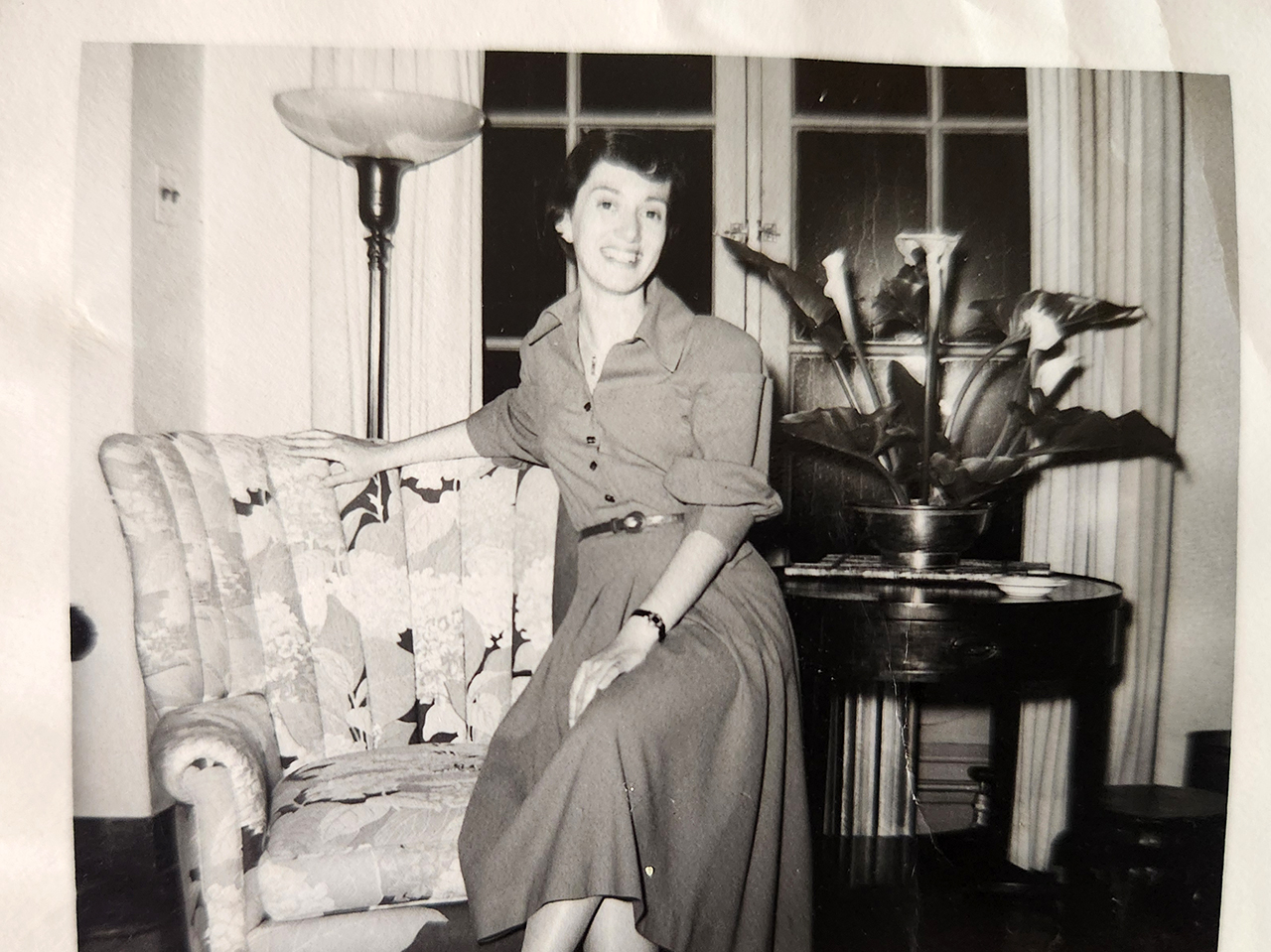
The club was more than just a place to live. My late mother, Esther Katz Selleck, a resident from 1954 to 1956, made lifelong friendships there. She told me stories about the club and the mythical Michels every bit as good as those of Mother Goose and Dr. Seuss. Many former residents visited, with husbands and children in tow, often for a Purim party. I remember going a couple of times and meeting Michels. I may have curtsied to her!
By the late 1960s, a chaperoned living situation not far from the Haight-Ashbury amid the Summer of Love was no longer in demand, and the club was sold to the San Francisco Zen Center in 1969 for $300,000.
The story of this building designed by women for women wasn’t quite over, though.
Proceeds from the sale funded Jewish Vocational Services’ and Jewish Family and Children’s Services’ programs that benefited women in need for many years after the last resident attempted to explain to Michels why she was out until 1 a.m.