

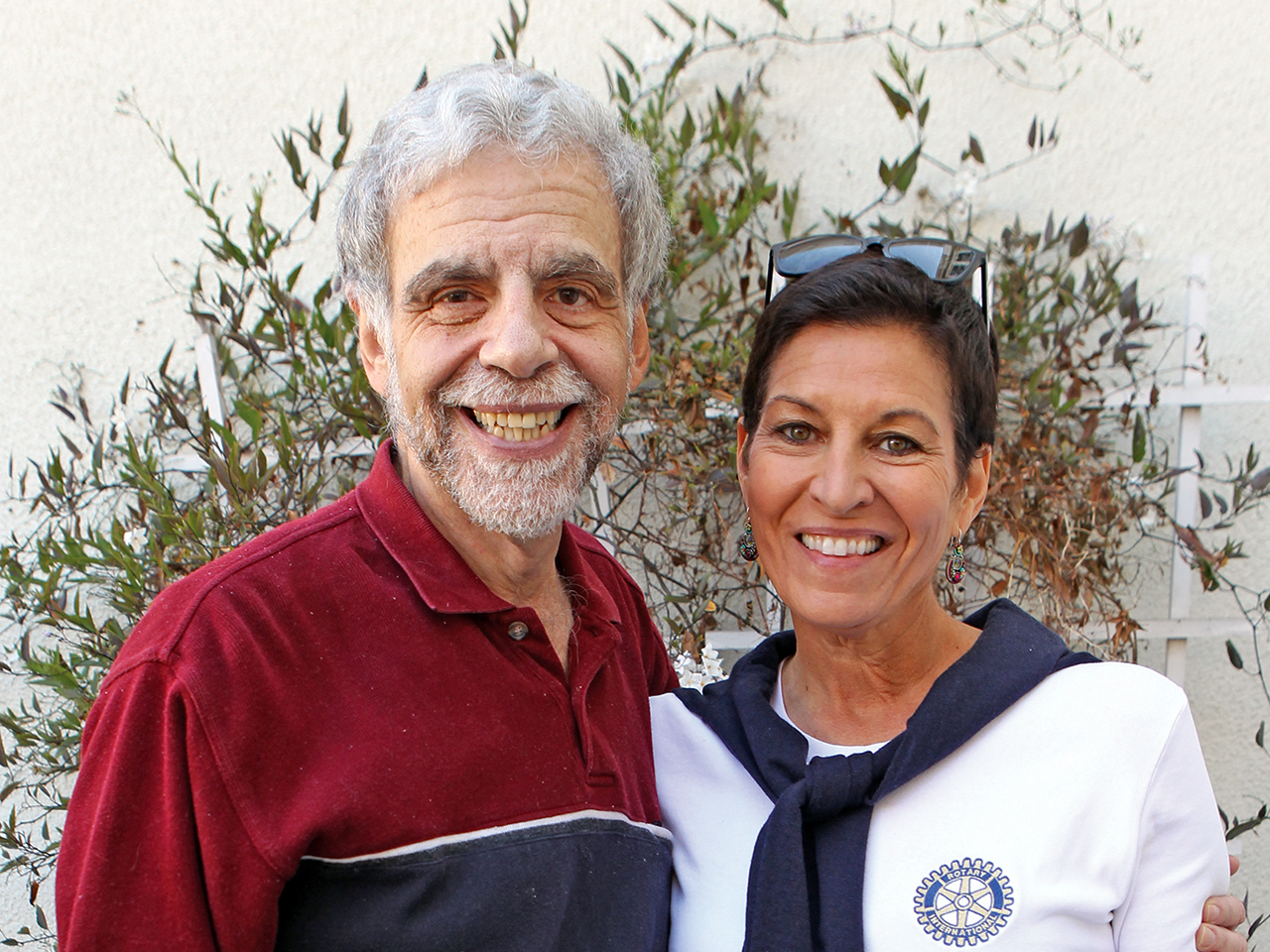
Twelve years ago, Toby Adelman donated a kidney to Marc Klein, J.’s longtime editor and publisher. She had only met him two weeks before.
Adelman said it was a J. article in March 2012 that brought them together. After she read about Klein’s renal failure and desperate search for a donor, she made a bold decision to step forward and see about becoming a donor. Three months later, one of her kidneys became his.
Klein died on May 25 at age 75 — just weeks short of the next anniversary of the transplant on June 13, 2012. Adelman’s kidney allowed him to live another 12 years, long enough to spend lots of time with his grandchildren, who had not been born yet when he was looking for a donor. He and Adelman kept in touch, exchanging notes and letters through the years.
“Marc dreamed of meeting his grandchildren,” Adelman wrote in a letter to J. published last month, reacting to news of his death. “The fact that he had the past 12 years to love and get to know his three grandsons — and they him — gives me great joy.”
Today, at 66, the retired nurse told J. she is “healthier and happier than ever” and never once regretted the life-saving gift she gave Klein, whom she’d never met before signing up to become his donor.

“I really believe freedom is a wonderful thing, and for someone to be free from dialysis, or from the need for dialysis, was a big part of why I did this,” she said earlier this month.
Kidney disease is a major killer worldwide. More than 37 million people in the U.S. have chronic kidney disease, according to the National Kidney Foundation. Some 660,000 people live with kidney failure, and 100,000 are waiting for a transplant, which can come from a living or deceased donor. The transplant waitlist is years long, and many people on the list die or become too sick for a transplant before a kidney becomes available. Each living donor who steps forward to offer a kidney means one more person can be taken off the waitlist.
As Adelman told J. in a 2012 story, she recovered quickly from the surgery and was back running and biking within weeks.
Today, the story is much the same — she’s happy and healthy, living in Mars Hill, Maine, the same small town where she grew up in the only Jewish family for miles around, she said. And she has married a boyfriend from her youth after being out of touch for many decades.
Adelman was living in San Jose in 2016, on faculty at San Jose State University’s nursing school, when she attended her 40th high school reunion in Maine and reconnected with Timothy Brewer, her middle-school boyfriend. They started a long-distance courtship until Brewer convinced her to move back to Maine and marry him, which they did in August 2018.
They bought a home near the potato farm where she grew up. She sails, canoes, does Pilates and walks five miles every morning with her husband. They spend winters in Naples, Florida, and play golf in Maine all summer.
“Happy snowbirds,” she wrote in an email to J. “Life is good.”
Adelman is also involved in her local Jewish community, as she was in the Bay Area. She is active at Congregation Beth Israel in Bangor, Maine, about two hours from her home. She’s also helping out with the Documenting Maine Jewry project, a nonprofit that serves as the repository of all things Jewish in that state.
Giving back is just in her blood. Adelman said she doesn’t talk much about her kidney donation, but when she does, she usually discovers someone in the room is also part of what she calls the “one-kidney club.”
“It’s a sweet connection,” she said.
She wishes more people would do the same and encourages those interested to reach out to their local transplant clinic or the National Kidney Foundation to find out more.
She said that giving Klein her kidney was the best thing she’s ever done, adding, “One never knows which of our random acts of kindness might tip the scale to a whole new world of goodness for us all.”