

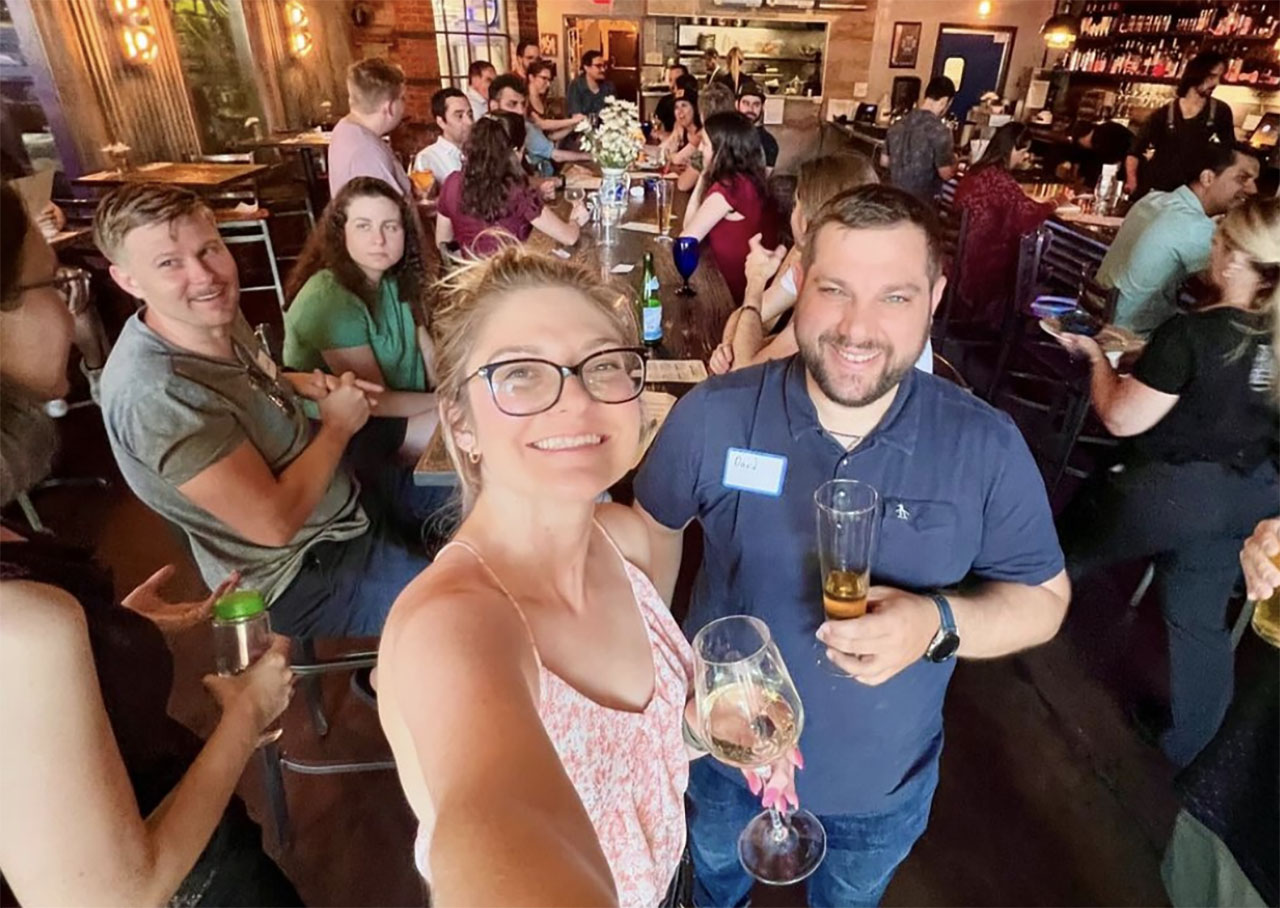
SF Bad Jews — an off-beat social group that has attracted young adult Jews with irreverent events and programs since December — has expanded to Sacramento.
Bad Jews hopes to keep adding more cities across the U.S. with unpretentious, come-one-come-all events that have included Shabbat service “after parties,” a skeeball social, a “420 park day,” shooting practice at a gun range, a post-Pride parade party and a Purim rave.
“I started to get messages from people in other states and other countries asking when we’d be going there,” said Igor Milgram, founder of SF Bad Jews — Bad, as in Bay Area Degenerate.
Milgram’s self-described “Bad Jew movement” caters to Jews in their 20s and 30s who feel like they don’t fit the mold of a “nice Jewish boy or girl” or can’t quite find their place in mainstream Jewish life.
The group’s goals include organizing events for Jewish young adults that, Milgram said, “are fun, accepting and welcoming” while shattering “stereotypes of what society expects a Jew to be.”
A native of Ukraine who moved with his family to the Bay Area when he was 2 years old, Milgram started SF Bad Jews because he found a dearth of activities for young Jews to do together outside of explicitly Jewish settings.
“We want Jews to be able to have a place to enjoy themselves and to do something light and easy,” said Milgram, 33, who works as an operations analyst for a cannabis edibles company.
Milgram’s own experiences shaped his approach to the group. During his college years at San Jose State University, he joined Jewish fraternity AEPi. After college, he started attending Jewish events but found those gatherings to be a “little boring, very clean cut, and [they] just didn’t have a lot of room for people to be their true selves.”
Enter Bad Jews.
Social media has aided its growth. Since launching in December, SF Bad Jews’ Instagram account has accumulated nearly 1,400 followers. The account for the Sacramento chapter has over 350 followers so far.

The organization gained visibility in January when it led a “reverse boycott,” encouraging people to patronize food businesses in San Francisco that had been targeted by anti-Israel activists after the Oct. 7 Hamas massacre in Israel.
Milgram said he was unprepared for the attention that followed the reverse boycott.
“It blew up on Instagram,” he said. “There were high-level Jewish influencers sharing my content, and I was like, ‘Oh God, what did I do? What have I started?’”
Sac Bad Jews launched in April with a Shabbat happy hour at a Sacramento bar that attracted about 20 people and recently joined SF Bad Jews on a river-rafting trip.
“We were blown away with attendance” at the launch event, said Erica Altman, who is leading the Sacramento chapter.
Altman said she’s been heartened by the response and expressed gratitude for helping to create friendships and possibly romantic relationships — a Sac Bad Jews bowling night on July 31 will have a lane designated exclusively for singles.
“It’s been so rewarding to see people making these connections in real time,” she said. “At our events, there’s no judgment with how observant you are or aren’t. A lot of us just want to hang out with fellow Jews who have stuff in common.”
Creating these opportunities has been more important post-Oct. 7, Altman said. Both chapters have a WhatsApp group, which has allowed members to discuss their reactions to rising antisemitism.
“Everyone I’ve talked to has said, ‘We’ve felt very isolated since Oct. 7,’” she said. “Personally, I just felt really alone. And ever since we’ve had this group, we’ve had this space to have conversations and talk about emotions that we are all experiencing. Just being able to collaborate has made a world of difference.”
Altman, who works in management and operations at a senior living community, also attended San Jose State University, though she and Milgram didn’t meet until after college. She credits her experience at Jewish summer camp, as well as a 2015 Birthright trip, for strengthening her Jewish identity.
Everyone involved with Bad Jews is doing so strictly out of passion and on a volunteer basis, Milgram said, noting that he has a team of six people organizing events.
Bad Jews, which became a nonprofit in March, has started fundraising so it can open more chapters, Milgram said, especially in places with smaller Jewish populations and fewer resources for their young adult Jews.
“I want to focus on places that have some people but not a huge amount,” he said, “because they’re the people that feel the most isolated, feel the most alone and who are the most in need of this kind of organization.”