

This article originally appeared on Haaretz. Sign up here to get Haaretz’s free Daily Brief newsletter delivered to your inbox.
PALO ALTO (Haaretz) — Like many Israelis who descended on Silicon Valley at the start of the high-tech boom, Hagit and Oded Shekel were planning to stay for only two years. Nearly 25 years and four children later, they are still here.
And like many Israelis who call this part of Northern California home — or at least, home away from home — the Shekels have lived, for most of this time, in an Israeli bubble. They speak Hebrew at home, socialize mainly with other Israelis, send their children to the Israeli Scouts movement and make sure to take in every Israeli show that comes to town.
“We still get our news about what is happening here in the U.S. from the Israeli media,” says Hagit.
Not surprisingly, they hardly ever took an interest in local politics.
“We’ve been living in Sunnyvale for the past 14 years and had no idea even where the city council building was located or what it looked like,” she admits.
That all changed a few weeks after Oct. 7, 2023, when the Shekels discovered that their mayor, along with several city council members, had signed a declaration condemning Israel for its actions in Gaza. Equipped with Israeli flags, they staged a protest at the next city council meeting and brought along their Israeli friends and neighbors. From then on, they began showing up at every city council meeting.
“Nothing like this had ever happened before,” recounts Hagit.
Shattered bubble
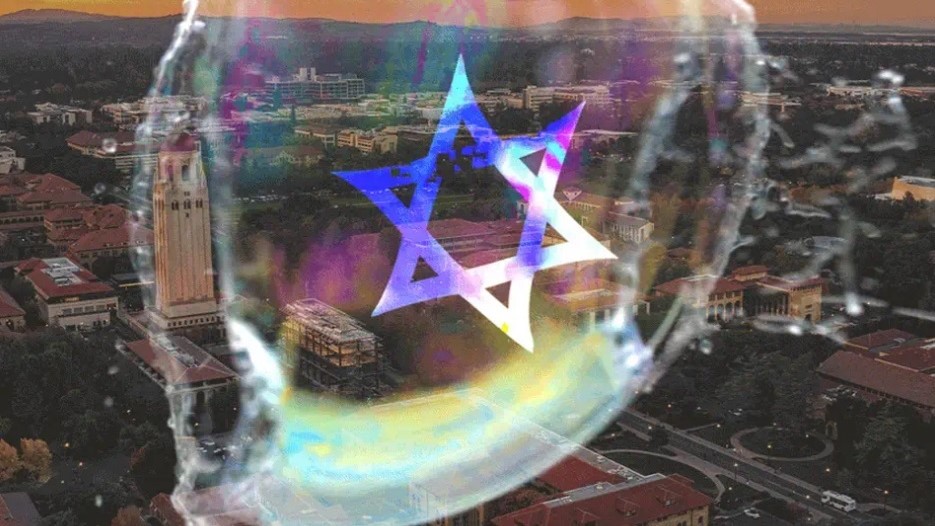
More than a year after the deadly Hamas attack on Israel, Jewish communities around the world are still reeling. But for Israeli expats, it has been an even bigger shock to the system. Not only because they are more likely to have known the victims, but, having been born and raised in a country where Jews are the majority, most of them had never encountered antisemitism before Oct. 7.
An estimated 40,000 Israelis live in Silicon Valley — the largest concentrations in the towns of Sunnyvale, Mountain View, Palo Alto, Cupertino and Los Altos. Many of them, like the Shekels, arrived in the area on short-term relocation assignments and ended up staying.

Among Israeli expat communities situated across the globe, Silicon Valley is perhaps the largest, most affluent and most successful. Israelis have become such a force in this high-tech capital of the world that Hebrew-speakers have nicknamed it “Silicon Wadi,” a reference to the ubiquitous dry river beds in Israel.
Silicon Valley and the larger Bay Area also happen to be known for very progressive politics — virtually synonymous these days with pro-Palestinian activism. Indeed, it is no coincidence that the anti-Zionist groups Jewish Voice for Peace and Students for Justice in Palestine — leading forces in the campus protests of the past year — got their starts out here. Since Oct. 7, many of the anti-Israel resolutions passed in city councils across the country and many of the complaints about antisemitism in the public school system have also originated here.

(Adva Ophir)
“As Israelis we’re very familiar with terrorism, but not with antisemitism,” notes Guy Miasnik, a tech investor and entrepreneur who also sits on the board of the local Jewish federation. “Suddenly, we’re getting exposed to it in our kids’ schools, on their campuses and in city councils. So, for the first time I can remember, you have Israelis here in Silicon Valley becoming active in local politics.”
Miasnik, who has been living in the Bay Area for nearly 25 years, describes the level of grassroots activism he has witnessed among local Israelis this past year as “unprecedented.”
“These are people who before Oct. 7 had no idea what a school district or what a school board was,” he says. “I mean these things don’t exist in Israel. And suddenly they’re showing up at school board meetings and city council meetings and making lots of noise.”

Ronit Jacobs, who runs the Israel department at the JCC in Palo Alto, moved to Mountain View with her American husband and three children 23 years ago. She helped set up the afternoon Hebrew-language school at the JCC that now serves 650 students, primarily children of Israelis, and has branches around the region.
“On Oct. 7, secular Israelis here suddenly understood that we are Jewish,” she says. “It’s not like growing up in Israel where you get your Judaism in the air and in the water. In Israel, you don’t need to work on being Jewish.”
She adds: “October 7th was when we understood, whether American or Israeli, that we Jews are all in this together. We have experienced a big awakening this past year.”
Life-changing encounter
Ella Segev, a 16-year-old high school student, moved to Palo Alto with her family when she was 9. A few weeks after Oct. 7, she relays, a classmate came up to her in the school corridor and, to her utter astonishment, said: “Fuck the Jews.”
“I was absolutely shocked,” she recalls. “That’s when I decided I needed to take action. So, I started showing up at school board and city council meetings to try to explain to local politicians what Jewish and Israeli students like me were going through.” She eventually landed a private meeting with the mayor.
“I had never been an activist before,” says Segev. “Before Oct. 7, I was just your average Israeli kid doing Passover and fasting on Yom Kippur. But what happened that day changed my life.”

Until this past year, notes Jacobs, she had never encountered Israelis who would consider hiding their identity.
”Most of us are proud of who we are and never felt we had anything to be ashamed of,” she says. “We didn’t think twice about walking around with T-shirts that had Hebrew writing on them. But suddenly, I started getting calls from Israeli friends, asking me if I think they should take down their mezuzahs or if they should stop speaking Hebrew outside. It made me realize what a huge impact Oct. 7 was having on us Israelis.”
Loosening the purse strings
In times of crisis for Israel, Jewish Americans have typically responded by opening their wallets. For Israelis, however, even those based in the United States, charity and philanthropy are not as second nature.
“Donating money is not part of the Israeli DNA,” notes Oded Hermoni, a venture capitalist who moved to Silicon Valley 13 years ago. “For Israelis, it’s always been about donating blood.”
That changed as well after Oct. 7. Hermoni is the co-founder of J-Ventures, a high-tech investment fund — fondly known as the “capitalist kibbutz” — run by a group of Jewish Americans and Israelis.

After the Hamas attack, J-Ventures set up an emergency fund to help the victims. “We raised as much money from Israelis as we did from American Jews, and, for me, that was a surprise because I’d never seen Israelis give in that way before.”
Hermoni is probably the rare example of an Israeli based in Silicon Valley who, as soon as he arrived in the country, began befriending local Jewish Americans.
It was the shock of Oct. 7 that prompted Hagit and Oded Shekel, who until then had rarely mingled with Jewish Americans, to seek out their company. “We realized we were all in this together and that by joining forces, we could affect change,” says Hagit.
The Shekels are the founders of the Bay Area Jewish Coalition — a grassroots association of Israelis and Jewish-Americans committed to fighting anti-Israel and antisemitic initiatives in local councils and public schools. In typical Israeli fashion, it uses WhatsApp groups to mobilize members into action. According to Hagit, thousands of local Israelis and Jewish Americans have joined these WhatsApp groups over the past year.
“This was a first-of-its-kind partnership between local Jews and Israelis, with Israelis leading the way,” notes Miasik, who helped win funding for the coalition from the local Jewish federation.
Before the Nov. 5 election, coalition volunteers interviewed candidates running for local office in the Bay Area in order to ascertain where they stood on issues of concern to Jews and Israelis. They subsequently published a “Voter’s Guide” with recommendations for candidates running in 200 races across the region.
“I had some new members of the state assembly call me and say that they got elected thanks to our recommendations,” says Oded Shekel.
But while Oct. 7 and its aftermath have created new bonds between Israelis and Jewish Americans living in the Bay Area, it has also exposed a growing divide within the Hebrew-speaking community.
In the nine months that preceded the Hamas attack, many Israeli expats, in locations across the globe, held weekly demonstrations in solidarity with Israelis back home who were protesting the government’s judicial coup. These Israeli expats were part of a global network, known as UnXeptable, headquartered in the Bay Area.
A few weeks before Oct. 7, when Benjamin Netanyahu was visiting Silicon Valley, thousands of them came out to protest the Israeli prime minister. But since then, laments Offir Gutelzon, the Israeli high-tech entrepreneur who founded UnXeptable, it has been difficult to mobilize Israelis and get them to speak out against the Israeli government.

“Oct. 7 did to lots of Israelis here in the Bay what it did to Israelis in Israel,” says Gutelzon. “It made them very defensive about Israel. Here, too, they’re more divided than ever, and here too, you have many who support Donald Trump.”

Like the overwhelming majority of Israelis, Hanoch Eiron, a retired Silicon Valley marketing executive, supported the Israeli offensive in Gaza immediately after the Oct. 7 attack. “But when information started coming out about the atrocities being committed there, as well as in the West Bank, it made discussions with other Israelis very difficult for me. We were no longer on the same page like we had been a year earlier.”
Over the past year, says Eiron, many of his friendships with local Israelis have come under great strain. “My view is that democracy and occupation are incompatible, but I cannot bring this up in conversations anymore without introducing tensions.”
He also discovered that he did not see “eye to eye” with many local Israelis with regards to what constitutes antisemitism. In his view, his Israeli neighbors tend to “over-react” to legitimate criticism of Israel’s actions.
The Zionist project isn’t over
For many of the Israelis who have relocated here over the past few decades, the survival of their homeland was always taken as a given. In many ways, Oct. 7 and its aftermath have blasted that assumption apart.
“Most of us grew up in a world where Israel was a strong and stable place, and with all our love for the country and our attachment to its people, we didn’t feel we needed to continue investing in the Zionist project,” says Miasik. “What Oct. 7 taught us is that the Zionist project is not over and that there’s still lots of work to be done.”
Events of the past year have also caused many Israelis here to question where they see their future.
“On the one hand, you have those who feel they want to be back in Israel because that’s where their family and friends are, and they even have guilt pangs about being so far away at a time like this,” says Miasik. “On the other hand, I also talk to Israelis who are in absolute despair about what’s happening in the country and feel they have no place to return to.”
Oded Shekel does not know of many Israelis in Silicon Valley who are thinking of going back, but he does know of quite a few contemplating a move to other parts of the United States.
“California has become too progressive for them,” he says. “Israelis I know who have kids in middle school here in the Bay are telling me there’s no way they’re going to send them to high school out here.”
“I don’t remember anything like this ever coming up before,” he adds. “I mean there are definitely Israelis who have left because life is too expensive out here, but because their kids are having a difficult time in school being Jewish?”