

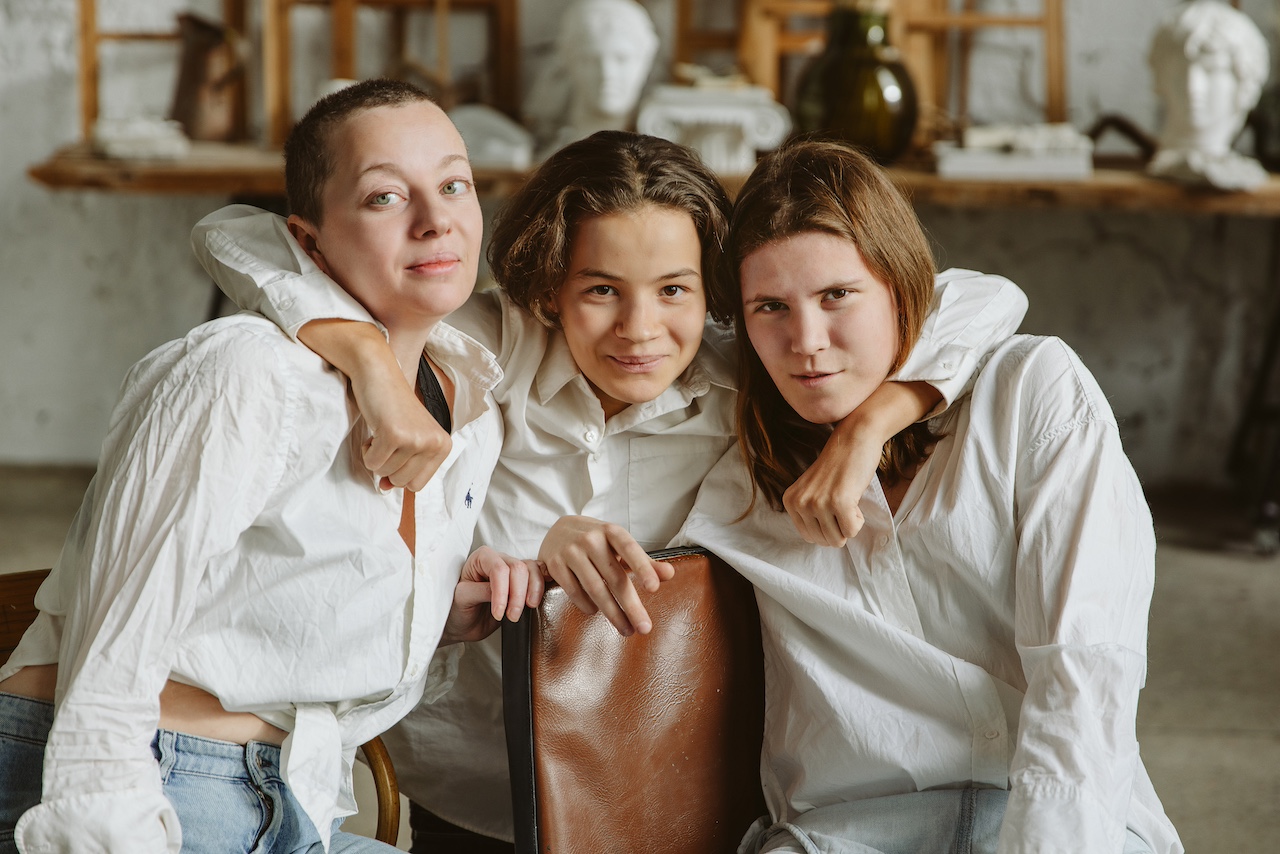
An emigre in San Francisco has launched an online campaign to free a renowned Russian theater director serving six years in prison for “justifying terrorism” in a play the Kremlin once supported.
“She’s my friend for more than 20 years now,” Olga Zhuravskaya told J., referring to Evgenia “Zhenya” Berkovich, who was arrested in May 2023 and sentenced in July 2024.
Zhuravskaya, who like Berkovich is Jewish and a native of St. Petersburg, works for a mobile crisis-response team in San Mateo but spends much of her time on volunteer work. Zhuravskaya, 42, has founded organizations dedicated to the inclusion of special-needs children in the United States and in Russia and is active in local efforts to combat antisemitism.
Last month, Zhuravskaya launched #freeberkovich and freeberkovich.org to pressure the U.S. government to include Berkovich, 40, in the next prisoner exchange negotiated with Russia. Her online petition at Change.org has garnered more than 5,400 signatures in its first weeks.
The campaign is part of a global effort by Jews and artists to bring attention to the case, which has been described as the first time that charges have been filed against a theater production in post-Soviet Russia. The case caught the attention of human rights groups, such as Amnesty International, and the media, including the New York Times, Washington Post, BBC and CNN. However, that attention has dwindled since the trial ended last summer.
The play at issue is “Finist the Brave Falcon,” written by playwright Svetlana Petriychuk and staged by Berkovich. A documentary-style piece of work, it is based on the true stories of Russian women who responded to what they believed were online marriage offers, but that turned out to be ISIS recruitment scams. Several of the scamming victims served jail sentences after they escaped Syria and returned home to Russia.
“Finist the Brave Falcon” debuted in Moscow in 2021 to great acclaim and with the support of Russia’s Culture Ministry. In 2022, it won two Golden Mask awards, the country’s top prize for theater.
But as repression grew in Russia after its invasion of Ukraine three years ago, Kremlin support for the play soured. Since then, the number of people jailed for political crimes, including opposing the war, skyrocketed.
On May 5, 2023, Berkovich and Petriychuk were arrested in Moscow on charges of “justifying terrorism,” a criminal offense in Russia. After more than a year in jail, the two women were sentenced on July 8, 2024, to six years in prison.
Berkovich and Petriychuk vigorously denied the charges, noting, in fact, that their play carries a clear warning against terrorism. They pointed out it was even staged in a prison, with the support of Russia’s prison authorities, to educate female inmates about the dangers of such recruitment efforts.
As soon as the two women were arrested, outrage erupted in Russia. Within days, an open letter in their support posted by Novaya Gazeta, an independent newspaper forced to leave Russia since the war began, had been signed by more than 3,000 people, with one prominent Russian journalist writing, “It’s a bit like arresting Dostoyevsky for justifying killing old ladies after writing ‘Crime and Punishment.’”
Activists and artists in Russia and elsewhere have suggested that Berkovich’s arrest had less to do with this particular play and more to do with her public opposition to the war in Ukraine. Soon after Russia’s invasion in February 2022, she stood on a Moscow street holding a piece of paper saying “No War” and was jailed for 11 days, putting her on the Kremlin’s radar.
I’m kind of hopeful. American Jews, Israeli Jews, Russian Jews, Ukrainian Jews, all of us are really supporting this cause. Olga Zhuravskaya, #freeberkovich leader
Zhuravskaya said she launched the “Free Berkovich” campaign after speaking to Berkovich’s lawyer in Russia. They agreed, she said, that domestic efforts to free her were no longer enough and that they needed to turn to the world community, particularly to the United States, which plays the leading role in deciding which Russian prisoners are included in prisoner exchanges.
Berkovich’s supporters were hoping, Zhuravskaya said, that she would be part of a prisoner exchange in August that, among others, freed Wall Street journalist Evan Gershkovich and former U.S. Marine Paul Whelan, who were both serving long sentences after espionage convictions. Now Berkovich’s supporters believe that if enough attention is brought to the case, she will be freed in the next such exchange.
“I’m kind of hopeful,” Zhuravskaya told J. “American Jews, Israeli Jews, Russian Jews, Ukrainian Jews, all of us are really supporting this cause.”
She is convinced that the Kremlin knows about the campaign to free Berkovich.
“All the social media networks are monitored, and I write in Russian,” she said. It’s really up to the Americans now, particularly the Trump administration, she said.
“I think that if President Trump would be interested in getting Zhenya back, I think the Kremlin wouldn’t insist on keeping her,” she added. “And since this administration has been doing a lot of good things for Jewish people, and I’m very appreciative, I am hopeful that one more Jewish woman could be released from the gulag.”
Zhuravskaya notes that along with being a distinguished poet and theater director, Berkovich has been involved in humanitarian causes.
The two met in Moscow when Berkovich helped Zhuravskaya run a festival for one of her children’s charities in a Moscow park. Berkovich became close to two teenage girls living in an orphanage and eventually adopted them. Since her arrest, Zhuravskaya said, both girls have been traumatized.
This is a Jewish issue, Zhuravskaya notes, not only because Berkovich herself is Jewish but because she has treated Jewish subjects in her work. Two well-publicized plays she staged were “The Black Book of Esther,” which intertwines the Purim story with Holocaust testimonies, and “The Trial of Joseph Brodsky,” a dramatization of the Soviet oppression of that noted Jewish poet.
“Leading Jewish critics have called her a ‘modern voice of Jewish resilience,’ comparing her to Osip Mandelstam for her courage and creative legacy,” Zhuravskaya writes on the homepage of freeberkovich.org, referring to the Russian Jewish poet who died in a Soviet labor camp in 1938 during one of Josef Stalin’s infamous anti-Jewish purges.
“We couldn’t free Mandelstam,” Zhuravskaya told J. “So let’s free Zhenya.”