
I felt like time was running backward when I heard that Steven Meiner, the Jewish mayor of Miami Beach, wanted to cut funding to the popular nonprofit O Cinema if it did not cancel a planned screening of the Academy Award–winning documentary “No Other Land.”
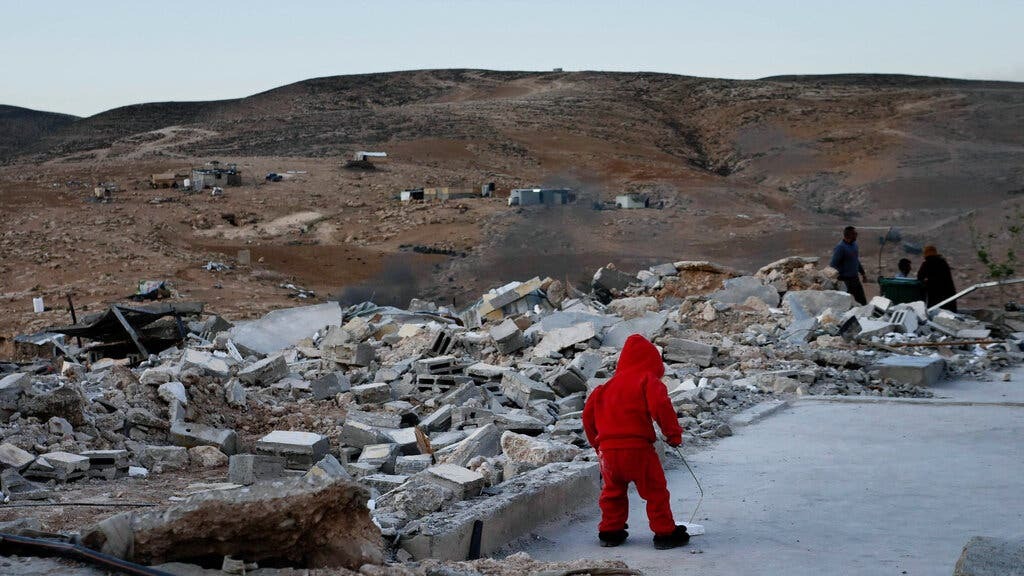
The film, made by a Palestinian-Israeli collective, tells the story of the devastation and destruction by Israelis of Palestinian villages in the occupied West Bank, and the unlikely friendship between a Palestinian activist and an Israeli journalist.
The mayor’s claims that the film was “false, one-sided propaganda” sparked backlash and an outcry by filmmakers and civil rights groups concerned about censorship, the First Amendment and Israel-Palestine issues. The Miami Beach City Council received a deluge of email and social media protests. In response to the uproar, the mayor rescinded his proposal to cut O Cinema’s funding and evict it from a city-owned space.
In the end, it was a small but significant repudiation of censorship.
The turmoil in Miami Beach was deeply familiar to me.
I was the founding director of the San Francisco Jewish Film Festival, the oldest and largest Jewish film festival in the United States. We also faced controversy for screening films that documented or dramatized the consequences of Israel’s occupation of Palestinian land. When screening the documentary “Talking to the Enemy” and hosting a Palestinian advocate of nonviolent resistance in 1988, the festival became the center of a media circus, and Jewish community leaders pilloried the festival and cut our financial support.
In 2009, not long after I left the festival to make documentaries with my partner Alan Snitow, the festival screened “Rachel,” a documentary about American activist Rachel Corrie, killed in Gaza by an armored Israeli bulldozer while she was protesting the Israeli occupation. The festival was besieged by a campaign against the film. Some leaders within the Jewish Community Federation in San Francisco as well as some major donors called for censorship.
The festival screened the film anyway — to a sold-out audience.
Alan and I went on to make “Between Two Worlds,” a 2011 film about the Jewish community’s internal divisions, focused in part on what happened with “Rachel” as well as the boycott, divestment sanctions movement at UC Berkeley. “Between Two Worlds” similarly faced backlash from Jewish leadership. Despite great reviews and sold-out screenings, many communities tried to censor the film, particularly on college campuses. The UCLA Hillel and Jewish studies department pulled their sponsorship and canceled our venue at the last minute. At UC Santa Cruz, the provost felt she needed security for the screening. Jewish film festival programmers around the country told us — always off the record — how much pressure they faced from conservative donors, who claimed it was “sophisticated propaganda.” We were told repeatedly that we should not be using the word “occupation” and that we should not air internal disagreements. But at least we didn’t receive death threats as the directors of “No Other Land” have.
Just last year it was déjà vu related to another Oscar winner. Director Jonathan Glazer’s acceptance speech for his best international feature film “The Zone of Interest” ignited a similar controversy. The film dramatizes the quotidian life of the family of the commandant of Auschwitz living next door to the death camp, despite the smoke, smells and screaming over the backyard fence. Glazer said his film was about the process of dehumanization during the Holocaust, and that it was relevant to our own times, especially during Israel’s attacks on Gaza. Jewishness and the memory of the Holocaust, he added, should not be hijacked to justify victimization of Palestinians.
The Jewish community has been riven since Israel’s Independence War and the Palestinian Nakba in 1948. Fierce controversies erupt with regularity over cultural works that deal with it, going at least as far back as S. Yizhar’s 1949 Hebrew novella, “Khirbet Khizeh,” about Israel’s violent expulsion of Palestinians from one town. That book was considered an Israeli masterpiece, vilified by critics who couldn’t bear its wrenching view of the price paid by Palestinians for Israel’s independence. But the novella and the reactions to it can be seen as the template for ongoing cultural controversies since then.
“Khirbet Khizeh,” along with subsequent works of art, including “No Other Land,” challenge viewers with their unflinching depictions of lived reality. Sadly, there will be many more works of witness and art to come as long as the underlying causes of the Israel-Palestine conflict remain unresolved. What happened in Miami Beach this week is yet another recapitulation of this seemingly unending battle over how to tell the story, and who gets to tell it.