
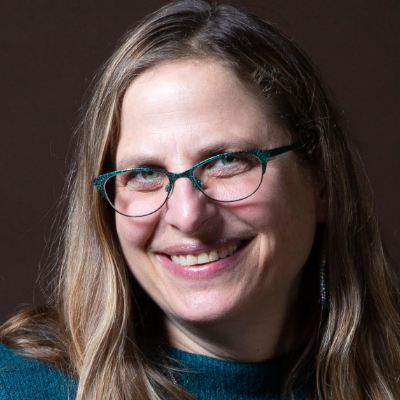
When Dr. Jessica Nutik Zitter set out to make a documentary about her colleague and mentor, Highland Hospital chaplain Betty Clark, she wasn’t planning to appear in the film. Until about a year and a half ago, the working title was “The Chaplain of Oakland.”
But Zitter, the director, eventually realized that she needed to be in the film, too.
“The Chaplain & The Doctor” will mark its world premiere as part of the San Francisco International Film Festival with two screenings in April, one in San Francisco and another in Berkeley.
This is the third documentary that Zitter has been involved with. And at 86 minutes, it is her first full-length film. She was featured in “Extremis,” a 2016 Oscar-nominated short about the life-and-death decisions doctors make in the intensive care ward. She then co-directed “Caregiver: A Love Story” about two congregants at her synagogue, Oakland’s Modern Orthodox Beth Jacob Congregation. The short screened at the San Francisco Jewish Film Festival in 2020.
Zitter also founded Reel Medicine Media, the nonprofit behind “The Chaplain & The Doctor,” to shine a spotlight on issues in health care.
“I could write 50 million articles, but people need the visuals,” she said. “They need the story that they can watch and imagine themselves in. And people don’t read as much as they used to.”
The 59-year-old Oakland resident specializes in — and calls herself “an evangelist for” — palliative care, which seeks to improve the quality of life for people with serious or terminal illnesses. Because of the hierarchies that exist at hospitals, she acknowledges that for years, she didn’t know much about chaplains or the work they did.
“As doctors, we’re moving fast, and there’s a culture of certainty in the hospital,” Zitter said. “We’re supposed to know things, and if you know something quickly about a patient, or about a disease, that’s a good thing.”
Clark, a Black woman who celebrates her 80th birthday in the documentary, grew up in Kentucky in a family of sharecroppers during the Jim Crow era, which lasted into the mid-1960s. She is a descendant of slaves and indentured servants. Clark and her family members only had access to medical care when white doctors made time to see them outside of their regular duties.
“Betty pointed out, very bravely, to me, my own blind spots about bias,” Zitter said. “In addition to attending to the heart, mind and spirit of our patients, I was also learning from Betty that I wasn’t really paying attention to the patient’s story, and who they are as a human being.”
Clark became both a mentor and a close friend to Zitter.
Most of the patients who appear in the film are Black, an accurate reflection of the patient population at Highland, which is officially known as the Wilma Chan Highland Hospital Campus. Zitter said the majority of her patients are people of color.
The film also includes a patient who is a Holocaust survivor and shows how a social worker incorrectly assumes the patient has financial resources because she is Jewish.
“The Chaplain & The Doctor” takes an unexpected turn when we learn that Zitter was visiting Israel for the wedding of close friends on Oct. 7, 2023. Staying in the Tel Aviv area, she spent hours in a bomb shelter as the Hamas massacre unfolded in southern Israel.
Zitter, a descendant of pogrom and Holocaust survivors, comes home and realizes she is having trouble returning to work. It is Clark who counsels Zitter, as she, too, understands what it means to carry ancestral trauma.
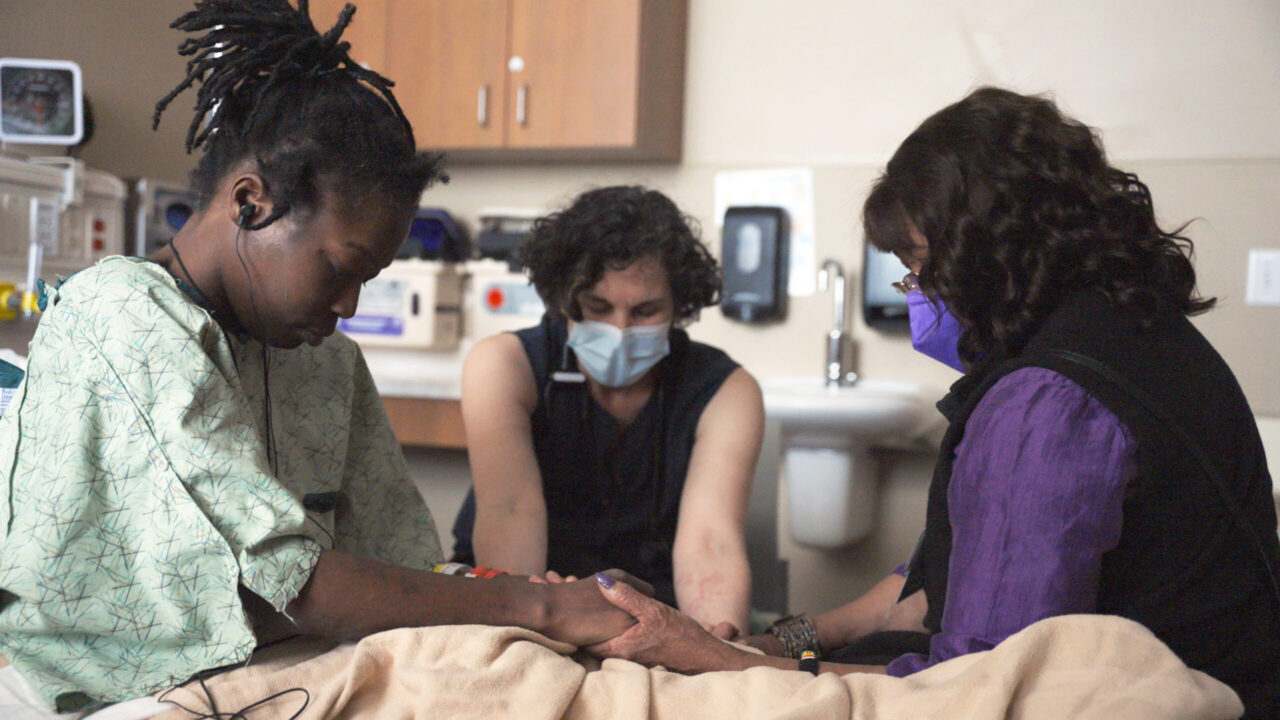
Zitter describes herself as an observant Jew; it becomes obvious in the documentary that she and Clark relate because they are both people of faith. Though Zitter is seen praying with Clark and her patients, Zitter said she felt uncomfortable doing so at first, like maybe she shouldn’t be there. That changed over time.
“I want to honor what people need that will bring them comfort,” Zitter said. “Through praying with them, I can connect with their soul.”
As part of the emphasis on faith and spirituality in the film, we see Clark attending a Shabbat dinner at Zitter’s house and sharing her life story with the Jewish guests.
Zitter sees the film as a natural one for Jewish film festivals, she said, even though putting so much of her Jewish self into the film was scary for her.
“The film is an homage to a person I love and respect, and bringing myself into it as a buddy film was hard, as I didn’t want to take her out of the limelight,” Zitter said. “But even as a secondary character, or a foil, it felt flat, so I had to bring in the things going on in my life.”