

Books coverage is supported by a generous grant from The Milton and Sophie Meyer Fund.
Two fantasy sequels, two memoirs and two books based on the lives of the writers’ grandmothers — a work of historical fiction and an illustrated children’s book — comprise this roundup of new(ish) books by local authors, a periodic feature in J. All of these books may be ordered through your local independent bookstore, including Afikomen in Berkeley, or online at bookshop.org.
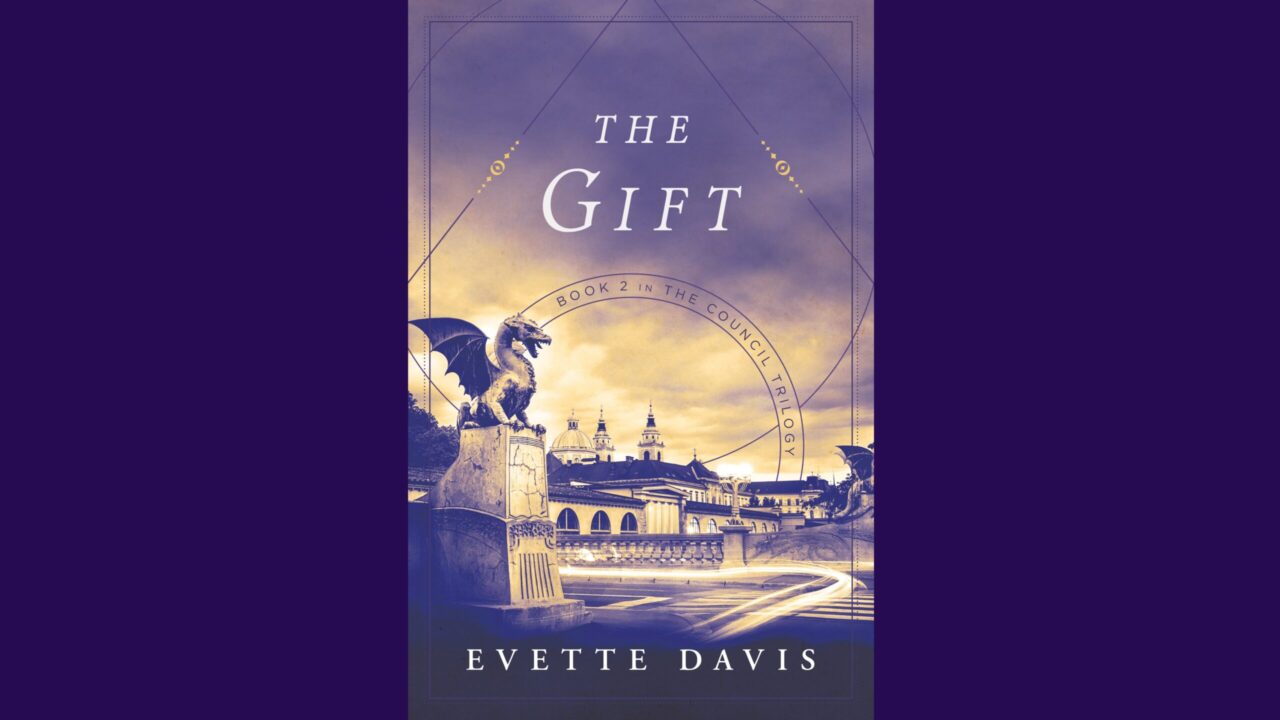
“The Gift,” by Evette Davis (288 page, SparkPress)
This second book in Evette Davis’ urban fantasy “Council” trilogy tells of a San Francisco-based secret society of supernatural beings who band together to save the world from fascism. The main protagonist, a witch named Olivia, is sent to Eastern Europe on a mission from the group, where she meets Josef, a Czech Resistance fighter from World War II who became a vampire as he lay dying in a field after an encounter with Nazi soldiers. What does it mean to be a Jewish vampire, albeit one who lost his faith after the Holocaust? Davis is a former Bay Area journalist, a board member of Litquake, the Bay Area’s premier literary festival, and co-owner of a public affairs firm in San Francisco. Her previous novel, “48 States,” was named one of the best indie books of 2022 by Kirkus. She lives in S.F. and Sun Valley, Idaho; the third book in the trilogy will be published in September.
“Shaken Free,” by Ilana DeBare (397 pages, Hypatia Press)

Oakland writer Ilana DeBare has come out with the sequel to her 2023 fantasy novel “Shaken Loose,” which launched the story of Annie Maple, a young San Francisco woman who dies and finds out — to her chagrin — that the classic Christian version of heaven and hell is correct, and anyone who has not accepted Jesus as their savior is condemned to the netherworld. At the end of “Shaken Loose,” Annie has managed to return to Earth through a secret portal. In “Shaken Free,” she goes back to hell to reunite with her friends, including a 20th-century Chinese revolutionary and the fifth-century Hun who has become her lover. But the systems within this dismal dystopia are fast decaying. God has abandoned the universe, leaving an existentially depressed Satan in charge of a hell where lost souls struggle to understand how a supposedly just God could permit so much injustice.
“Outside Voices: A Memoir of the Berkeley Revolution,” by Joan Gelfand (256 pages, Post Hill Press)

New York native Joan Gelfand arrived in Berkeley in 1972 and stepped right into the revolution. Young and idealistic, she hooked up with like-minded feminists and artists and lived through the social and political experiments that defined the Bay Area in the ’70s. Communes, music collectives, sexual experimentation and on-the-road adventures all form part of this memoir of a woman who eventually left her second-wave feminist tribe when it embraced radical gender separatism. She went on to establish herself as a Bay Area poet and writer, whose works have appeared in more than 150 publications. “Outside Voices” won the 2024 New York City Big Book Award for Non-Fiction. Publishers Weekly opined, “This stirring account from the front lines of the feminist movement enchants.”
“Stumbling Blocks,” by Jennifer Krebs (273 pages, Legacy Books Press)

Jennifer Krebs’ father was born in prewar Germany and survived the Holocaust. In this debut memoir, Krebs traces her father’s memories and interweaves them with her own coming-of-age and search for Jewish identity in a rural area of New York where she was often the only Jew in her class. The title refers to Stolpersteine, which are brass plaques embedded in sidewalks in front of houses where Nazi victims once lived. Memory, trauma and loss are examined in a writing style that incorporates humor and curiosity. Krebs, who is semi-retired from a career in environmental protection, divides her time between Berkeley and the New York Catskills.
“Regina of Warsaw,” by Geri Spieler (308 pages, Speaking Volumes)

Another book of historical fiction based on the author’s grandmother is by Palo Alto writer and investigative journalist Geri Spieler. Regina Anuszewicz fled Poland as a young woman following the anti-Jewish pogroms of 1906 in her native Bialystok. The antisemitic violence she witnessed that day, hiding in a closet, colored the rest of her life, as she moved to the United States and devoted herself to protecting her four children. A forthcoming sequel titled “Revenge of the Sisters” will follow Regina’s three daughters, Spieler’s aunts, as they grow to adulthood in Los Angeles. Spieler is the author of the award-winning book of nonfiction “Housewife Assassin: The Woman Who Tried to Kill President Ford,” a portrait of Sara Jane Moore.
“Elsa’s Chessboard,” by Jenny Andrus, illustrated by Julie Downing (48 pages, Holiday House/Neil Porter)

This beautifully illustrated children’s book for grades K-3 is based on the true story of the author’s grandmother. Born in Vienna in 1900, she was taught to play chess by her brothers at a time when that was not typical for young girls. In 1940 she and her husband fled Nazi occupation and made their way to San Francisco, where Elsa worked in a dress factory called Fritzi’s, which was located near the currently closed Contemporary Jewish Museum. Elsa died in 1995, but Andrus researched her story and wove it into a book aimed at inspiring youngsters to dream big and never give up. The book is “highly recommended” by the School Library Journal, which called it “a moving historical tale of one family’s immigration story, along with a compelling introduction to the game of chess.” Andrus lives in San Francisco, where she served for 14 years as the librarian at Live Oak School.