

A play within a play, a metaphor for the need for freedom and a cautionary tale from history, all wrapped up in a tale of censorship, shame and bravery. That, and more, is “Indecent,” a play by U.S. playwright Paula Vogel that will open the 58th season at CenterREP in Walnut Creek.
“Indecent” is a very Jewish work. It tells the story of the famous 1906 Yiddish play “God of Vengeance” (“Got Fun Nekome” in the original), written by Sholem Asch and known for its groundbreaking and tender queer romance. The story revolves around a Jewish brothel owner who tries to marry his daughter off to a yeshiva student; his daughter, meanwhile, is in love with one of the prostitutes. First put on by renowned producer-director Max Reinhardt, “God of Vengeance” toured Europe, playing to huge crowds. But when it came to America in 1923 for an English version, bringing the first lesbian kiss to Broadway, the cast and producer were thrown into jail for obscenity.
“Indecent” tells the story of that fateful production. The play, complete with musical numbers and the inclusion of the groundbreaking kiss, received a Tony nomination in 2017.
It’s not new to the Bay Area, having been put on in 2022 in a collaboration between the Yiddish Theatre Ensemble and San Francisco Playhouse. (Also, in 2021, in the throes of the pandemic, the Yiddish Theatre Ensemble produced an online version of the English translation of “God of Vengeance.”) But the play will have a new angle via director Elizabeth Carter, who brings her non-Jewish, Black and queer lens to the production. (The cast includes Michael Champlin, Michelle Drexler, Cindy Goldfield, Kina Kantor, Adam KuveNiemann, Vinny Randazzo and Joel Roster.)

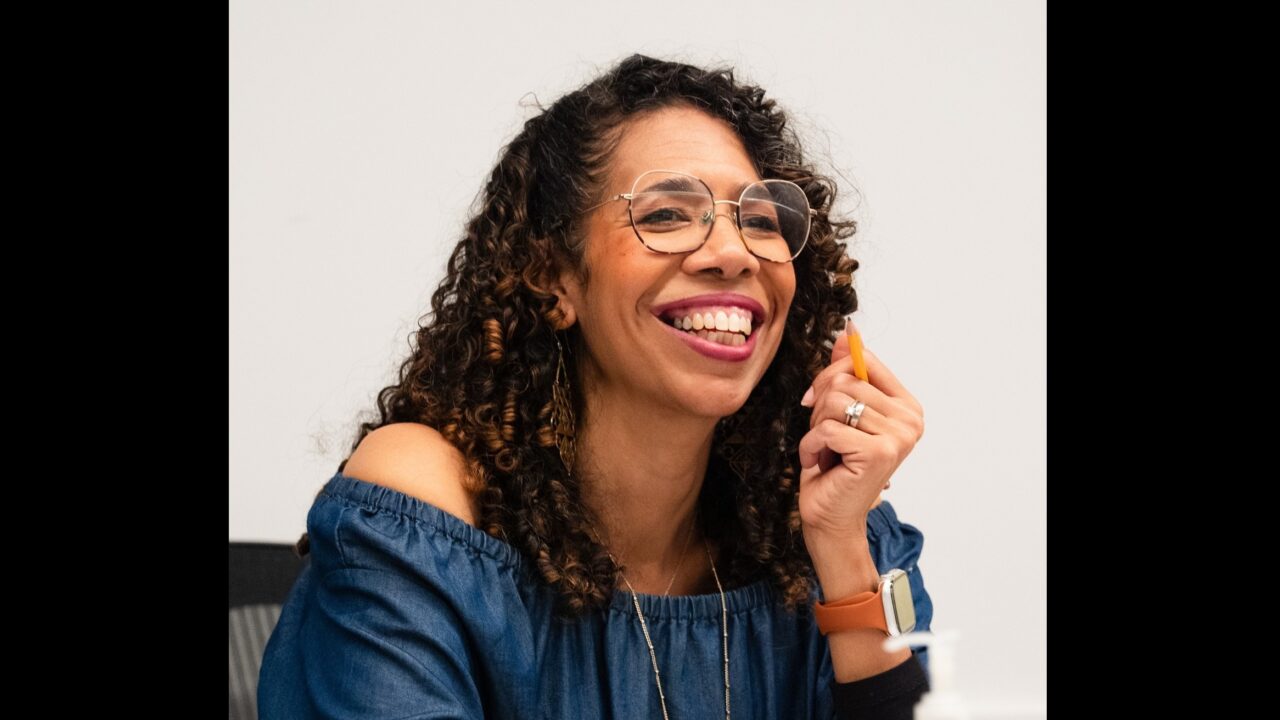
Carter has received help along the way by partnering with the Bay Area-based Yiddish Theatre Ensemble. Carter and the ensemble’s co-artistic directors, Laura Sheppard and Bruce Bierman, sat down with J. for a roundtable discussion about the play. The interview has been edited for length and clarity.
What’s different about this production, compared with the one Bay Area audiences may have seen in 2022?
Carter: I think I can probably speak to that, because I was the person who was asked to direct it. I think I was asked to direct because of the work I’ve done before for the company, and because I have a great, deep passion for social justice queer plays.
Every director, and every moment in time, you might have a different lens that you see the play through. I’ve actually never seen a production of this play, which I love for myself as a director, because I read it off the page and then I have my own impulses and my own connection to it. As a queer theater maker, that part of the story obviously resonates with me at this moment — having the first queer kiss on Broadway be shut down.
Bruce, you worked on the previous iteration. What’s your take?
Bierman: It was really exciting to work with a new director with a new vision for the show. Elizabeth, some of our first discussions were about your vision of wanting to make it more multicultural and bring in more colors of Jews. Then the exciting thing is to find the dramaturgy that supports that. The first opening musical number is the national anthem of the Jewish Bund, the socialists who were working for social justice. And in that song [are the lyrics]: “Brothers, brown and black and white all together, rich or poor we’re all together.”
These were the Yiddish artists of Asch’s times and they were working toward a just world. They were socialists and they were feminists and they were queer. They were diasporists as well, believing that the Yiddish culture belonged with all the other cultures around them. So “Indecent” really brings us back to that deep, painful, passionate conversation about identity, justice and what it means to be human.
Sheppard: [“Indecent”] is such a powerful ensemble production, the way that the characters interact with each other and morph into other characters through time, and also how the musicians are incorporated into the movement and the staging of the play. For those who have not seen this play before, it’s really a delight.
Why do both these plays — one from 1906 and one from 2015 — still resonate today?
Carter: The thing that I kind of love about Sholem Asch was that there was a fearlessness about him. I really see the connections everywhere.
As a Black woman, I feel like I have a connection to the understanding of communities that have struggled in America to be their full selves or to be recognized. We are asked to assimilate in so many ways that are really quite very difficult and diminishing.
Bierman: Asch was obsessed his entire life with this question of antisemitism and how to heal it. Asch was saying why not show us as we are? We’re rabbis and we’re brothel owners. The contradictions, the yearnings and the hypocrisies [make] us Jews like everybody else, and that’s what he was interested in showing.
What can audiences take away from this play?
Sheppard: Elizabeth has touched on the issue of censorship. It just rings so true today. It hits hard, when we as theater makers are just feeling it from all directions. As mentioned, theater productions are being canceled right and left. Funding is being reduced and eliminated. We see our own productions that we had to cut back.
Bierman: The play has often been described as a love letter to the Yiddish theater and to actors, the artists who make art despite difficult times.