
A Jewish student who spoke to J. on the condition of anonymity says his computer science lecturer at UC Berkeley made a surprising announcement last week about a political action he had begun. But the lecturer didn’t say it out loud.
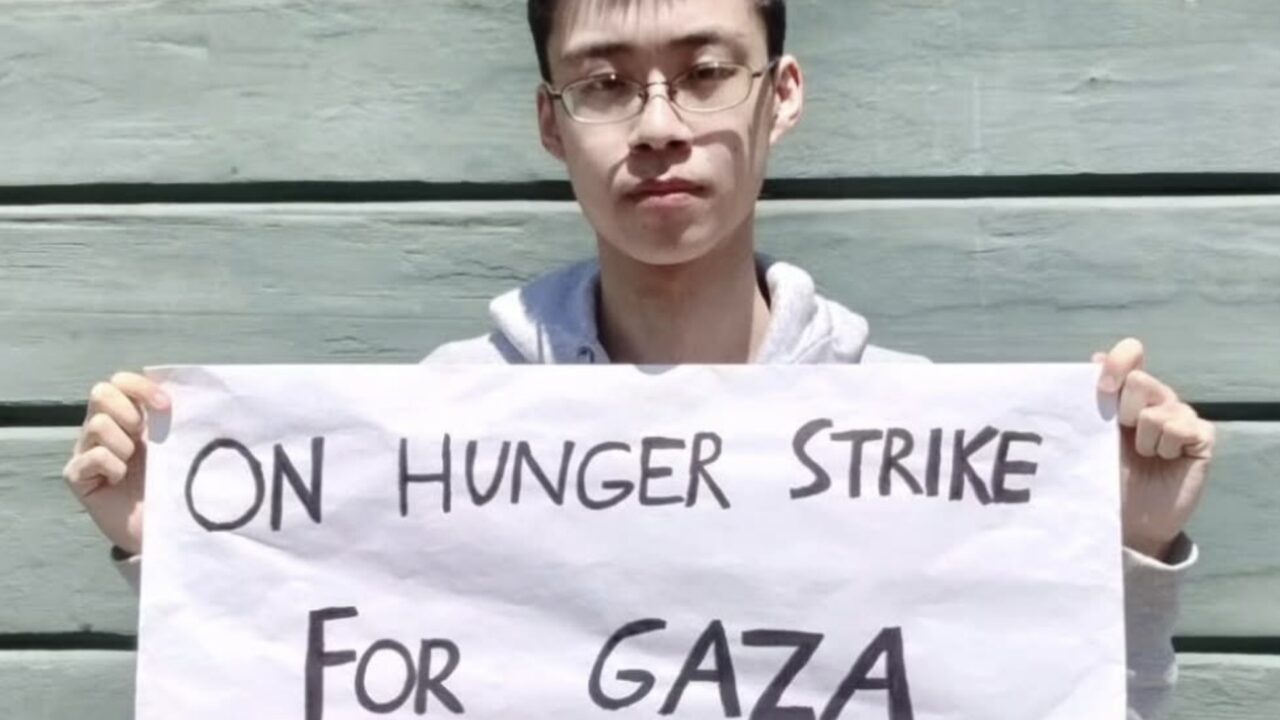
Instead, Peyrin Kao projected a written message on a screen in front of the lecture hall informing the class that he had started a hunger strike to protest the conditions in Gaza amid the ongoing war.
According to the student, Kao told the class that “I may be ill for the next days, weeks or months as I complete this protest I’m doing for a cause I care about. I don’t want to talk about it in class for administrative reasons, but I wanted to let people know about it.”
The projection showed his page on Github, a website widely used in tech circles, that notified students about the start of his “starvation diet” of 250 calories per day. “Apologies in advance if I’m in poor health during lectures,” the message read.
The page contained a link to @berkeleyeecs4palestine, a week-old Instagram account run by students, faculty and staff in Cal’s electrical engineering and computer sciences department.
Kao, who is teaching two courses this semester, said in an Aug. 27 video posted to the Instagram account that he is starting an “open-ended” hunger strike to protest what he called Israel’s genocide in Gaza. Israel vehemently rejects such claims. Kao also expressed his belief that computer science is linked to “high-tech weapons” used to carry out “atrocities” in Gaza.
The Jewish student, who spoke to J. on Tuesday, is involved in campus Hillel, Chabad and Students Supporting Israel. The student questioned why Kao chose to announce a personal protest to his students.
“Just like any issue, I think that politics should stay out of the classroom,” said the student, who requested anonymity to avoid unnecessary attention. “You should be able to support your own causes, whatever they may be, on your own terms. But if it affects his ability to teach I think that should not be allowed.”
Added the student, “I don’t think [computer science] is connected at all” to the Israeli-Palestinian conflict.
Cal has been roiled by protests against Israel for years and by allegations that the campus has become hostile to Jewish students. Those protests, which grew in intensity after Oct. 7, 2023, have resulted in lawsuits, civil rights investigations and a combative congressional hearing.
Kao was back in class for the next session on Aug. 29, but his co-lecturer led the discussion, the student said. The student plans to remain in Kao’s class but believes the administration should get involved.
“It’s an administrative issue. They have a teacher who’s impairing himself,” the student said.
Rabbi Gil Leeds, who leads the Rohr Chadad Jewish Student Center at UC Berkeley, said that the political message, while technically unspoken in the classroom, is still problematic.
“To have to face this in the classroom, in a class that has nothing to do with the conflict, it creates an extremely hostile learning environment,” Leeds told J.
Kao declined J.’s request for comment.
Janet Gilmore, a university spokesperson, told J. that personnel matters are confidential but reiterated the university’s policies on free speech for university employees.
“While speech outside of the classroom may be protected by the Constitution, the university has stringent policies that prohibit the use of the classroom for political advocacy. The university takes violations of those policies very seriously,” Gilmore said in an email.
Kao is calling on the university, through Instagram posts, to meet demands, including divestment from Israel, acknowledgment of “genocide” and ethical standards for collaborations and funding that “align with international humanitarian law.”
“To my knowledge the campus has not been contacted regarding any demands,” Gilmore said.
Kao has previously weighed in on the situation in Gaza while addressing students. In November 2023, shortly after the Hamas massacre and the onset of the war, Kao reportedly ended a computer science lecture — after class was dismissed, according to the student newspaper — with a 20-minute statement of solidarity with Palestinians. University administrators reprimanded Kao following those remarks, according to the Daily Cal.
As part of his hunger strike, Kao told the Daily Cal, he is allowing himself small amounts of plain pasta and limiting his intake to 250 calories per day, which he states is the average caloric intake in Gaza.
In April 2024, Oxfam reported that people in northern Gaza were surviving on an average of 245 calories per day. However, the United Nations reported in June that the average intake was 1,510 calories per day between October 2023 and December 2024. As of May, the U.N. added, that figure had dropped to 1,400 calories.