
The Torah column is supported by a generous donation from Eve Gordon-Ramek in memory of Kenneth Gordon.
Noach
Genesis 6:9-11:32
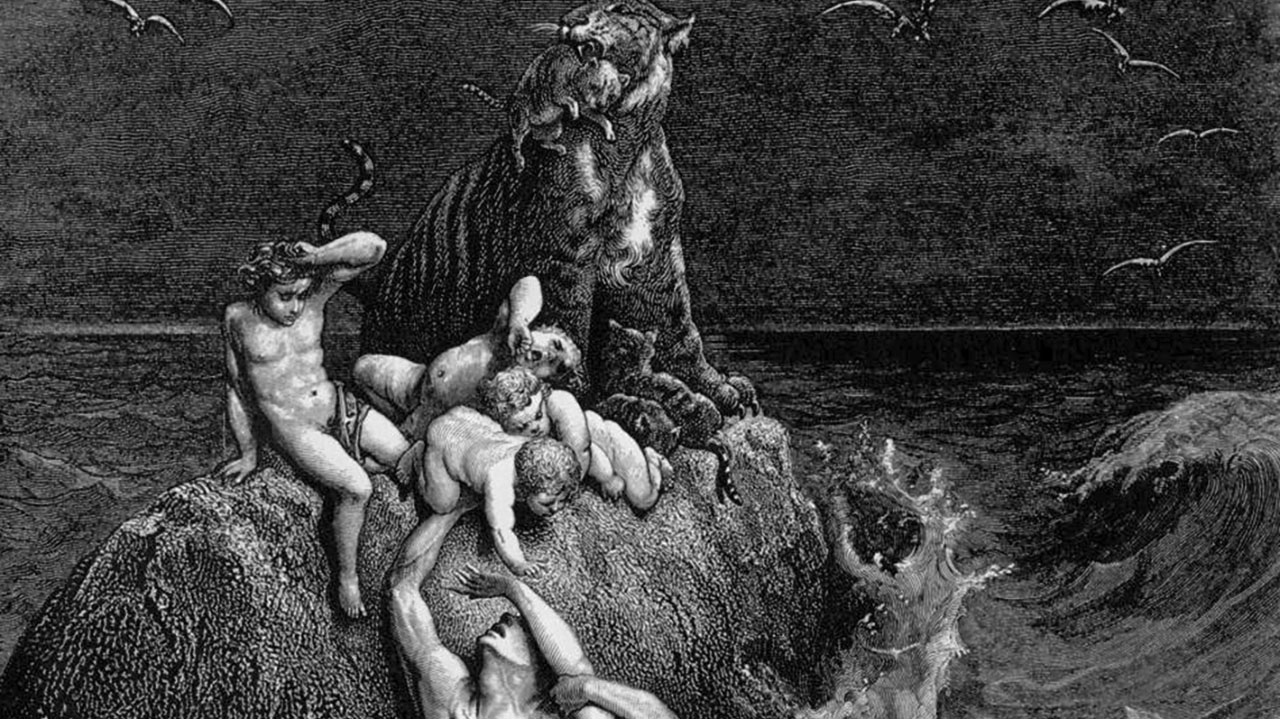
It was a flood of Biblical proportion.
On Dec. 26, 2004, a 9.1 magnitude earthquake tore apart the floor of the Indian Ocean. The tsunami that followed killed more than 230,000 people in Indonesia, Thailand and Sri Lanka. In just a few hours, 100-foot-tall mountains of water submerged entire cities and coastal regions, reminding humanity again of our smallness against the mind-boggling power of nature.
In the terrible aftermath, one of the thousands of tourists who had been enjoying his winter holiday in that tropical paradise, spoke to a reporter.
“What are you doing now?” asked the journalist.
“I am crying a lot,” said the European traveler.
He paused with trembling breath.
“And I am drinking a lot,” he said, in a clear reference to alcohol.
I think of that indescribable catastrophe — and the honesty of that solitary man sitting with his pain and his cups — every year when we read Parashat Noah. I’d rather think about rainbows and doves, but I’m compelled to pay annual witness to the flood that came with no warning and wonder how anyone who survived found the strength to stagger on.
The Torah knew how difficult a task it is to confront a cataclysm and stay remotely sober. As soon as Noah and his family emerge from the ark after the devastating flood, we learn: “Noah, a man of the soil, was the first to plant a vineyard. He drank of the wine and grew drunk, and exposed himself under his tent.” (Genesis 9:20-21)
The speed with which Noah becomes inebriated is dizzying, as the grapes seem planted, harvested, fermented and imbibed in one magical arc of record time. We know nothing of Noah’s emotions in the ark. We know (and still ponder what it means) that he was a “righteous man in his generation” (Genesis 6:9) who silently, automatically followed God’s command to build the ark, collect his family and gather the animals into a floating laboratory of coexistence. But as soon as he exited that protected vessel, he fell apart.
What did he see? What could he not un-see? We can only imagine the devastation.
Judgments of Noah’s actions and his resulting drunkenness are wide ranging. Many condemn him. They point logically to his immodesty and the subsequent incident with Ham, Noah’s son who famously “saw his father’s nakedness and told his two brothers outside,” (Genesis 9:22), leading to Noah’s dreadful cursing of that son and his descendants, the Canaanites.
The tragic rupture and immediate reappearance of “sin” supports the contention that excessive intoxication can be extremely damaging to one’s body, family and society.
Others forgive him. If, as the Torah asserts, Noah was the first to plant a vineyard, they insist he couldn’t have anticipated the negative consequences of his fruity drink. Perhaps he yearned for an altered mind, to feel a bit closer to the Divine Presence that had protected him and his family and made a covenant with them. Maybe he wanted a pick-me-up or to raise a celebratory glass of thanksgiving, and things just got out of hand.
Some ascribe nobility to Noah’s vineyard, seeing faith in the regeneration of the earth and the resumption of agrarian life as willingness to begin again after tragedy. One Chasidic source even suggests that Noah’s was an earnest attempt to recreate the Garden of Eden, that pristine and innocent time before temptation and disobedience changed the trajectory of humankind forever. (Sefer HaMa’amarim Melukat)
Whether his intentions were irresponsible or laudatory, I can’t help but see Noah as the “unhappy, storm-tossed soul with none to give comfort” whom the prophet Isaiah addresses in this week’s Haftarah (Isaiah 54:11). The prophet assures this distressed person that there is still reason to hope and that Divine love will never depart — though while in the pit of despair, both may seem impossibly faint.
The responsibility of repopulating and replanting amid the wreckage must have been overwhelming, and Noah’s impulse to self-soothe with alcohol may come as little surprise. The Torah senses something profound in his post-diluvian drinking, something that today we might recognize as survivor’s guilt or a response to intense post-traumatic stress.
Combat veterans, first responders, refugees and survivors of serious medical crises, mass shootings, genocides, crashes, fires, huge storms and floods, among others, are at risk of developing survivor’s guilt, according to social worker Iris Waichler and Dr. Rajy Abulhosn.
“Circumstances vary, but when a survivor believes they could have changed the outcome of someone else’s death … they tend to question the reason they survived. Initially, they may feel gratitude for being alive, but as they start to relive the experience, they may experience regret, blame, shame, and guilt,” they write in “Survivor’s Guilt: Why It Happens & 7 Ways to Cope.”
Flashbacks, irritability, fear, painful physical symptoms and an overall sense of helplessness may follow. Notably, alcohol use is very common among individuals with PTSD, with up to 75% of trauma survivors reporting alcohol use disorder (AUD) as a coping mechanism. (See Sober.com and Healingus.org.)
Noah’s only spoken words in the Torah are heavy with agony and hurt. He lives a very long time afterward, but we do not hear from him again. We can only wonder how he managed in his subsequent years, and whether the memory of the flood ever receded like the waters of that awful time.
I don’t have words to say how relieved I am that the last living hostages in Gaza have been released, and I don’t know what strength it will take for them to heal. I know that the cease-fire is very tenuous and that the trauma suffered by far too many cannot be undone. The flood of misinformation and hate rises still higher, and I don’t know what ark we can build to protect ourselves from it all.
Noah was raw and naked after his ordeal. We who live in this tormented time may feel similarly. But I want, and need, to believe the words of Isaiah we chant this week — that one day, “great shall be the happiness of your children; you shall be established in righteousness, safe from oppression and unafraid, safe from terror.” (Isaiah 54:13-14)
May recovery be swift and complete, and may peace endure.