
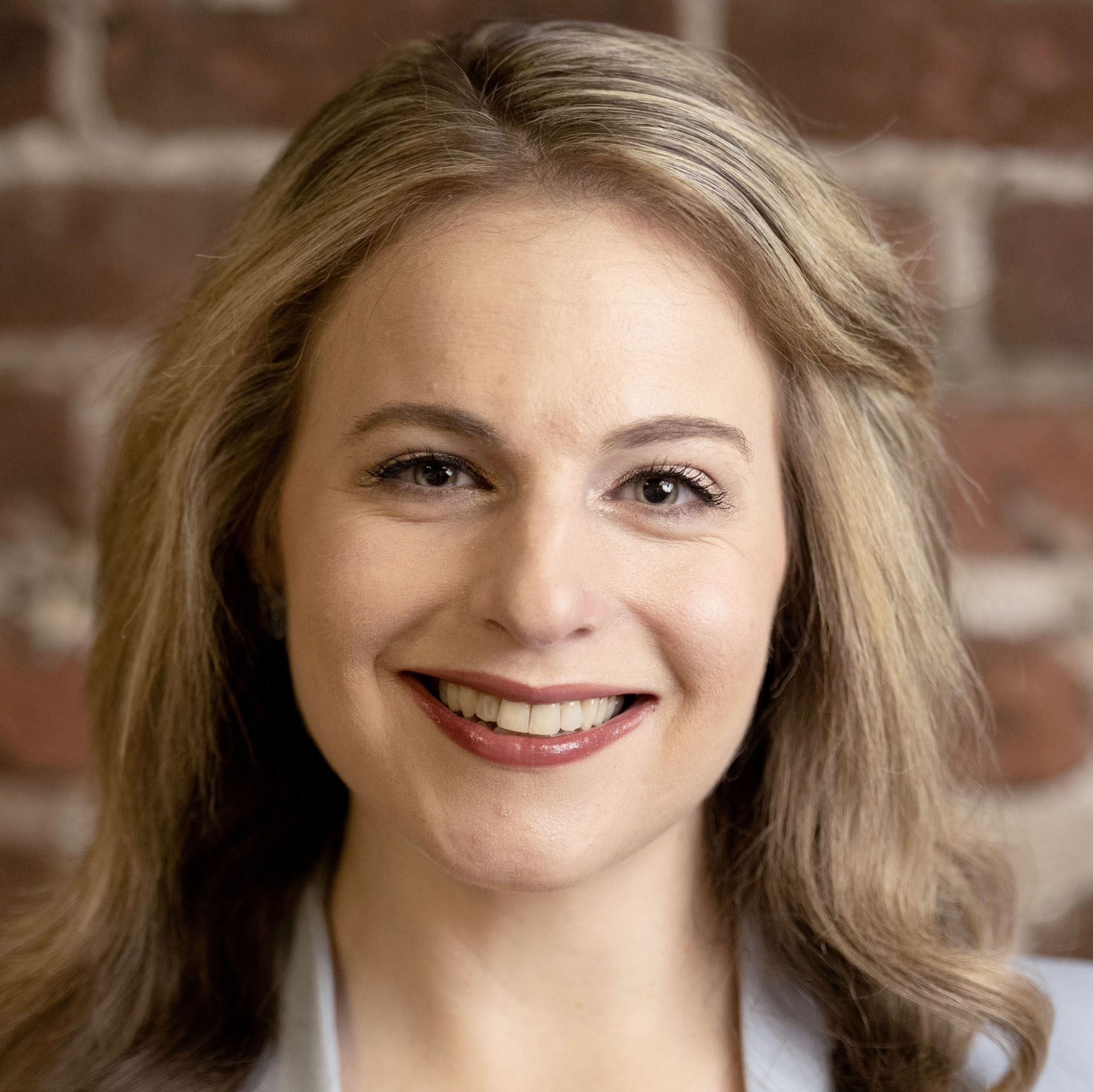
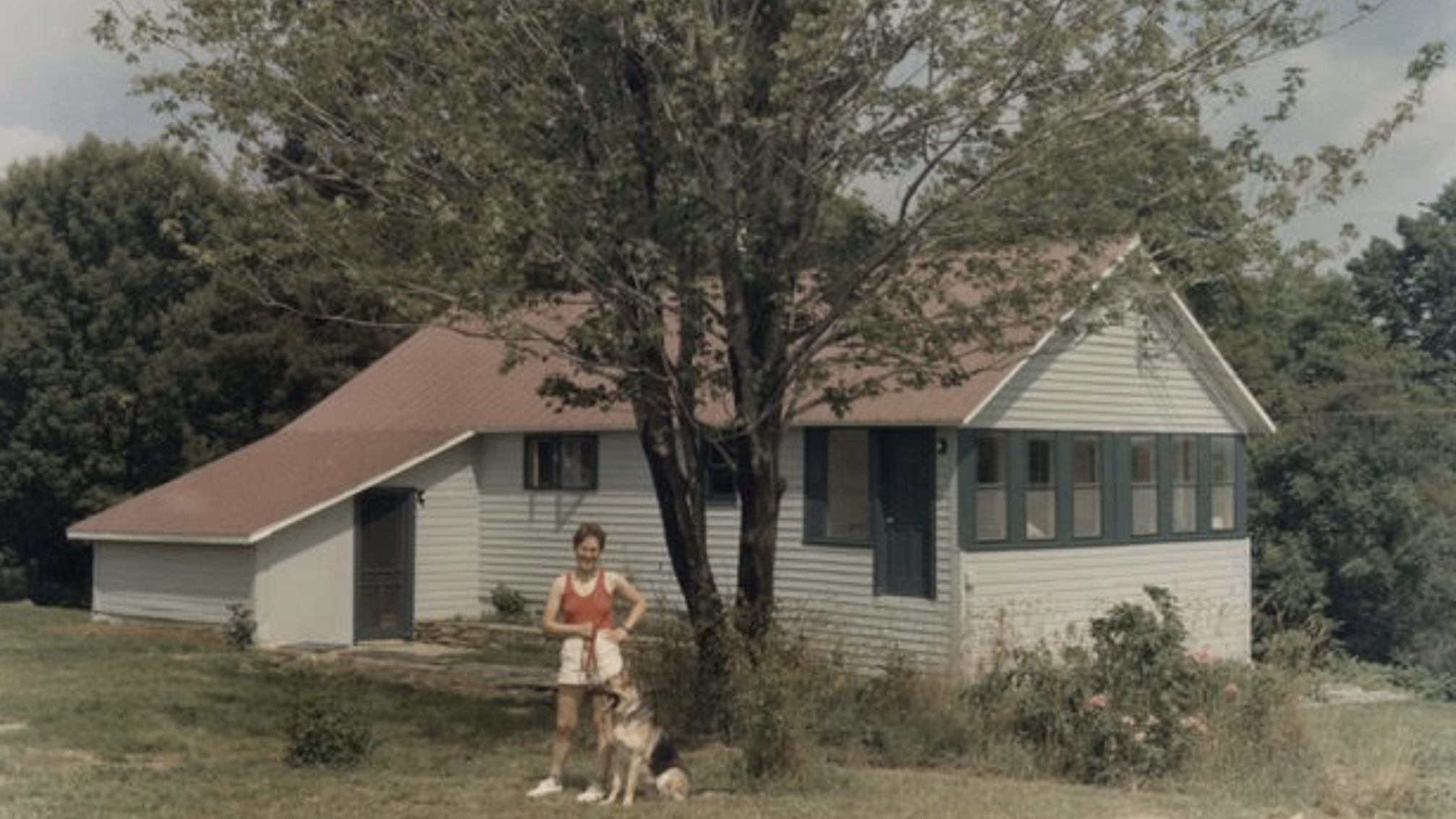
Nancy Gonchar, 73, peered into the nervous faces of three University of San Francisco students on Zoom, unsure how to begin the conversation. Gonchar, an art curator and political activist, had come to be interviewed by the students, but someone needed to break the ice.
Gonchar had been invited to take part in the semester-long course “Honoring our LGBTQIA+ Elders,” part of USF’s Swig Program in Jewish Studies and Social Justice, in which small groups of students are paired with an older queer Jewish San Franciscan. The students interview their assigned elder each week, asking personal and often intimate questions about their lives.
Gonchar was up for getting personal. But first, she could see she needed to get the ball rolling.
“How many of you really wanted to take this class, or had to because it was a requirement?” she asked them. The students appeared unsure how to respond until she said, “That was a joke! Jews have a lot of humor, and they tease.”
Gonchar is among the two dozen queer Jews, 60 and older, who have volunteered to be interviewed by students about their life experiences. Topics have included coming out to friends and family, San Francisco during the AIDS epidemic, and feelings about aging and death. The interviews are recorded, and students edit them into roughly 12-minute documentaries.
Now they’re available for anyone to view.
More than 40 student-produced legacy videos came online on Oct. 1, the start of LGBTQ History Month. They are part of the digital exhibition “Honoring Our Queer Elders,” the latest installment of “Mapping Jewish San Francisco,” an ongoing digital humanities project within the JSSJ Swig program.
Rabbi Camille Angel, USF’s rabbi-in-residence, developed the course five years ago. (Though she is just shy of 60, her video profile is also online with the others.)
“I thought about the importance of the value of mi’dor l’dor, from generation to generation, the importance of giving people an opportunity to transmit their legacy,” said Angel, who served as rabbi of Congregation Sha’ar Zahav, San Francisco’s historically queer synagogue, from 2000 to 2015. “Whether they’ve raised children or not, everyone has that obligation to transmit their Torah to another generation.”
Most students who take the course aren’t Jewish, she noted.
“If only the Jewish community would invest more in educating the non-Jewish world about Jews and Jewish values,” Angel said. “It’s a pretty amazing investment.”
The exhibition is the latest installment of “Mapping Jewish San Francisco,” a project developed by JSSJ’s program director, Aaron Hahn Tapper, which also includes online exhibitions about the history of Karaite Jews and of the House of Love and Prayer, a countercultural experiment in the 1960s.
“We’re trying to educate people of all ages about marginalized Jewish communities in the Bay Area, and the history of these communities,” Hahn Tapper told J.
Steve Fritsch Rudser, 70, has participated twice so far and is planning to host a Shabbat dinner for the whole class at his home in December. Rudser first took part last fall, eager to talk about the experience he and his husband, Ron, had in raising three children as a gay couple.
In the 1970s, when Rudser came out as gay, “the idea of people starting families as gay or LGBTQ people was further away than marriage [equality]” in terms of public acceptance, he said.
“Giving people a structure to ask intimate questions that can lead to intimate answers is a really fast way [of] acknowledging somebody else’s humanity, getting interested in them, caring about them,” Rudser said. “It felt really special, really warm.”
In addition to weekly interviews, the students and elders go off campus during the semester to tour historic places in San Francisco, such as the AIDS Memorial Grove and the Castro District.
Each semester, the elders are invited to appear before the entire class in a live interview conducted by the students in their cohort. At the end of the semester, the elders and students come together to watch each completed legacy video.
About 28 students enroll in the course each fall and summer. Its popularity has been growing, Angel said, so she has started keeping a waitlist.

She said the course has been a way for some queer students to work through their own religious-based trauma.
“Every semester, students [enroll] who have been disowned from their families,” she said, and others “who, if their families or parents knew that they were taking a class like this, they would be cut off.”
Sydney Wright, 19, said when he first met Gonchar in fall 2024, he was nervous about asking a stranger personal questions. “It was kind of scary,” he said.
But Wright, who is nonbinary, said connecting with a queer person decades older filled a void for him.
“It didn’t necessarily feel at all like she was a grandparent figure, because age didn’t feel like a relevant thing,” he said. “It was more her experience and the wisdom she could provide us with.”
Also, Wright said, “I really enjoyed the aspects of Judaism in the class. I feel like I take a lot of those Jewish values now with me,” especially around education and learning.
Many students have maintained contact, and often lasting friendships, with their elders long after the class has ended.
Lydia Scott, 25, was a USF junior in fall 2020 when she took the course during the pandemic. Scott and her two classmates interviewed Joss Eldridge, now 75, and her partner, Sandra Marilyn, 79.
“I call them my San Francisco grannies, because anytime I’m in the Bay Area, I visit them,” said Scott, who now lives in Indiana. They catch up most Sundays, she said.
“The greatest gift that Joss and Sandra ever gave me was that they showed how extraordinary an ordinary life could be,” Scott said.
Mike Shriver, 62, said he was touched when a student came to his adult bar mitzvah in 2022 and even brought a gift.
“We still keep in touch. For me, that’s the ‘honoring’ piece — it wasn’t a one-off, one-semester meet and greet and chat and make a video,” Shriver said.
The introduction to the “Honoring Our Queer Elders” project describes the participants, many of whom have been in San Francisco for decades, as “living sources of invaluable history” who have had “profound experiences that shaped the queer nexus that San Francisco has become over the last half-century.”
Marcy Adelman, 79, was one of the first openly gay therapists in San Francisco in the 1970s, “a political act” that she said came from her involvement in the Gay Women’s Liberation Movement. She currently serves on the California Commission on Aging and has devoted her career to supporting LGBTQ seniors. Adelman and her late partner, Jeanette Gurevitch, founded Openhouse SF in 1998, which provides affordable housing and resources for San Francisco seniors in the LGBTQ community.
Mark Leno, a former San Francisco supervisor and the first openly gay man elected to the California Senate, has participated in the class several times. In 2011, Leno authored the FAIR Education Act (SB 48), now a law in California, ensuring that the historical contributions of LGBTQ people are accurately and fairly portrayed in the classroom and included in the state’s educational requirements.
Rabbi Allen Bennett, considered by many to have been the first openly gay rabbi in the United States back in 1978, joined the class in the fall 2023 and talked about that moment in history.
“There were no other openly gay rabbis anywhere on Earth,” Bennett told his student interviewers. “Organized Judaism began getting its knickers in a twist, because they didn’t know what to do with somebody who wasn’t going to keep his mouth shut and who they thought was going to embarrass them to death by being truthful about who I was,” he said, noting that some 200 rabbis came out to him as queer within a couple of years of his own coming out.
Shriver, a gay rights activist who participated in ACT-UP’s 1989 die-in on the Golden Gate Bridge, has participated over five semesters. He likens the experience to the Jewish tradition of chevrutah, when small groups study Jewish text together. When Shriver visits USF’s campus to meet with students for interviews, he marvels at the fact that such a course exists at USF, a Jesuit University.
“It sort of closes a gap for me in my upbringing in the Catholic Church, when homosexuality was … an ‘intrinsic moral evil,’” said Shriver, who converted to Judaism 15 years ago. “To now be able to go on campus and meet these students for whom that isn’t their common parlance, that isn’t their belief, and queer is not a pejorative, it’s this breath of new life for me,” he said.
“This is one of the most important things I think I’ve ever done,” he added. “Our job is to make sure the story gets told to the next generation, so that they can pick up the story and carry it forward.”