

Books coverage is supported by a generous grant from The Milton and Sophie Meyer Fund.
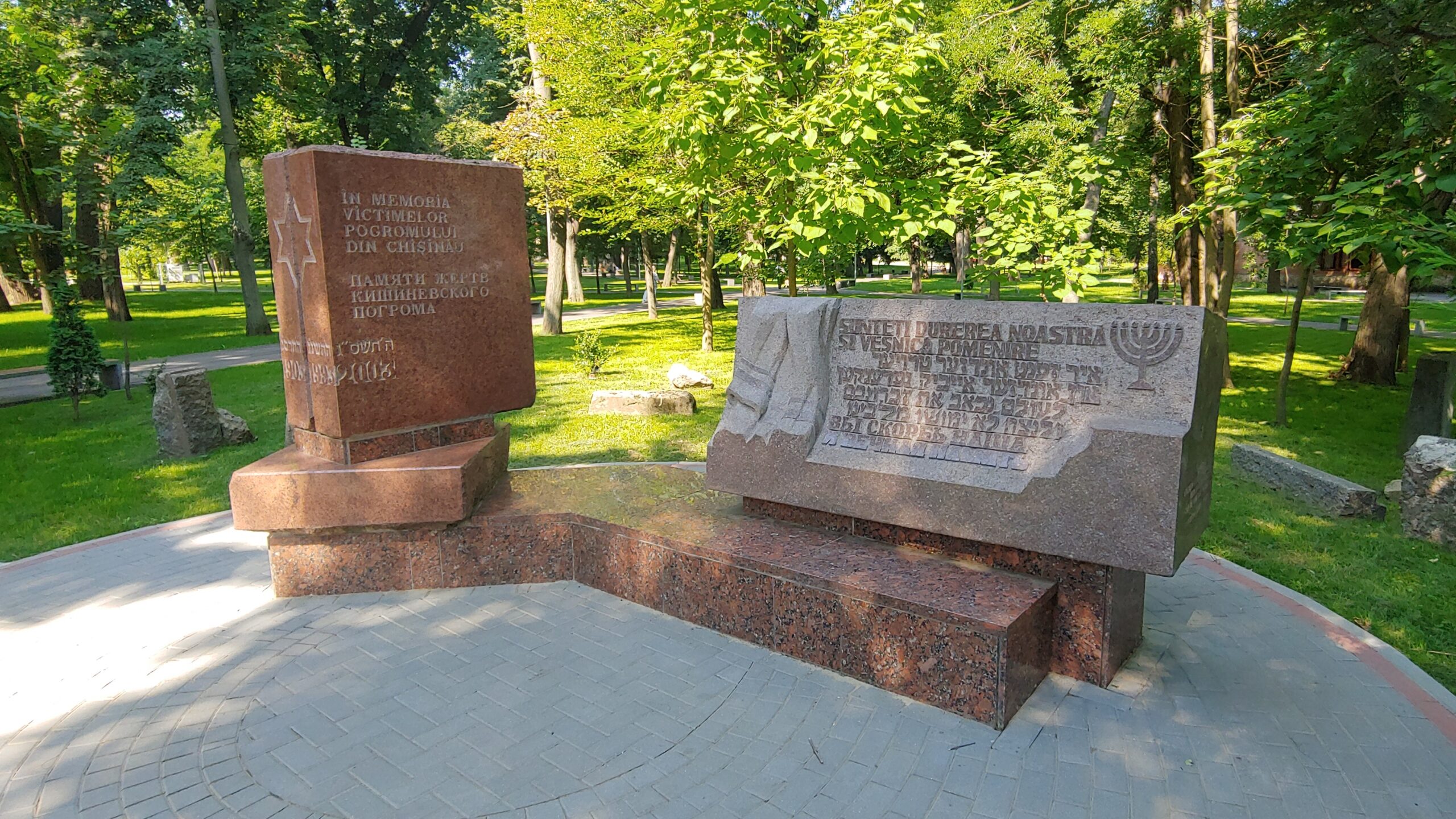
Marking the second anniversary of Oct. 7 this month offered a chance to reflect on how so many of us, even at a distance from Israel, feel that we are living in the shadow of the horrific day and of all that has occurred in its wake. It brought to my mind Stanford professor Steven Zipperstein’s 2018 book “Pogrom: Kishinev and the Tilt of History.”
The book not only chronicles the riots of April 1903 in the Bessarabian city of Kishinev, in which 49 Jews were murdered and hundreds more were raped or injured, but traces the powerful impact and afterlife of the horrors, which would, in Zipperstein’s words, “define for many Jews and others, too, the contour of Jewish fate in the half-century before the Holocaust.” Although vast differences separate Oct. 7 and Kishinev, among the similarities is that sense of reverberation.
Keeping that in mind, I’d like to share two new books of poetry that form a bridge to the aftermath of the Kishinev pogrom and also speak to us today.
Published in 1904, Hayim Nahman Bialik’s “In the City of Slaughter” is often cited as the most influential Hebrew poem of the modern era. As a staple of the Israeli school curriculum, many Israelis turned to it in complicated ways in the aftermath of Oct. 7. The release this month of “On the Slaughter,” Peter Cole’s translation of selections of Bialik’s poetry, offers a new opportunity for English readers to engage with the poem, along with Bialik’s larger body of work.

The stunning poem has a compelling origin story. In 1903 Bialik was living in Odesa, where he had earned acclaim as an innovative Hebrew poet. Following the pogrom, he was given the assignment of traveling to Kishinev to survey the scene, conduct interviews with survivors and issue a report articulating his findings.
After five weeks in Kishinev and several months of writing, what emerged was not a report, but a long poem. In an eloquent voice explicitly incorporating Biblical language and structure, the poem portrays God commanding the prophet/poet/reader to go to the besieged neighborhoods of Kishinev to witness what has transpired. Bialik relates the carnage unflinchingly and responds with intensity, depicting Jewish existence at its lowest ebb and a deity who promises neither succor nor salvation.
The poem’s searing portrait of Jewish helplessness, and its rejection of religiosity as a means of deliverance, helped fuel the cause of Jewish nationalism and self-defense that captivated many Eastern European Jews in the early 20th century. The poem has also been criticized for its allegation that the men of Kishinev passively “looked on and did not stir” and prayed for their own welfare as women were being assaulted. We know from court records and Bialik’s own field notes that many Kishinev Jews did in fact exhibit forms of resistance.
Peter Cole is among the most sensitive and skilled translators of Hebrew verse in our era, and his work here offers a new opportunity to appreciate Bialik’s multifaceted craft, which laid the groundwork for Israeli poetry. Cole’s notes on the poems are especially helpful and identify some of the Biblical and rabbinic references Bialik employs.
One would not expect to find “The Protocols of the Elders of Zion” mentioned after considering Bialik, but the notorious antisemitic forgery is also connected to Kishinev. Claiming to be the record of a meeting of Jewish leaders plotting world domination, it was first issued in the fall of 1903 in a St. Petersburg newspaper owned by Kishinev-based publisher Pavel Krushevan, who is now believed to be at least partially responsible for its authorship.
Krushevan also published “Bessarabets,” the Kishinev newspaper that regularly employed accusations of ritual murder and other canards to rally its readers against Jews in the months leading to the pogrom. Just months after the pogrom, Krushevan would produce a text whose long and influential life even he could not have predicted — if a book can have blood on its hands, this one does.
Erasure poetry is an uncommon modern poetic form in which an author develops a poem by removing words from preexisting source material. Portland-based poet and artist Daniela Naomi Molnar worked methodically with an edition of “Protocols” to create a new work through the process of erasure. She added no words to the existing text; the only liberty she gave herself was to alter where the words appear on the page.

Extending more than 80 pages, the resulting poem, titled “PROTOCOLS: An Erasure,” is a marvelous act of subversion. Molnar renders the original document unrecognizable, replacing it with a thoughtful and hopeful meditation whose spare text is arranged with intention and sometimes playfulness, reflecting an artist’s eye. The word “Jew” makes no appearance. Standing out instead is “power,” which recurs dozens of times and is given emphasis not only through its retention in this erasure, but in Molnar’s repeatedly embedding the word in parentheses, as if it is always present but stands apart. Power and powerlessness — political, personal, artistic — are at the center of this revision, perhaps most palpably in the author’s sheer chutzpah in vanquishing the antisemitic tract by robbing its ability to inspire violence.
The lengthy poem is followed by a moving autobiographical essay in which Molnar reflects on her own painful inheritance as the granddaughter of four survivors of Nazi concentration camps.
When Molnar writes that “traumas live on like stars. Their effects continue to reach us long after their ends,” I’m reminded of how dwelling in the dogged afterlife of tragedy shapes us in fundamental ways. Molnar goes further to suggest provocatively that post-Holocaust Jewish culture is “intent on freezing its members in a state of haunting not only by disregarding the possibility of healing, but by actively obstructing it.” I have little insight into how we heal ourselves and each other, but I am left wondering whether transforming injury into poetry is one way we move in that direction.