

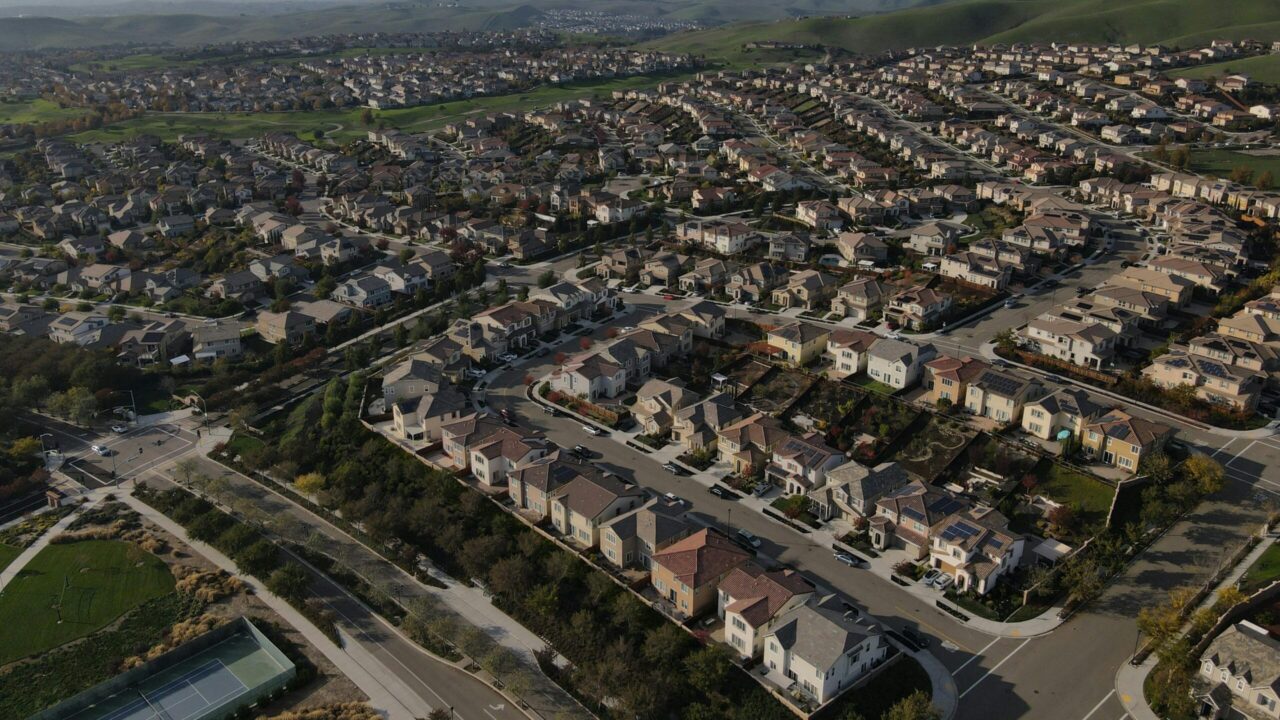
As an expecting father, I’ve found myself thinking a lot about what kind of California my child will inherit and what kind of Jewish values I hope to pass on. Will my child inherit the seemingly idyllic but gated suburbs of my youth? Or values of equality and generosity?
More and more, I realize that my Jewish values point toward greater Jewish involvement in setting equitable housing policy.
I grew up in Lamorinda in Contra Costa County among those quiet, tree-dense towns just east of the Caldecott Tunnel. It was a great place to be a kid: safe streets, good schools and a strong Jewish community that gathered for Shabbat, b’nai mitzvahs and youth group retreats. I don’t remember much talk about housing, zoning or the evil of real estate developers, but I do recall that every friend I knew lived in a single-family home.
Only as an adult did I realize what that uniformity represented. Our towns had excluded the people who might only have been able to afford to live in apartments or duplexes. We didn’t need to talk about keeping people out because our zoning already had.
After college, I left Lamorinda for the wider world and eventually found my way back to the Bay Area. Thanks to a combination of good timing, a supportive partner and a dual-income household, I can afford to remain in the region where I grew up. But I’m painfully aware that our ability to stay here is not a reflection of merit. It’s a reflection of privilege.
Over the past decade, I’ve watched friends and family leave California. Some were priced out of renting in the communities they loved. Others saw remote work during the Covid pandemic as a rare escape from an impossible housing market. Each departure tells a story of loss — a loss for them and for all of us who believe the Bay Area should be a place where people can thrive in affordable homes.
California’s housing crisis isn’t a natural disaster. It’s the predictable result of decades of opposition by local homeowners to building homes, especially multifamily housing near jobs, transit and schools. Ours is a political culture that treats newcomers as threats to “neighborhood character” instead of as new neighbors to welcome. That culture of exclusion runs directly counter to the Jewish values I was raised with.
The Torah commands: “Tzedek, tzedek tirdof,” or “Justice, justice shall you pursue.” We are taught the importance of tzedakah, areyvut (mutual responsibility) and tikkun olam (repairing the world). These aren’t abstract virtues; they’re moral imperatives to see others’ struggles as our own, and to act accordingly.
Yet when I look at how our Jewish elected officials are voting on housing, I can’t help but feel that something has gone astray. Take Senate Bill 79, this year’s major housing reform bill authored by state Sen. Scott Wiener (D-S.F), who is co-chair of the California Legislative Jewish Caucus.
The bill, which the governor signed into law in October, unblocks dense construction within a half mile of public transit stops, focusing on where California will and should allow housing, rather than where it should be prohibited. Looking at the vote tallies, most members of the Jewish caucus either opposed or abstained on SB 79. Had the outcome depended solely on them, this key housing bill would have failed outright — a signal of how far our political priorities have drifted from Jewish ethical teachings.
That statistic suggests that the people most visible in Jewish public life, those who carry our tradition into California’s political institutions, are not voting in alignment with the core Jewish values of justice, responsibility and repair. Our faith calls us to welcome the stranger and love our neighbors, not to preserve exclusion through zoning, parking requirements and procedural barriers to new housing.
If even our Jewish representatives can’t connect those ethical teachings to the housing crisis, what does that say about the broader state of our moral imagination as a community? The Jewish story, after all, is one of displacement and return, of exile, wandering and the long search for home. How can we, a people shaped by centuries of exclusion, stand by while our own cities build barriers via zoning codes and planning meetings?
To live Jewishly in California today means more than showing up for the High Holidays. It means recognizing that just housing policy is part of tikkun olam. Areyvut calls us to carry our neighbors’ burdens. Tzedakah calls us to redistribute opportunity, not just wealth.
If we believe that every person is created b’tzelem Elohim — in the image of God — then we are obligated to uphold the dignity of a home for everyone.
Our synagogues can be allies in building a California that welcomes rather than excludes. We should expect our legislators to show the moral courage to vote for inclusion, even when the loudest voices demand otherwise. And we, as Jewish voters, should treat housing not as a nuisance, but as a core moral responsibility that affirms belonging.
My hope is that by the time my child is grown, “neighborhood character” will no longer be a euphemism for exclusion. It will mean something closer to the Jewish character I was raised with. One rooted in hospitality, fairness and the belief that our communities grow stronger when we make room for new members.
In the end, building housing isn’t just about policy. It’s about living our Jewish values in the most concrete way possible: by helping our neighbors find a place to call home.