

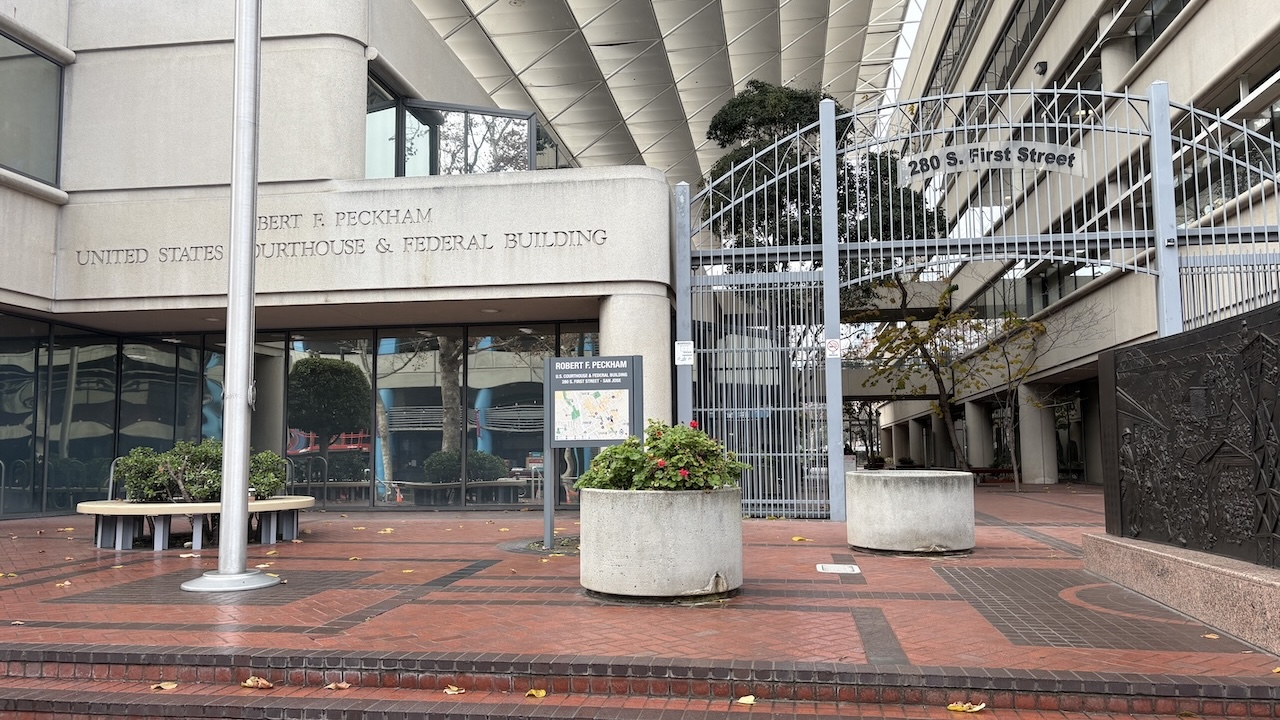
A federal judge in San Jose has denied a legal challenge seeking to block AB 715, California’s new law to address antisemitism in K-12 schools, from taking effect on Jan 1.
The 22-page ruling came Wednesday afternoon from U.S. District Judge Noël Wise, just hours before the law was set to take effect. In her ruling, Wise stated that the request to seek a preliminary injunction against the law was premature and unlikely to succeed in the future. The lawsuit was filed against the state in November by the American-Arab Anti-Discrimination Committee and a group of California teachers and students, including two teachers from Berkeley and Santa Clara schools. Wise heard oral arguments on Dec. 17.
“During oral argument Plaintiffs struggled to articulate any provision of AB 715 that was unconstitutional, other than the reference to the Biden National Strategy,” Wise wrote in her Dec. 31 ruling. “The court does not find the word antisemitism in AB 715 to be vague.”
In the ADC’s lawsuit against AB 715, one of its primary arguments was over the law’s reference to that national strategy, released by the Biden administration in May 2023, and its citation of the International Holocaust Remembrance Alliance definition of antisemitism as the “most prominent” working definition.
Wise noted in her ruling that the IHRA definition “has been subject to numerous legitimate criticisms,” however she stated that the court is not taking a position on the merits of the IHRA definition.
Regarding the teachers’ complaints about AB 715 chilling their First Amendment rights, Wise sided with the defense, noting that teachers do not have the protection of the First Amendment in the classroom. She also called the teacher plaintiffs’ arguments “inconsistent.”
“On one hand, they insist AB 715 is vague because it fails to define antisemitism; on the other hand, Teacher Plaintiffs decry the injustice of the IHRA definition to which they claim they will now be held,” Wise wrote.
Gov. Gavin Newsom signed AB 715 into law on Oct. 7 — the two-year anniversary of the Hamas massacre in Israel — after it passed the Legislature without opposition. The law is designed to address the rise of antisemitism in California’s K-12 public schools over the past two years.
Supporters of AB 715 celebrated the ruling.
“Today’s ruling is a powerful and clear affirmation that protecting students from harassment is not only lawful, it is essential,” David Bocarsly, executive director of the Jewish Public Affairs Committee of California, said Wednesday in a statement. “The court rejected the core premise of this lawsuit and made clear that AB 715 respects free speech while ensuring schools meet their responsibility to keep students safe. Jewish students deserve classrooms free from intimidation and discrimination, and AB 715 helps make that promise real. We are grateful to Attorney General [Rob] Bonta for defending this law and keeping Jewish students safe.”
In a livestreamed video posted to X shortly after the ruling came down, Jenin Younes, the ADC’s national legal director, called Wise’s statements about teachers not having First Amendment rights in the classroom “a really problematic decision.”
“I think we all agree that teachers shouldn’t use their classrooms for political activism. That’s not the point,” Younes said. “But they have to have some leeway when it comes to speech in order to foster critical thinking abilities and free discussion. They’re not just government parrots.”
Wise concluded her ruling by scheduling a court date on Jan. 27 to determine next steps for how the case should proceed now that the request for a preliminary injunction has been denied.
Younes, in the video posted to X, vowed to keep fighting the law through the courts, potentially even as far as the U.S. Supreme Court.
“The problem is with litigation, it could be a years-long thing,” Younes said.