

Updated Dec. 23
A federal complaint seeking to stop Assembly Bill 715 from taking effect on Jan. 1 had its day in court last week when arguments were presented about California’s new law designed to combat antisemitism in K-12 public schools.
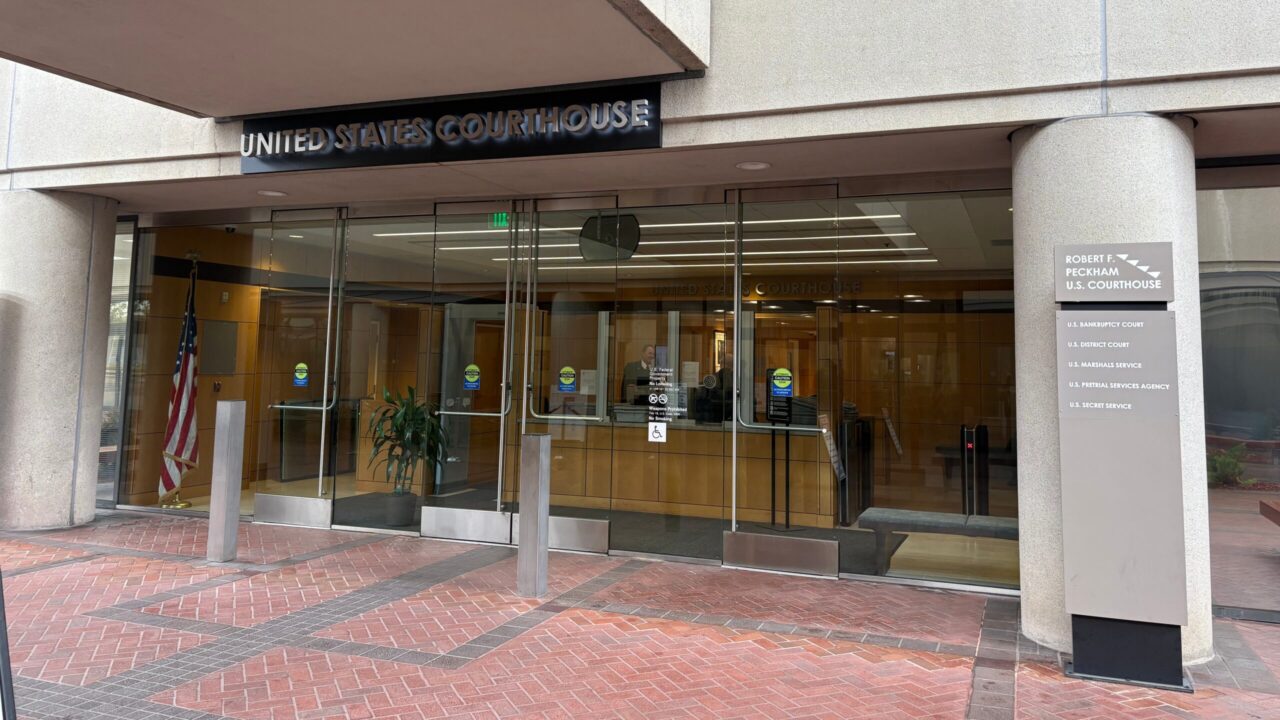
An attorney from the American-Arab Anti-Discrimination Committee (ADC), which is seeking a preliminary injunction against the state, asked a judge in oral arguments on Dec. 17 to block the law. J. attended the hearing in U.S. District Court in San Jose.
“It’s a surreptitious means of conflating anti-Zionism and anti-Israel rhetoric with antisemitism,” Jenin Younes, the ADC’s national legal director, said of AB 715 and its alleged “chilling effect” on teachers’ ability to teach about the Israeli-Palestinian conflict. The complaint claims the law is “unconstitutionally vague” and can harm teachers by restricting their protected speech.
Andrew Edelstein, California deputy attorney general, defended AB 715 in court.
“You don’t throw out anti-discrimination laws because it’s hard to define discrimination,” Edelstein said in front of U.S. District Judge Noël Wise.
Gov. Gavin Newsom signed AB 715 into law on Oct. 7 — the two-year anniversary of the Hamas massacre in Israel — after it passed the Legislature without any “nay” votes. The law is designed to address the rise of antisemitism in California’s K-12 public schools over the past two years.
The ADC’s complaint centers on a requirement in AB 715 that the U.S. National Strategy to Counter Antisemitism shall be used to help “identify, respond to, prevent, and counter antisemitism.” The national strategy, released by the Biden administration in May 2023, cites the International Holocaust Remembrance Alliance definition of antisemitism as the “most prominent” working definition.
Opponents of the IHRA definition argue it conflates criticism of Israel with antisemitism. The definition states, for example, that “claiming the existence of the State of Israel is a racist endeavor” could be antisemitic, depending on the context.
Wise questioned the assertion that the national strategy is the only resource that school districts have for determining cases of antisemitism, noting that AB 715 refers to it as “a guide,” not “the guide.”
“There are no other guidance documents given,” Younes countered.
In his defense of AB 715, Edelstein clarified that the 60-page Biden strategy document is highly detailed and does not present a singular definition of antisemitism, but rather explains the different forms antisemitism can take. The document also notes circumstances when criticism of Israel falls into the category of antisemitism.
If the law goes into effect as planned on Jan. 1, it will create the nation’s first statewide antisemitism prevention coordinator, who will be appointed by the governor and confirmed by the state Senate. The coordinator will develop training for educators, track incidents of antisemitism and issue guidance on handling complaints of antisemitism across schools. The law also establishes a new state Office of Civil Rights focusing on K-12 schools.
Senate Bill 48, also signed by Newsom on Oct. 7, requires that additional coordinators be appointed to address other forms of discrimination based on race and ethnicity, religion, gender and LGBTQ identity.
Edelstein took the position that teachers have no First Amendment rights to use class time to pursue personal advocacy. He also argued that the timing of the preliminary injunction puts the cart before the horse, noting that the law hasn’t taken effect, nor has an antisemitism coordinator been appointed by Newsom. In essence, no harm can be claimed.
“It’s not to say that the teachers don’t have a claim, but it’s the position of the government that they do not have a claim yet,” Edelstein said.
“You’ve given me a lot to think about,” Wise told both attorneys before concluding the hearing. “Timing is somewhat critical here,” she added, because AB 715 is set to take effect so soon. “I don’t yet know how I’m going to address this,” she said.
Kausner Adenwala, a former teacher at Wilcox High School in Santa Clara and one of the plaintiffs in the ADC complaint, was seated in court. Many other supporters of the complaint attended the hearing as well.
A representative from the grassroots advocacy group Bay Area Jewish Coalition and Seth Brysk, regional director for the American Jewish Committee (AJC), were also present.
Fredrick Levin, a partner at Orrick, Herrington & Sutcliffe, which filed an amicus brief on behalf of AJC in support of AB 715, spoke with J. after the hearing.
“The judge was carefully considering and paying attention to arguments on all sides,” Levin said. “I think she asked appropriate questions about the plaintiffs’ case, which is centered on the IHRA definition.”
Earlier this month, Willkie Farr & Gallagher, the law firm that includes former second gentleman Doug Emhoff among its partners, filed an amicus brief in support of AB 715 on behalf of the Jewish Public Affairs Committee of California.