
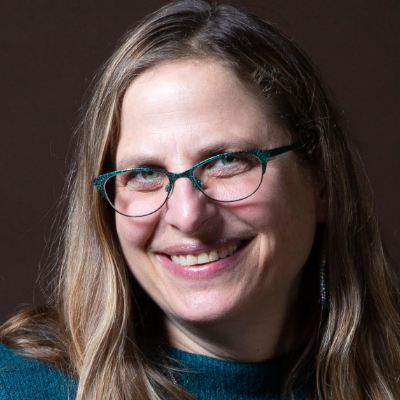
Jesus doesn’t tend to occupy a prominent place in the lives of most rabbis. But Rabbi Harry Manhoff has spent much of the past 10 years studying the Christian savior.
Huh? Aren’t rabbis supposed to be more concerned with the actions of Moses, Abraham and Miriam? Doesn’t Jesus come from the other Testament, that Jews are supposed to have nothing to do with?
Usually, yes.
“Some of my colleagues kind of expect unusual things from me,” Manhoff explained. But “many rabbis nowadays have an interest in the dominant culture around us, and there’s no way to live here without knowing about Christianity.”
Now, after nearly a decade, the spiritual leader of San Leandro’s Congregation Beth Sholom has just completed his doctorate in comparative religion at U.C. Santa Barbara. The focus of his studies was Christianity.
While he certainly isn’t the first Jew to study Christendom, there aren’t many such Jewish scholars. And in so doing, he said, it gave him a unique vantage point. “When I was studying the Bible, I had an agenda. I wanted to find authentication of the Hebrew Bible.” And the love that he had for the Torah, no doubt, affected his studies. On the other hand, “the New Testament I could look at without any bias, as it doesn’t affect me.”
Manhoff said he has always been interested in religion; he majored in it as an undergraduate at Yale, and after being ordained a Reform rabbi, he undertook a doctorate program at Columbia University, in ancient Semitic peoples.
“Anyone who knows me knows how much I love to learn,” he explained.
He completed the coursework, but became “academically orphaned,” as it is called, when his adviser died. Then, his cross-country move made it even more difficult to finish. He remained “ABD,” he said, or “all but dissertation.”
In San Luis Obispo, his congregation could not afford to pay him the salary a full-time rabbi deserved. So, for additional income, he began to teach through the extension department of Cal Poly San Luis Obispo.
Since he was paid per student, Manhoff wanted to teach a class that would appeal to the broadest group possible: He chose Jesus and the Jewish teachings of his time.
And that, he said, “was the big problem. I knew about Judaism of the first century, but I knew nothing about Jesus.”
Manhoff got in touch with a minister he had met through an interfaith clergy association, and the two agreed to teach the course together. But in talking about it, they quickly realized they had no common ground.
“Our vocabulary was so different,” he said. “He and I would sit for hours, asking each other questions that the other person had no reference point to answer. I couldn’t answer his questions because they had no Jewish context.”
It was this difference in language that led Manhoff to enroll in the religious studies program at U.C. Santa Barbara.
While he’d studied the philosophy of religion as an undergraduate, Santa Barbara’s program required the study of comparative religion.
This led him to compare the origins of Judaism and Christianity as if they were two separate traditions.
“I believe Christianity, for a century, was a form of Judaism,” Manhoff said.
Christianity is the product of the church fathers from the Roman Empire, he said. Because they were unfamiliar with Jewish theology and practice, they invented their own interpretations of what they found in the Christian Bible, “so it made sense in a Roman context.”
Manhoff’s contention goes against the prevailing opinion that it was Paul or the disciples who didn’t understand the Jewish traditions, and “that’s critical for understanding how Judaism and Christianity split,” he said.
Additionally, the common position is that Jesus was a rebel against those traditions. “But if he was such a rebel, who would follow him?”
Manhoff’s dissertation focussed on how idioms were interpreted one way by Jews and another way by Christians.
He believes that Christian scholars missed the fact that when Jesus talks about the Kingdom of God and the Kingdom of Heaven in the Christian Bible, these are actually two separate concepts.
The rabbi, who is active in a Jewish-Palestinian dialogue group, believes that learning about other faiths and cultures has brought him closer to his own.
“The more I studied about Christianity, the more I kept asking, ‘Why do Christians believe what they believe?'”
But at the same time, he has developed an appreciation for those religions and cultures.
Manhoff is often invited to lecture at churches. That he is always invited back he takes as the highest compliment, since essentially, when he explains his beliefs, he’s telling those listening that he thinks they’re wrong.
One of the best compliments he ever received came from a pastor who told him, “When you’re talking to us about Jesus, it’s as if you’re walking alongside him, like you’re a friend of his.”
While Manhoff said he wouldn’t buy into his messianism, he likes to think he and Jesus would be friends. Comparing the theology of Jesus to that of Hillel, Manhoff said, “My Jesus was a Reform rabbi and I’m a Reform rabbi, and that’s why we get along so well.”