

Updated March 18
A tiny Hillel chapter serving Jewish college students in Sonoma County has merged with San Francisco Hillel, enabling it to hire its first staffer to organize programs and events.
Founded in 1999, Hillel of Sonoma County operates primarily at Sonoma State University in Rohnert Park and also serves students at Santa Rosa Junior College. Until now, students ran the Hillel.
Roger Feigelson, executive director of SF Hillel, told J. that both Hillel boards approved the merger in October. He filed to dissolve Hillel of Sonoma County’s independent 501(c)(3) nonprofit status in early March. After the merger process wraps up, Sonoma Hillel and its assets will be formally consolidated under SF Hillel. Those assets don’t include a building. Sonoma Hillel events often take place in the student center or private homes.
The merger process could take more than six months to complete, Feigelson said, but the two Hillels have already begun to make changes.
Students are noticing those changes already.
“It feels more organized and consistent,” said Sonoma State student Eli Goldstein, who began attending events last semester before the merger. “The character is the same, but now there’s more structure and more support behind it.”
The biggest shift has been the addition of a part-time program associate at Sonoma Hillel, Eliana Meyer, who now handles logistics that once fell entirely on students.
“I’m going and doing the grocery runs and handling scheduling and taking those tasks off of the students’ plates, so they don’t have to worry about, you know, who needs to find a car to go get things for events between tests,” she said.
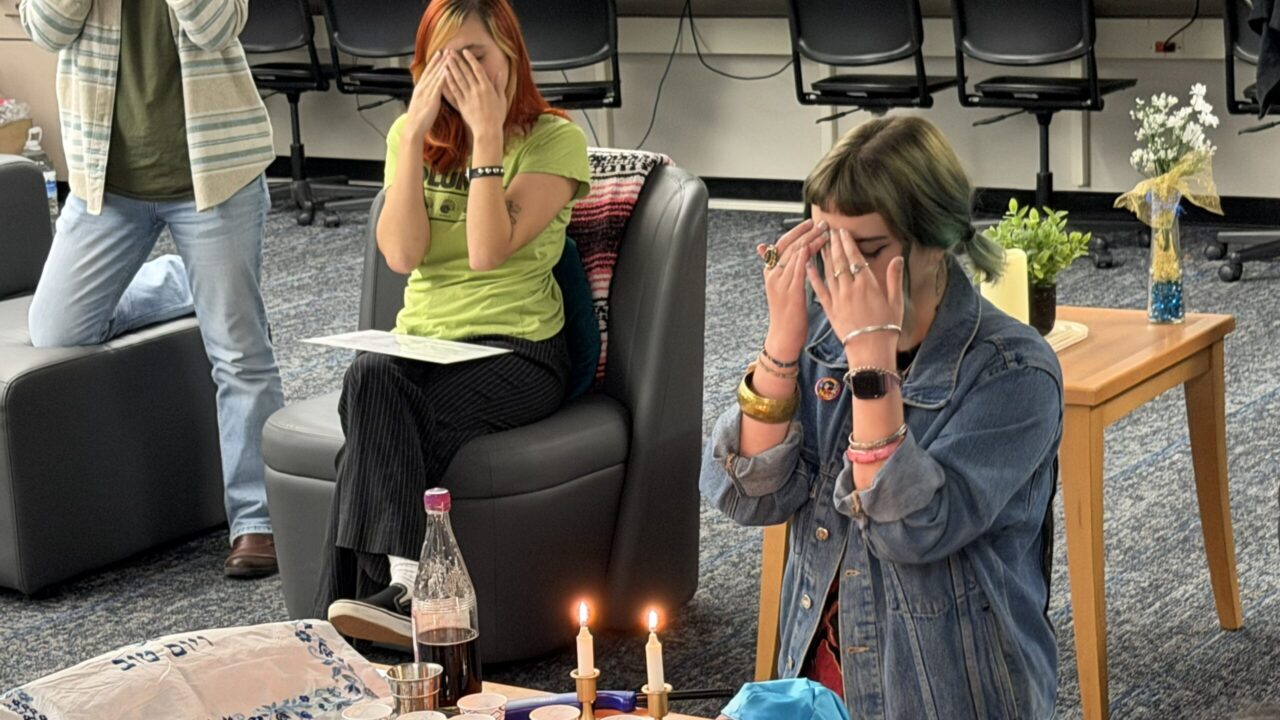
In the past, student leaders juggled planning events like Shabbat dinners alongside their course loads, other activities and jobs. For Sonoma Hillel student president Sofia Fichera, that often meant experiencing Hillel more as a responsibility than a community.
“It’s been really great for me as a full-time student to be able to enjoy the programming more, because I’m not the only one running it or planning it,” she said. “It has been such a relief.”
Hillel International estimates that there are about 150 Jews among Sonoma State’s approximately 5,100 students.

The Sonoma Hillel began small and remains so. Its website notes that it started by “holding occasional Shabbat dinners for a few students in their dorm rooms.”
Events now typically draw up to a dozen students, with a four-person student leadership team.
Regular programming includes Shabbat dinners every other week, along with newer, more casual offerings like bagel brunches, which are designed to reach students who might not attend more religious events.
One major focus of the merger is outreach to Santa Rosa Junior College, which has more than four times the student population of Sonoma State but no active Jewish student club. Historically, Hillel has served both campuses, but engagement at the junior college has been limited due to resources.
“We’ve never really been able to connect consistently with JC students before,” said Fichera. “Now we’re seeing more of them come to events and even join leadership.”
For some students, that connection is deeply meaningful. Noe Margulis, a first year student at Santa Rosa Junior College, said she sought out Sonoma Hillel after encountering antisemitic comments and anti-Israel sentiment in the classroom.
“I didn’t really know how to react to that, so I tried to seek out some people who understood,” she said.
Margulis now helps lead outreach efforts at her campus, working to bring more connection and support directly to fellow junior college students.
While still in what Feigelson and Meyer describe as an “assess and grow” phase, the newly merged Hillel is exploring ways to expand programming, from more music- and food-centered events to potential partnerships with local synagogues and faculty.
There is also a focus on a longer-term plan to ensure the organization can thrive beyond the turnover of student leadership. For student leaders graduating soon, like Fichera, that stability is one of the merger’s biggest advantages.
“The beauty of having student leaders is that so many people are coming at it from so many different perspectives, but I think having a stable person like Eliana now will be very beneficial,” Fichera said. “I’m excited to see where it continues to go now that Hillel’s really blossoming again.”