

Growing up, I had a lot of questions.
Why is it so hard to make friends with other kids, when it seems easy for everyone else?
Why is it easier for me to express myself in writing versus speaking?
Why do other kids call me “the dictionary”?
Why is outdated language in “The Lord of the Rings” easier for me to understand than modern slang?
The unifying answer to all of these questions: autism.
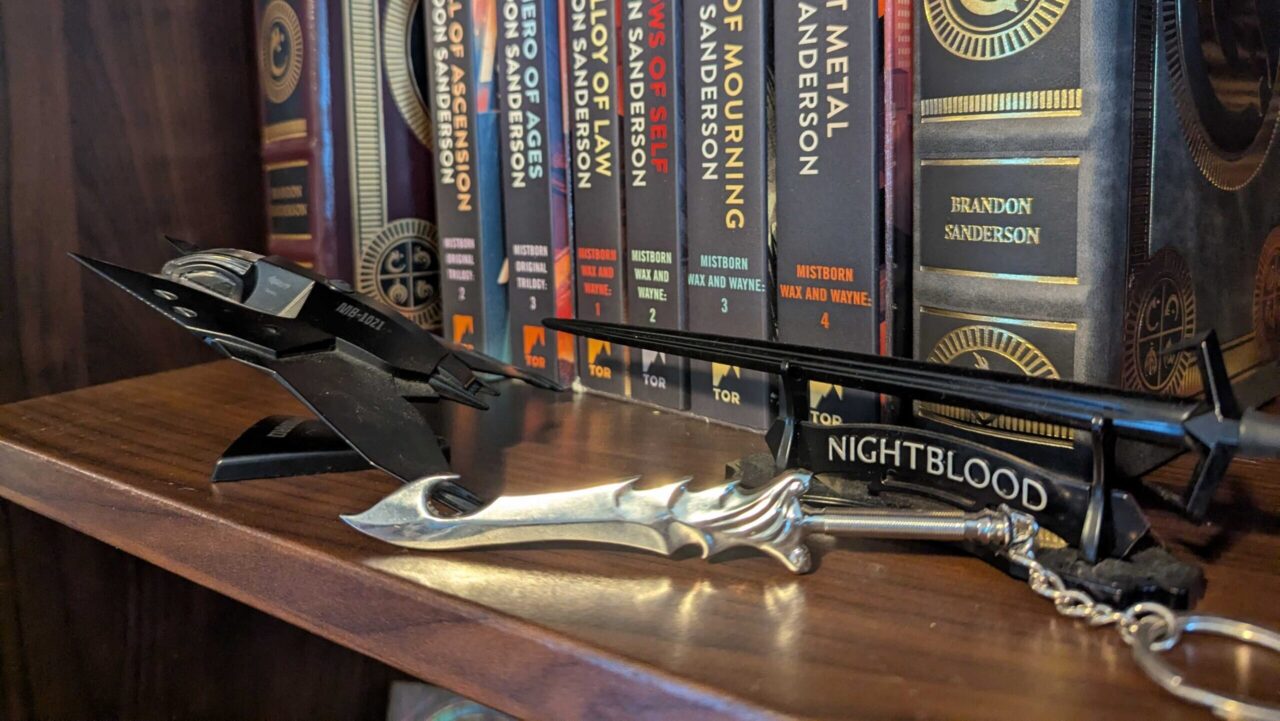
Autism gave me my love of writing, reading and storytelling. It’s how I make sense of a confusing world that moves too quickly and clobbers me with too much sensory input. Reading was my escape from childhood bullies, which many quirky kids can probably relate to. Leather-bound, signed editions of my favorite books live in a special place on my bookshelf with replicas of fantasy swords and a spaceship. Meanwhile, writing is my way of understanding my surroundings. If I can put it into words, I can start to grapple with it.
April is Autism Awareness and Acceptance Month, and yes, awareness of autism has probably never been higher. But many people have a rigid view of autism as one specific kind of person deserving of pity and even rejection. Autism, as we have increasingly learned in recent years, is a broad spectrum, and I’m here to highlight my own particular place on the rainbow.
Writing has always been my preferred mode of interacting with the world. Speaking goes too fast, giving me no time to process the interaction, and I work double-time trying to strike the right facial expressions, body language and tone of voice. Meanwhile, I’m trying to understand the other person’s face and body language but often end up misinterpreting them. There are also the many obtrusive lights, noises and scents that batter my senses when I’m trying to focus on my conversation partner. I’m happier chatting with even my closest friends and family via text.
In writing, it’s just me and my words, without anything else getting in the way. I can indulge my social anxiety by editing and rewriting to my heart’s content until it’s just right. If only I could do that in conversation when I accidentally say something “wrong” by other people’s social standards. I never received the metaphorical socializing rulebook that most people seem to inherently possess.
When I was a kid in the late 1990s, smart, verbal little girls like me weren’t diagnosed with autism. The situation is changing, as diagnostic criteria have widened to allow more variety in how doctors and others view autism. It was my own dogged belief that I was autistic that led me to seek out multiple psychologists for evaluation as an adult.
The first psychologist I brought it up to said I couldn’t possibly be autistic. “Why?” I asked.
“Because you care about other people” was the response, implying the common if wholly incorrect notion that autism blunts empathy. “Anyway, autism doesn’t really affect girls.” Again, wrong.
With my background as a special education teacher, I already knew I was autistic. But it took several more years of searching to find a doctor who was on the cutting edge of autism research to get an official diagnosis in 2022.
Autism makes me the writer I am: attentive to the tiniest details, serious and literal, perfectionist to the point of obsession.
In many ways, autism has been a challenge, but it has also given me the gift of my most precious pastime and career: reading and writing. I can’t be anything less than grateful for my unique brain when it comes to these gifts.