

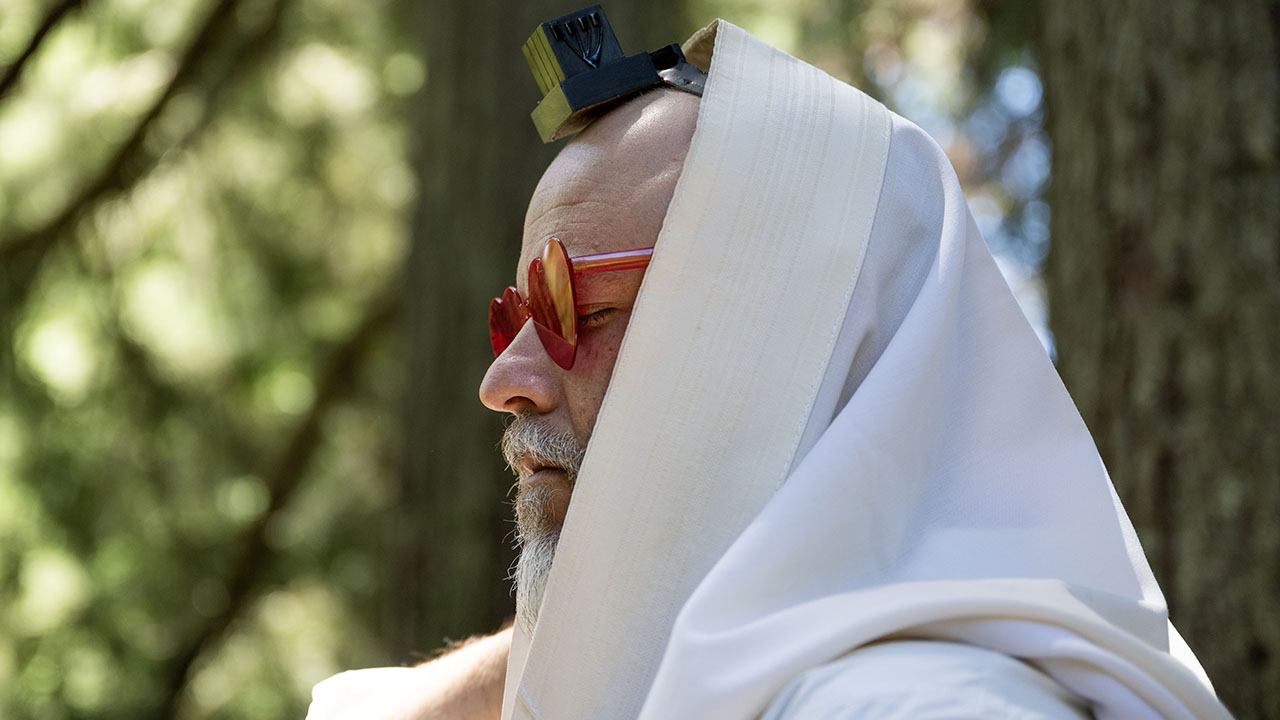
There is a particular kind of exhaustion that has settled into Jewish life in America. It did not begin on Oct. 7, 2023, though that day cracked open something that has not closed. It began earlier — in the isolation of Covid, in the fracturing of communities that had not yet recovered when the next crisis arrived, in the slow and grinding effort to hold together Jewish life while forces on every side worked to pull it apart. And it stretches back further still, shaped by historical wounds that inform our individual and communal lives in ways most of us have never had the tools to name, let alone address.
It lives in the bodies of rabbis who have not slept well in years, in the group chats of Jewish college students navigating harassment and isolation, in the silence of families who no longer know how to talk about Israel together, and in the alienation of Jews who feel they have no political home. The tools most of us reach for — therapy, prayer, community, distraction — are often not enough. But there is something else available, something that is not new, that is in many senses ancient: therapies involving psychedelic substances that, in recent years, have become legally available in limited settings in parts of the United States.
Psilocybin is legal for therapeutic use in Oregon and Colorado, where licensed healing centers have served more than 10,000 clients. Ketamine therapy is available through licensed providers in most states. On April 18, the White House signed an executive order directing federal agencies to accelerate review of psychedelic therapies, allocating $50 million in federal matching funds for state research programs.
Clinical evidence for the therapy is striking: psilocybin has shown significant reductions in treatment-resistant depression, PTSD and end-of-life anxiety at Johns Hopkins University, New York University, and University of California, San Francisco, often after a single session. (I participated in a study at Johns Hopkins in 2017.) Mount Sinai Hospital in New York is running psilocybin trials specifically targeting intergenerational trauma. The wounds Jews carry across generations are not metaphorical. They are biological, epigenetic, and finally being taken seriously as a target for healing.

Judaism is no stranger to altered states. The Torah describes the Sinai revelation as a synaesthetic event — the people saw the thunder, heard the fire — and the Kabbalists mapped the soul’s capacities with a precision that reads today like a phenomenology of psychedelic experience. Abraham Abulafia, the thirteenth-century mystic, taught that rhythmic breathing coordinated with the vocalization of the Hebrew letters of the Divine Name could loosen the soul’s ordinary cognitive grip and open the practitioner to prophetic influx, which is surely a description of a psychedelic experience. The Piaseczner Rebbe, writing in Warsaw in the 1930s, taught that the soul requires genuine emotional and spiritual arousal for psychological health, and that without it a person will either seek cheap substitutes or eventually suffer mental illness. He was describing trauma, dissociation and the slow erosion of meaning.
Antisemitic incidents reached record levels in 2023 and continued rising in 2024. Jewish students report feeling unsafe and politically homeless. Jewish leaders are burning out. Beneath all of it runs something older — the ancestral weight of a people that carries trauma encoded not just in memory but in the body. This is a communal mental health crisis, one that belongs to the whole community and not to any faction.
In the first large-scale study of Jewish psychedelic experience, conducted by my organization along with Emory University, we heard from over 1,100 Jewish people. Most were unaffiliated or underserved by Jewish institutions. Among them, 88% had already tried psychedelics, and more than a third had done so specifically to address intergenerational trauma. A majority, 69%, reported increased connection to the divine. And yet for most, these experiences did not feel Jewish — not because Judaism had nothing to offer, but because no one had brought it into the room. But these are not people who are necessarily done with Judaism. They are people Judaism has not yet found a way to reach.
When a Jewish person in a psilocybin session encounters ancestral trauma, questions of God’s presence or absence, the weight of collective memory, a clinician trained only in Western therapeutic models may not know how to hold what emerges. A growing ecosystem of Jewishly rooted, licensed practitioners is building the infrastructure for exactly this work, including the organization I founded, Shefa.
We are in the month of Iyar, which Jewish tradition associates with healing. Its name forms an acronym for Ani Adonai rofecha — “I am the Lord your healer.” The prophet Jeremiah cried: “Heal me, and I will be healed!” Healing requires a particular posture — a genuine receptivity, an openness to being transformed at a depth that waking consciousness cannot reach. That is what psychedelic care, at its best, makes possible, and what the Jewish tradition, at its deepest, has always been pointing toward.
Iyar has always called us to heal. The medicine is now within reach.