

Jewish nonprofits in San Mateo and Santa Clara counties can now apply for grants to cover rising security costs through a new fund established by the group Jewish Silicon Valley.
The Community Safety Fund will provide grants that can go toward paying security guards and purchasing cameras, lighting and barriers, as well as training and emergency preparedness.
The fund is anchored with initial grant funding from Mountain View-based Silicon Valley Community Foundation, which distributes money on behalf of a broad array of individual donors and gave out nearly $2.1 billion in grants last year.
While there is no limit to how much applicants may request, Jewish Silicon Valley anticipates that average initial grant awards will be about $10,000, depending on available funding and demand.
Daniel Klein is the CEO of Jewish Silicon Valley, which serves as the region’s Jewish federation and oversees the Addison-Penzak JCC. Based on conversations with community leaders, he estimates that local groups have about doubled what they spend on security over the past year.
“Some were having to make tough choices, deciding whether to spend more money on security at the expense of the core of their work,” Klein told J.
Klein didn’t specify how much money is available and said that fundraising will be ongoing.
The announcement of the fund comes after a series of community listening sessions last year and earlier this year that found safety was among the most urgent concerns for local Jewish groups. The sessions also put a spotlight on the strain arising from funding cuts due to H.R. 1, the major federal tax and spending reconciliation package in 2025 known as the “One Big Beautiful Bill Act.”
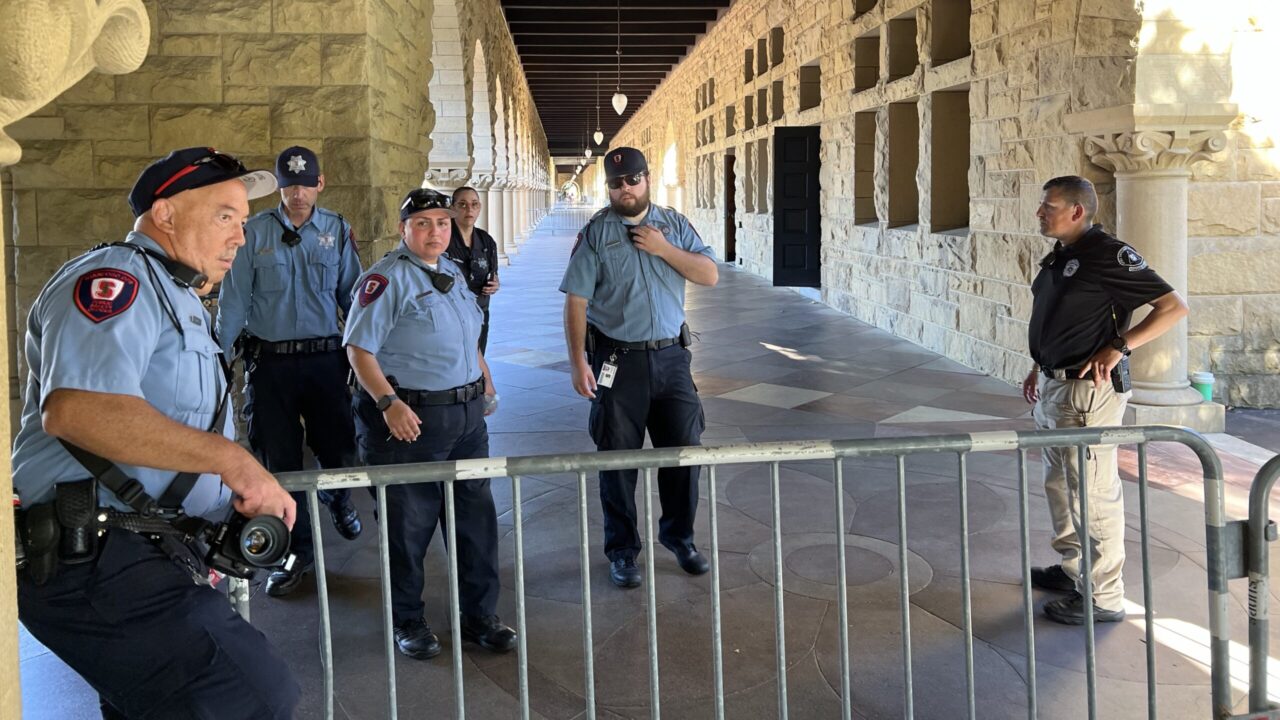
Klein cited the Antisemitism Worldwide Report, which found that 2025 was the deadliest year for the Jewish community in more than three decades. He pointed to incidents across the U.S. that he believes have contributed to the Jewish community’s demand for increased security measures, such as the Capital Jewish Museum shooting in Washington, D.C., the firebombing attack in Boulder, Colorado, and the tensions on college campuses since Oct. 7, 2023, including at Stanford University.
“We are finding in these conversations that our community is basically making threat assessments in order to engage in Jewish life,” Klein said. “This security fund is our attempt to help solve that, so that for the Jewish and broader community that walks through our doors at the APJCC and for our Jewish community partners, they are not having to face that choice.”
The fund is part of a growing pattern of local Jewish federations stepping up security funding: The Jewish Federation of Los Angeles distributed $500,000 in security grants to more than 50 institutions last year, and the Jewish Federation of Cleveland increased its security allocation to $1.75 million for the 2025-2026 fiscal year.
The new funding also follows a period of uncertainty around the federal Nonprofit Security Grant Program, which distributes hundreds of millions of dollars a year to any nonprofits at high risk of terrorist or other extremist attacks. The funding was effectively frozen earlier this year during a shutdown at the Department of Homeland Security. Congress ultimately approved $300 million in new funding for the program for 2026, though the Jewish Federations of North America has estimated that full cost of securing the Jewish community alone at roughly $765 million per year.