

The Torah column is supported by a generous donation from Eve Gordon-Ramek in memory of Kenneth Gordon.
Shelach
Numbers 13:1-15:41
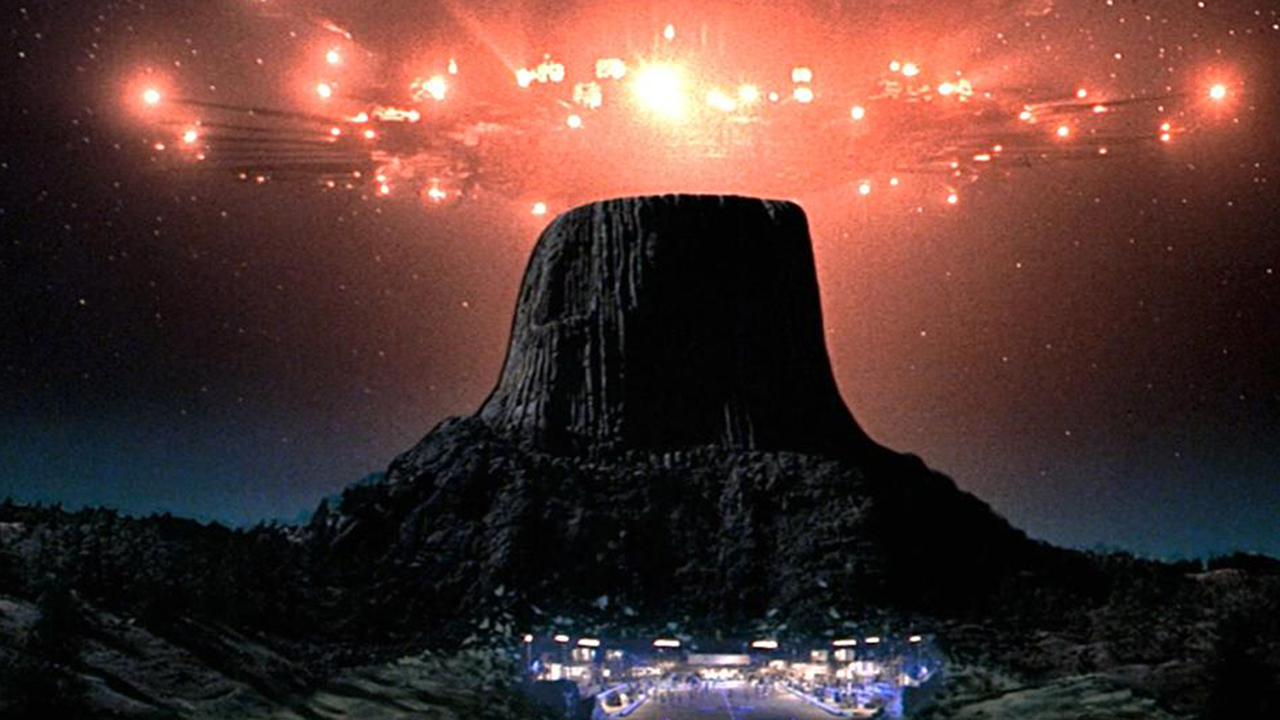
Director Steven Spielberg released “Close Encounters of the Third Kind” nearly five decades ago. The 1977 film was his first to ask the question that would recur throughout his career: What does it mean for humanity if there is intelligent life beyond our planet, and how might we connect with intelligence that seems superior to our own?
Most of all, Spielberg asks his audiences to consider what it means to encounter the unknown.
Spielberg has always treated the possibility of extraterrestrial life with empathy. He attributes his fascination with aliens to his Jewish identity and his own experiences of antisemitism. His childhood feelings of being othered generated a sense of solidarity with the fantastic others he imagined.
His films show a cosmic theology that is an extension of his Jewish identity. There is a hint of this in “Close Encounters.” Early in the film, Roy Neary’s children pause their screening of Cecil B. DeMille’s 1956 epic “The Ten Commandments” at the point where the Red Sea parts — a theophany on the television set, foreshadowing the otherworldly revelation ahead.
On June 12, his latest UFO-inspired film, “Disclosure Day,” is arriving in theaters. The film contemplates what might happen if the government were to disclose what it has gathered about phenomena that appear to violate the laws of nature, at least as physics has understood them on Planet Earth.
The film’s release comes at a charged moment for these kinds of conversations: Recent government revelations concerning what are now called Unidentified Anomalous Phenomena have renewed public interest in these questions. It is hard to say what these new disclosures actually amount to. As often as not, they consist of grainy images, inconclusive data and footage of fast-moving objects as easily attributed to instrument failure as to anything of otherworldly origin.
In this week’s Torah portion, Shelach, we have our own “Disclosure Day” moment. Moses has sent spies, or intelligence officials, into what was then the land of Canaan, ahead of the Israelites’ arrival. The spies witness the same things — a land of staggering abundance ruled by mythic giants, the Anakim — yet they return with conflicting reports.
The majority of the spies are terrified: “We cannot attack that people,” they say, “for they are stronger than we…. The country that we traversed and scouted is one that devours its settlers.”
Although Joshua and Caleb witnessed the same giants, their experience of them is vastly different. Ten of the spies say, “We looked like grasshoppers in our own eyes, and so we were in theirs.” But Joshua and Caleb tell Moses, “Have no fear of the people in that land, for God is with us.”
That human beings can react to identical facts in ways that are not just different but diametrically opposed is a phenomenon Carl Jung, Sigmund Freud’s onetime protégé, observed in the 1950s. He was captivated by reports of unidentified flying objects investigated by the United States Air Force. Jung perceived two conflicting realities in these objects. On the one hand, the sheer volume of reports and the credibility of the pilots meant they had certainly seen something. On the other, precisely what they saw was epistemologically unknowable. “Something is seen,” he wrote, “but one doesn’t know what.”
Because the phenomenon remained uncertain, people filled the gaps in their knowledge with images drawn from their own inner lives.
UFOs and aliens become vehicles for projection, screens onto which humanity casts our deepest hopes and fears. The alien is imagined alternately as a dark power poised to infiltrate and conquer the Earth or — as with Superman, a refugee from a dying world dreamed up by two Jewish teenagers — an otherworldly savior who might rescue humanity from its own worst impulses.
Jung’s insight helps explain why the Torah condemns the 10 spies yet counts Joshua and Caleb as righteous. All 12 saw the same thing: the same bountiful land, the same improbably huge Anakim. But the meaning they found in the Anakim revealed something of themselves. Ten read them as confirmation of their deepest fears, that God had led them through the wilderness for 40 years only to let them die at the threshold of the land. Joshua and Caleb saw the same giants as a chance to vindicate the faith that had carried them.
The Jewish mystical tradition has understood this story to teach that, sometimes, truth lies beyond the reach of the facts. We may share the same facts, yet the truth can stay hidden from us or surface only when we understand those facts in a different light.
The ancient rabbis distinguished between wisdom and discernment. Wisdom gathers facts; discernment intuits what those facts mean. The 10 spies saw the giants and were reminded of the trauma of slavery and of the possibility that their destiny would again not be their own. Joshua and Caleb saw the same giants and remembered the miraculous plagues, the parting of the Red Sea and how God had sustained them, as on eagles’ wings, for 40 years in the wilderness.
We are not so different from those 12 scouts: Time and again, life presents us with incomprehensible giants. We are forced to make decisions with incomplete information, unable to know what those choices might mean for our future. We see images on our screens and phones but cannot know what lies beyond the frame.
The truth is that meaning may never be disclosed to us. We are left, instead, with a choice. We can approach the unknown with fear, barring our own path to the promised land. Or we can embrace it with the hope and faith that, whatever the future brings, we have the capacity to bear it. That choice remains our own.