

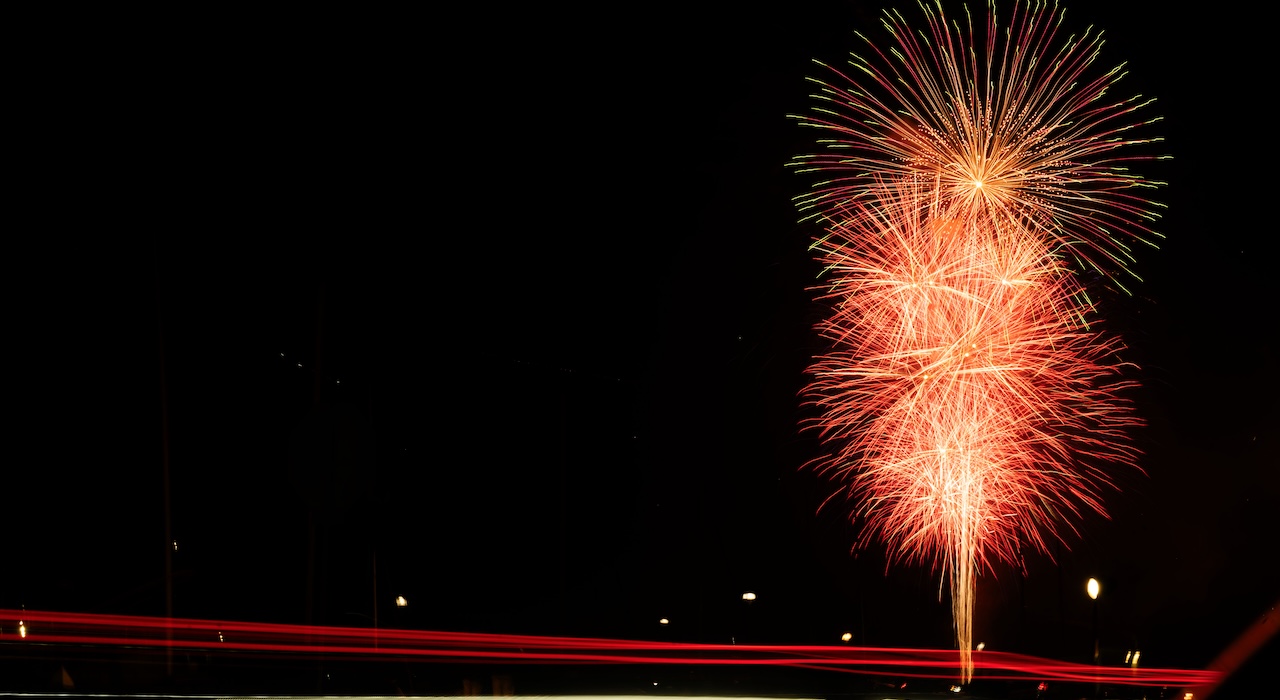
Independence Day will mark a rare convergence of the civic and the sacred as America’s 250th anniversary falls on Shabbat.
For at least four Bay Area Jewish clergy, the overlap presents an opportunity to celebrate America, reflect on the country’s ideals, address its shortcomings and examine the role of Jews here.
None said they have plans for uncomplicated celebration or outright criticism of the country. Instead, each sees the serendipity of Shabbat and America’s semiquincentennial as an invitation to examine America’s founding promises through a Jewish lens.
At Temple Isaiah, a Reform synagogue in Lafayette, the leaders and congregants have spent nearly a year preparing for the anniversary by participating in an ambitious national interfaith initiative known as Faith250.
“It’s really an opportunity to say, at this inflection point, what values are we committing ourselves to?” Rabbi Aaron Torop said. “How are we committing ourselves to liberty and justice for all alongside our partners from other faith traditions?”
Across the four weeks of June, more than 250 participants from 15 congregations representing Jewish, Protestant, Catholic and other faith traditions gathered in small discussion groups led by clergy and scholars to study four foundational American texts: the Declaration of Independence, Frederick Douglass’ famous speech “What to the Slave is the Fourth of July?,” Emma Lazarus’ poem “The New Colossus” and Katharine Lee Bates’ patriotic anthem “America the Beautiful.”
Rather than treating the documents as political texts, participants studied them as they would holy ones, asking questions and exploring their moral implications.
Torop said the conversations intentionally moved beyond the daily news cycle.
“Instead of reacting to whatever is happening in the news, we were able to dig one level deeper and reflect on the kinds of values we are holding close and the commitments we’re making to each other about the kind of community we’re building together,” he said.
The project culminates this Friday evening with an interfaith Shabbat service featuring a civic ritual developed jointly by clergy from participating congregations.
Rather than delivering a traditional sermon, the service will feature the lighting of ceremonial candles honoring different groups in the American story, including Indigenous peoples, the country’s founders, abolitionists, suffragists and civil rights leaders.
Each candle will be accompanied by prayers, songs or readings emphasizing liberty, justice and shared responsibility.
Among the local participating congregations are Lafayette-Orinda Presbyterian Church, Holy Shepherd Lutheran Church, St. Andrew’s Presbyterian Church, St. Anselm’s Episcopal Church, St. Stephen’s Episcopal Church, St. John Vianney Catholic Church, Lafayette Christian Church and Hillcrest Congregational Church.
Participants, Torop said, have found comfort in discovering common ground across religious differences during a time when many people feel politically and socially isolated.
“There’s been gratitude and a feeling of togetherness,” he said. “People are realizing we have common cause with so many people in our community.”
Cantor Marsha Attie of Congregation Emanu-El, a Reform synagogue in San Francisco, described the challenge of balancing Shabbat and Independence Day with the current political climate.
“It’s a complicated time in our country. A lot of people are really struggling with what’s happening,” Attie said. “But we also want to be just a Jewish Shabbat space for people to enter into Shabbat and leave the week behind and leave the world behind.”
Attie said that while Rabbi Madeline Budman, who will lead Friday’s services, will not include any overtly political messaging in her sermon, she will mention the Faith250 initiative and highlight aspects of the project. Attie will also add Paul Simon’s “American Tune” and “America The Beautiful” to the musical lineup.
“‘American Tune’ is a contemplative exploration of living in America, with themes of survival, resilience, adversity, hope and dreams,” she said. “It sort of acknowledges a lot of disappointments but also the resilience of the human spirit so there’s a lot in that song that relates to the day.”
The remainder of the service will consist of traditional Jewish liturgy and songs, the “comfort food of Jewish music,” as she put it, designed to create a sense of community and solace outside of politics.
“What we always do is just try to bring people together as a community and provide comfort and space for people to have different kinds of feelings that they’re bringing,” Attie said.

For Rabbi Paul Steinberg of Congregation Kol Shofar, a Conservative synagogue in Tiburon, the country’s anniversary has become an occasion to reflect on the unique place American Jews occupy in Jewish history.
His sermon was still being written earlier this week, but a recent congregational heritage trip through Romania and Hungary has shaped his thinking.
The two-week journey took roughly 20 congregants through sites that held significance to the historic Jewish communities in the two countries. Steinberg described visiting mass deportation sites and once-bustling synagogues that were emptied by the Holocaust and decades of communist repression.
Standing in places where previously vibrant Jewish communities nearly disappeared underscored for him how unusual the American Jewish experience has been.
“I feel like I hit the cosmic jackpot,” he said. “Of all the places and times to be born as a Jew, America has been extraordinary.”
American Jews have enjoyed unprecedented religious freedom, opportunity and security, compared with nearly every other Jewish community throughout history, he said.
At the same time, he acknowledges that the landscape has shifted dramatically since the Oct. 7, 2023, Hamas attack on Israel and the rise in antisemitism since then.
Many Jewish Americans, he said, now feel uncertain about institutions and political movements they once considered reliable allies. His sermon will explore the tension between gratitude for America’s historic protections and concern about its future.
“We’re on a threshold,” he said. “What we do now, what we commit to now, will determine what our future looks like.”
He plans to encourage congregants to remain engaged civically by defending democratic institutions, reporting antisemitism, investing in Jewish education and participating confidently in Jewish communal life.
“I don’t think complacency is what we need,” he said.
Temple Beth Abraham, a Conservative synagogue in Oakland, is taking a more text-centered approach.
Inspired by a new educational resource from Jerusalem’s Pardes Institute of Jewish Studies called “Talmud of America,” Rabbi Mark Bloom plans to lead a discussion on Saturday morning that compares passages from the Declaration of Independence with themes from the Torah.
The study session will explore parallels between the Declaration’s assertion of people being “created equal” and the biblical teaching that human beings are created in the image of God, while also examining differences between America’s emphasis on individual rights and Judaism’s stronger focus on communal responsibility.
Bloom said his congregation generally avoids overt political discussions during worship, preferring to focus on enduring values rather than current events.
“People do like to talk about it — that’s very Bay Area — but we don’t do much politics here because I think people need a little bit of a diet sometimes,” he said. “But also, the mood in the room right now and pretty much everywhere is very — I wouldn’t even say mixed — it’s very troubled about what’s happening in the United States in a whole different variety of ways.”
Rather than engaging contemporary partisan debates directly, the discussion at Beth Abraham will ask what America’s founding ideals can teach about Jewish values.
The weekend’s services will also include patriotic-themed music, such as Woody Guthrie’s “This Land Is Your Land” during Friday evening worship and a version of “Adon Olam” sung to music from the Broadway musical “Hamilton,” which tells the story of the American founding father Alexander Hamilton, during Saturday’s service.
The musical selections, he said, reflect both appreciation for the country and an understanding that patriotism itself can be expansive and inclusive.
IF YOU’RE GOING
Shabbat evening service at Congregation Emanu-El, 2 Lake St., S.F. Livestream option. 6 p.m. Friday.
Shabbat services at Temple Beth Abraham, 327 MacArthur Blvd., Oakland. 6:15 p.m. Friday and 9:30 a.m. Saturday.
Shabbat evening service and Interfaith 250th Birthday at Temple Isaiah, 945 Risa Road, Lafayette. Livestream option. 7 p.m. Friday.
Shabbat morning service at Congregation Kol Shofar, 215 Blackfield Drive, Tiburon. Livestream option. 9:30 a.m. Saturday.