
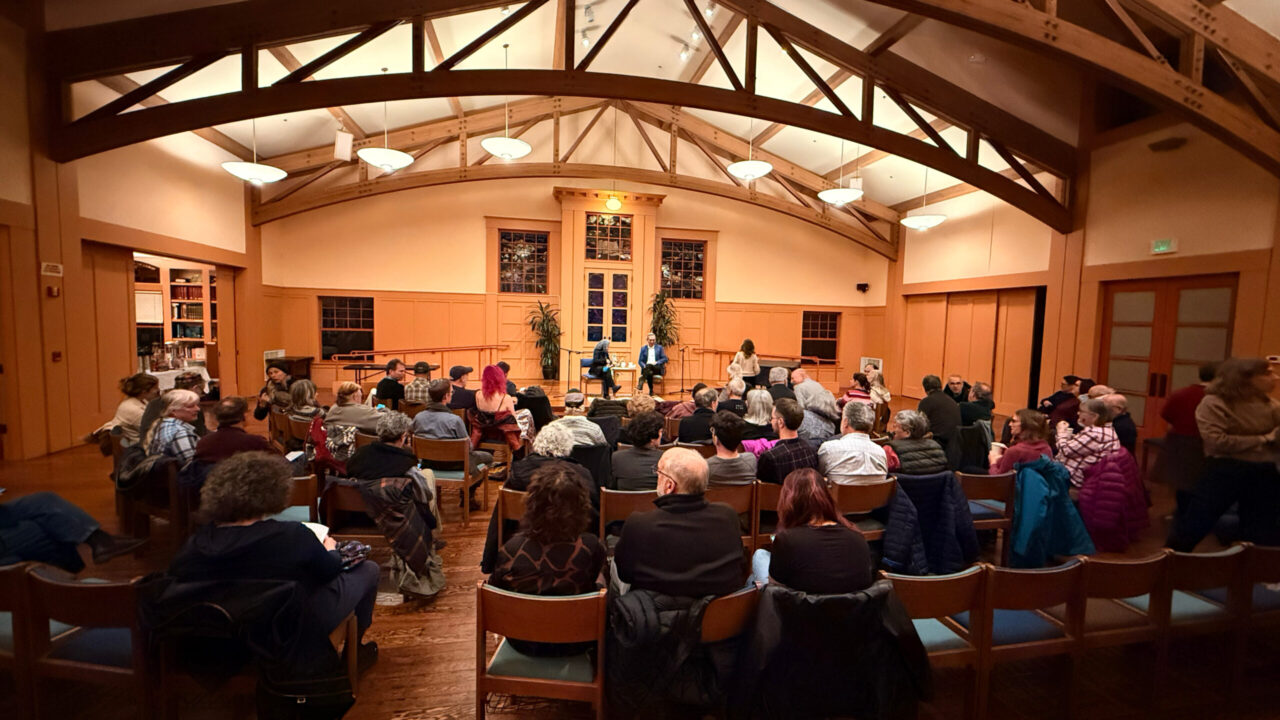
As it nears its 50th anniversary, Congregation Sha’ar Zahav has done something that very few other synagogues in the country have considered.
San Francisco’s pioneering LGBTQ synagogue, founded in 1977, has shifted a portion of its multimillion-dollar endowment toward impact investing, a financial strategy that aims to create positive social or environmental change while still bringing in a steady financial return.
It was a complicated decision to make, according to Deborah Levy, who served as president of Sha’ar Zahav’s board when the impact investment was initially made last July. As stewards of the endowment, board members had to balance their fiduciary duty to be cautious with the funds against a desire to align the congregation’s investments with its values.
“We all really value the security [the endowment] gives us for our future, feeling like we are going to be able to weather hard times thanks to this,” Levy said. “Nobody wanted to give that up.”
The process took more than two years, beginning with the synagogue’s endowment committee writing an investment policy statement.
The synagogue eventually needed the help of the Jewish Federation Bay Area. Sha’ar Zahav is one of 48 Bay Area Jewish institutions, including 20 synagogues, that use the federation to manage their endowments.
Sha’ar Zahav became the first of them to move a portion of its endowment into the federation’s donor advised fund (DAF) pool that is managed according to environmental, social and governance (ESG) principles. Sha’ar Zahav chose to shift about half of its endowment into that pool.
Then, in July of last year, the synagogue decided to go a step further and embrace impact investing. It asked the federation to lend $50,000 of its money to Grameen America, a nonprofit affiliated with Bangladesh-based Grameen Bank, that offers small loans to low-income women in the United States to help them start and expand their businesses.
Levy said that the investment felt aligned with the synagogue’s values, citing the Torah’s commandment to leave the corners of fields for the needy to glean.
“This is about a very clear Jewish value to consider giving to those less fortunate,” Levy said.
Sha’ar Zahav is earning 3% a year in interest on the loan, a steady amount that can help the congregation weather market volatility, according to Michael Chertok, a past board president and member of the endowment fund committee.
Chertok said he doesn’t believe the congregation has sacrificed returns by forgoing a traditional investment.
“From every indication that I have so far, we did about the same [by] investing in the socially responsible options versus investing in the traditional endowment fund,” Chertok said.
Eyal Bilgrai, chief financial officer for the federation, said that Sha’ar Zahav was the first organization it works with to make a direct impact investment through the federation.
Now, the federation wants others to know they can learn from Sha’ar Zahav and consider making similar investments.
“Sha’ar Zahav is a model other congregations can follow: long-term funds that support annual operating costs and special programs, invested with both future security and shared values in mind,” Bilgrai said in an email.
Bilgrai said the outcome is a testament to the services it provides to Jewish groups.
“The Federation is expanding the services it offers Jewish organizations to help them manage and grow their long-term assets, and Sha’ar Zahav is a timely example of what that support can achieve,” he said.
For Michael Lustig, a New York-based evangelist for impact investing in the Jewish world, the news about Sha’ar Zahav provided a jolt of excitement. Lustig, a retired Wall Street executive and the author of “A Guide to Jewish Impact Investing,” said that too few institutions are even willing to consider the possibility of impact investing and that it’s rare to see a federation cater to a demand for it from a congregation.
“It’s unfortunately very few and far between,” Lustig said, noting that many synagogues prefer to keep their endowments in traditional funds and rely on the old adage: “If it ain’t broke, don’t fix it.”
Of course, the prerequisite for using an endowment in this way, is having one to begin with. Sha’ar Zahav managed to more than double its endowment three years ago when it received two sizable gifts, totaling more than $1 million donated by members after their deaths.
The synagogue’s members have been thrilled with the decision to use part of the endowment to help others and have sent investment committee members thank-you notes, according to Levy.
“They know that we’re not just throwing money around,” she said. “We’re doing this seriously and wisely, and it’s going to be beneficial for a lot of people, including us.”