
Is Zionism still relevant?
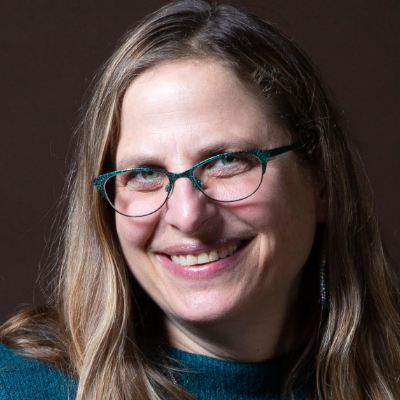
Depends who you ask. While some refer to today’s Israel as post-Zionist, Avirama Golan argues that the movement that created the Jewish state is absolutely relevant.
“Zionism was all about building a new society, and this is something we haven’t even begun,” said the Tel Aviv television host and journalist in a recent interview in San Francisco. “We’re building a new society, and we’re in a new stage, so it’s now relevant more than ever.”
Golan, who writes for Ha’aretz, describes herself as a “left-wing journalist.” While the Israeli daily known for its leftist politics is considered a must-read for the elite — intellectuals and politicians — it is only read by about 10 percent of the Israeli public. Nevertheless, its influence cannot be underestimated. There was the time that Prime Minister Ehud Barak woke up Golan at 3 a.m., calling from abroad because he didn’t like something she wrote.
And then there was the Or Committee, founded by the Barak government to investigate the deaths of 13 Israeli Arabs killed by Israeli police in October 2000, when the al-Aksa intifada first erupted.
At first, there was no such investigation. “Ha’aretz wrote three editorials in favor of the committee,” she said. “I know it changed Barak’s attitude.”
Golan strongly believes that being a Zionist and critical of Israel are not mutually exclusive. Joking that there were only a few people questioning Israel’s right to exist, with many of them in Berkeley, Golan said, “The Jewish state is something we don’t question anymore.”
So in these post-Zionist times, she said, being a Zionist means wanting to effect social change in Israel.
Listing such issues as infrastructure, the environment, water and education, Golan said Zionism was about changing society.
“Making society better and making it a better place to live, leaving a better Israel for the next generations,” that is all Zionism, she said.
Golan, who lectured on the legacy of slain Prime Minister Yitzhak Rabin during a commemoration of his sixth yahrzeit at San Francisco’s Congregation Beth Sholom, pointed out that Israelis did not elect him only because of his quest for peace with the Palestinians.
“He won the election because he changed the agenda of Israeli society,” she said. “He invested more in infrastructure, more in education, more on the Israeli Arabs than ever before. The idea of making peace for him was only a part of changing society.”
And since his death, she said, the society has been ruptured in countless ways, in her eyes, the greatest one being the divide between religious and secular — specifically when it has to do with the West Bank and Gaza Strip.
“The right-wing extremists don’t regard the territories as land, but as sacred land,” she said. “It’s a gap that is very difficult to find a bridge.”
Israelis should not think it couldn’t happen again, she warned, as settler leaders have openly threatened politicians who are willing to give up land for peace.
Noting that Foreign Minister Shimon Peres was under the protection of 12 bodyguards recently inside Israel because of threats from Jews, not Arabs, she said, “It’s one of the things that really bothers me more than anything else, that Peres is in danger not because of the Arabs but because of the settlers. It’s something that is so difficult for us that we don’t dare to speak about it. This rupture is so deep and so crucial and it hurts so much that we’d rather not talk about it.”
While the al-Aksa intifada tends to dominate the articles datelined Jerusalem these days, so many other problems have erupted as a result, she said.
“We’re in a terrible recession. Every year, more than 20 women are murdered. For years, we were proud there were no homeless people, now there are. And there is hunger. The gap between rich and poor is beginning to be enormous.”
And if American Jews who care about Israel want to help, she said, they should not only give money, but also ask exactly where it’s going.
“American Jews should demand to know,” she said. “They should say, ‘Listen, we want to know where you invest our money; we want to be involved.'”
When confronted with the reality that many Israelis don’t appreciate such advice coming from their American Jewish counterparts, she admitted her fellow citizens were too arrogant.
Golan spoke to a group of Jewish college students at a retreat sponsored by the S.F. Israel Center and was surprised to hear how hostile some campuses were for students who identified with Israel.
“I didn’t know how young Jews who don’t know about Israel have to defend it as a part of their identity as Jews. This was the first time I really understood the meaning of standing in this different spot. I think Israel has to understand that and be more open and more sensitive to what Jewish communities in the states feel and what they have to deal with.”