
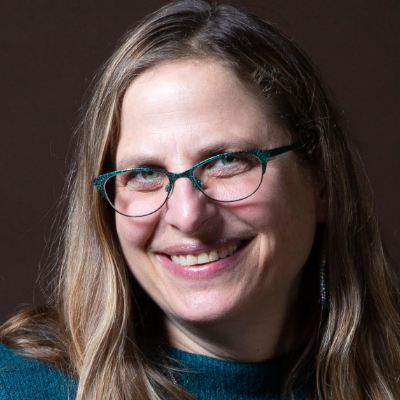
“Living in denial is no longer an option.”
That sentiment was one of those expressed by David Harris, executive director of American Jewish Committee, in a recent wide-ranging conversation before the local chapter in San Francisco.
His comments were a mix of his personal opinion, experience and the agenda of the AJCommittee.
The Jewish community needs to beef up security, he said. Jewish institutions need to follow the lead of their European counterparts, which have functioned under heavy security since the 1970s.
And in these post-Sept. 11 days, the American Jewish community cannot afford to be so lax. “It’s now coming to our shores,” he said. “We are a vulnerable community with thousands of institutions not prepared to deal with the threat.”
The war on terrorism is especially worrisome to Jews, he said, with the warnings against Jewish institutions and the murder of journalist Daniel Pearl.
Harris, who has spent many years living in Europe, said the rise of anti-Semitism is also extremely troubling. European governments have three ways of dealing with it: denial, obfuscation and rationalization.
One form of obfuscation suggest that the scapegoating is not specifically directed at Jews, and the rationalization, in France’s case especially, takes the form of “the poor disenfranchised children of Algerian immigrants are watching Al-Jazeera and see the Israeli oppression of Palestinians and take it out on Jews.”
In Norway, Harris said, Israeli products are marked that they come from the Jewish state, so shoppers can decide whether they want to purchase them.
He voiced other concerns about the status of Jews in Europe, where the ever-increasing Muslim population means that generally speaking, Muslims outnumber Jews at a ratio of 40 to 1.
“Many Muslims in Europe have been educated by extremist regimes in these countries,” he said.
Turning to Israel, Harris said the political left and the right were both morally bankrupt.
“The left willfully closed its eyes to the teaching of incitement, the accumulation of weapons, the violation of every element of the Oslo accords,” he said.
The right was no better, he contended, because it ignores that Israel cannot retain its Jewish majority, rule over the lives of 3 million Palestinians and call itself a democracy. “Something has to give,” he said. “The left was correct in pointing to this dilemma.”
The most American Jews could do was be supportive, but let Israel decide what to do, he said.
“I don’t believe that we want peace more than Israelis want it for themselves. If the Israeli people believe that [Prime Minister Ariel] Sharon is not capable of peace, then they will re-elect a new leader.”
However, it is up to American Jews to advocate for the state of Israel, to stand up for it before members of Congress and others who determine America’s foreign policy.
“The Michael Lerners of the world register very low but have a high decibel level,” he said, referring to the left-leaning editor of Tikkun magazine. “We have to be sure the government and Congress never get confused.”
In a question-and-answer session, Harris elaborated on some of what he said earlier. Addressing a question about what made this Palestinian uprising different from the first one that began in 1987, he responded that there is much more anti-American sentiment now.
“Israel is seen as an extension of American imperialism,” he said. In addition, Europe has changed. “Its mindset is very anti-military and much more passionately in support of the Palestinians.”
While the world used to look to America, with the European Union now 15 countries strong, “the real center of moral gravity is Europe.”