
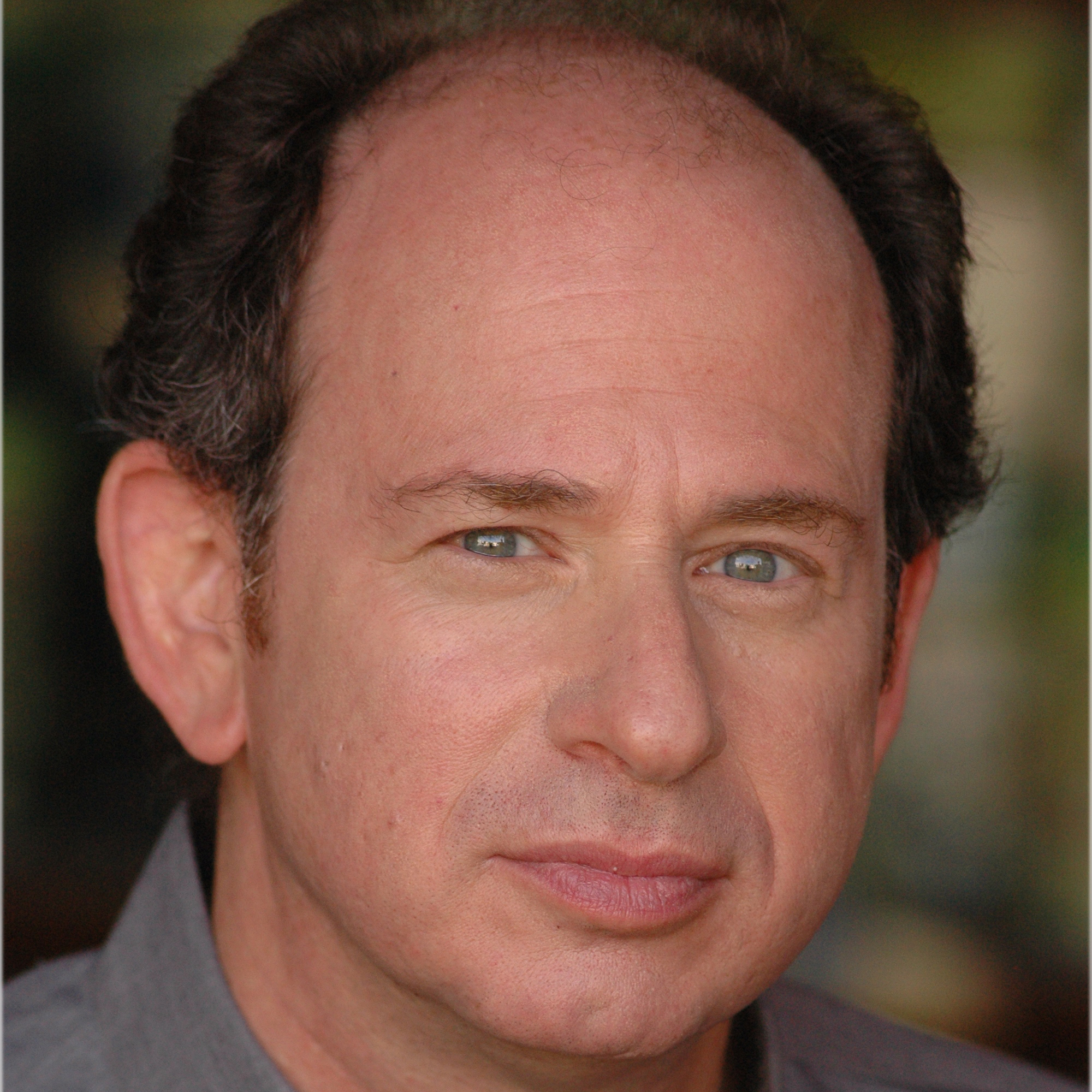
Jonathan Nossiter doesn’t see himself as a wandering Jew — although he does jokingly call himself a Jewish outsider — but he was inspired to reconsider his identity in the process of making “Mondovino,” a globe-spanning yet intimate documentary about the modern business and art of wine.
You certainly don’t have to be Jewish to enjoy “Mondovino,” but Jewish moviegoers will be especially attuned to — and gratified by — a few references that the filmmaker slips in along the way.
During his conversation with two haughty honchos of the mammoth Mouton-Rothschild winery, Nossiter casually inquires about the firm’s wartime dealings with the Nazis. Then he asks what happened to the Jewish Baron Rothschild (who was in England with the Free French, we learn) and the non-Jewish baroness (who fared much worse, at Dachau).
Nossiter’s disarming approach is the opposite of that of Marcel Ophuls, who angrily challenged interviewees in his blistering masterpiece “Hotel Terminus: The Life and Times of Klaus Barbie.” But it is no less effective, even if Nossiter’s aim is to expose the tendrils of creeping globalization rather than the hidden career of a mass murderer.
In another sequence, the head of a family of Argentine winemakers, over a relaxed lunch with Nossiter on their veranda, makes an informal and seemingly extraneous assertion that Juan Peron was not anti-Semitic.
But nothing was extraneous to Nossiter, he conceded during a visit to San Francisco last month, as he journeyed from country to country over 3 1/2 years shooting the film.
“I was always interested to see the cultural and political overtones,” he explains, “whether it was the power brokers in Italy proud of their Fascist roots, or a power broker in Bordeaux essentially unapologetic about his Nazi collaboration, or marketing whiz kids today thrilled to rip us off and manipulate us with great marketing scams.”
The well-educated son of a journalist, Nossiter learned at an early age to probe beneath the surface. Although born in the United States, he’s lived for extended periods in France, England, Italy, Greece and India, and his perspective is less American than European.
It’s also the epitome of secular Judaism — and the vision of a man who is at home almost everywhere but doesn’t have a homeland.
“I was struck when I was in Burgundy, and doing some of the first shooting, by the intense relationship of parents and children to their sense of place, to their terroir,” Nossiter recalls. “There were all the generational conflicts that we all know — what do we inherit from our parents and what do we give to our children — played out in a very concrete way. That got me to thinking, ‘I’m a globetrotting, deracinated Jew. Do I have a terroir?'”
The French word means land and, in a more profound sense, where one comes from. The closest English translation, says Nossiter, is “somewhereness.” Despite his lack of geographical roots, he had no problem answering his own question.
“Dammit, yeah. My terroir is what I’ve inherited from my parents. My father definitely felt that he inherited the Jewish notion of an aspect of Jewish culture that is essential — that is, an ethical relationship to his past. And [an ethical relationship] to the notion of curiosity and tolerance, which to him is an essential part of Judaism.”
Nossiter, 43, is a trained sommelier as well as an accomplished dramatic filmmaker. (He wrote and directed the Sundance prizewinner “Sunday” starring David Suchet and directed Charlotte Rampling and Stellan Skarsgard in “Signs & Wonders.”) Above all, he’s a connoisseur of creativity and original thought. Although he’s nowhere near as confrontational onscreen as Ophuls, he doesn’t pull his punches in person.
“The moment in any field — from dentistry to movies to wine to politics — that we allow homogenization and the stripping of our individuality to take place, we’re in terrible trouble. And I think we’re in terrible trouble today.”
“Mondovino” opens Friday, April 1, at the Embarcadero Center Cinemas in San Francisco, and Friday, April 8, in Berkeley, San Jose and San Rafael.